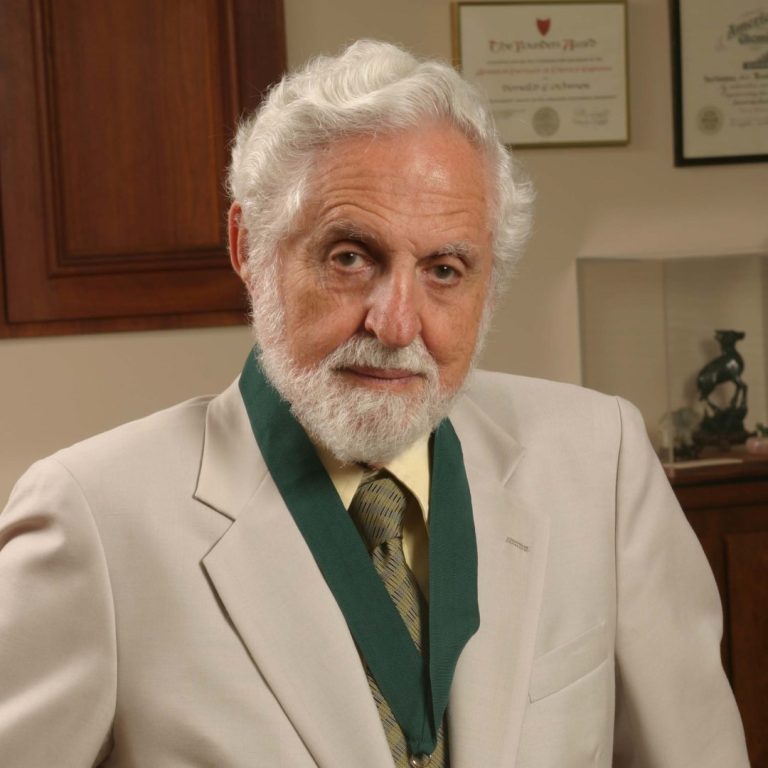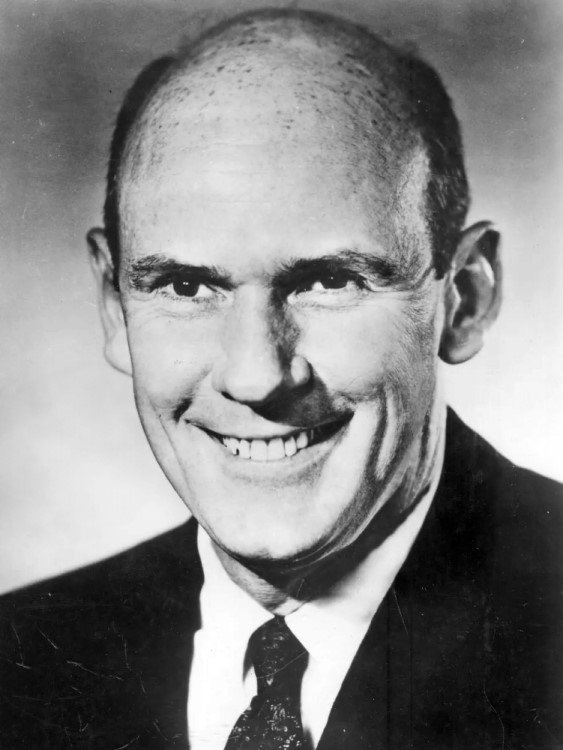
The Priestley Medal was awarded to George A Olah
On Mar. 1, 2005, the American Chemical Society awarded the Priestley Medal to George A. Olah “to recognize…
In 2005, the California Institute for Regenerative Medicine (CIRM) was formally established following the passage of Proposition 71…
On Dec. 15, 2004, Amgen announced that following priority review, the FDA has approved Kepivance(TM) (palifermin), the first…
On Nov. 18, 2004, the U.S. Food and Drug Administration (FDA) announced it had approved Genentech’s drug Tarceva…
In 2004, Touro University Nevada (TUN), located in Henderson, was founded as a private, non-profit institution of higher…
On Oct. 9, 2003, The Scripps Research Institute (TSRI) announced the establishment of a major science center in…
On Sept. 29, 2003, $81 million was awarded by National Institute of Allergy and Infectious Diseases (NIAID) through…
On Jan. 10, 2003, long-term efficacy and safety of etanercept (Enbrel) was found in children with polyarticular-course juvenile…
In 2003, The Institute for Collaborative Biotechnologies (ICB) was founded as an Army-sponsored University Affiliated Research Center (UARC)….
On Dec. 3, 2002, Genentech drug Pegasys (peginterferon alfa-2a) was approved by the Food and Drug Administration (FDA)…
In 2002, Stanford researchers became the first to use gene expression profiling to predict cancer outcomes. The research…
In 2002, the Nevada Cancer Institute (NVCI), founded in 2002 and located in Summerlin, was a non-profit organization…
On Dec. 17, 2001, the acquisition of Immunex by Amgen was announced for $16 billion in stock and…
On Nov. 19, 2001, researchers at Lucile Packard Children’s Hospital at Stanford announced they had identified a novel…
On Jan. 10, 2001, Livermore National Laboratory announced a partnership with BioLuminate to develop ‘Smart Probe’ tool for…
In 1978, Moores Cancer Center (MCC) at UC San Diego achieved National Cancer Institute (NCI) designated comprehensive cancer…
On Dec. 16, 2002, researchers at Stanford University Medical Center announced they were continuing a multi-year clinical trial…
On June 2, 2000, the U.S. Food and Drug Administration announced it had approved Genentech’s drug TNKaseᆴ (tenecteplase)….
In 2000, the Center for Clinical Sciences Research building opened, and is an example of a fully integrated…
In 2000, QB3 founded as the University of California’s hub for innovation and entrepreneurship in life science, with…
In 2000, Stanford researchers led by Ash Alizadeh announced they had used gene expression profiling to identify two…
In 2000, the University of California, Riverside Center for Nanoscale Science and Engineering was established to capitalize on…
On Jan. 10, 2012, the Norris Foundation made a $15 million commitment toward construction of the Harlyne J….
In 1999, University of California at San Francisco Cancer Research Institute received NCI Comprehensive Cancer Center designation. The…
On Oct. 30, 1999, Livermore National Lab work completed work on the mouse genome as part of Laboratory…
In 1999, the Del E. Webb Center for Neuroscience and Aging, which focuses on diseases such as stroke,…
On Sept. 25, 1998, the U.S. Food and Drug Administration (FDA) approved the monoclonal antibody Herceptin (Trastuzumab) for…
On April 30, 1998, the U.S. Food and Drug Administration (FDA) approved the Genentech’s drug Xeloda (capecitabine) for…
In 1998, National Cancer Institute (NCI) awarded the City of Hope Cancer Center NCI-comprehensive cancer center designation. City…
In 1998, The Norris Comprehensive Cancer Center received a $5 million gift from local philanthropist Henrietta Lee which…