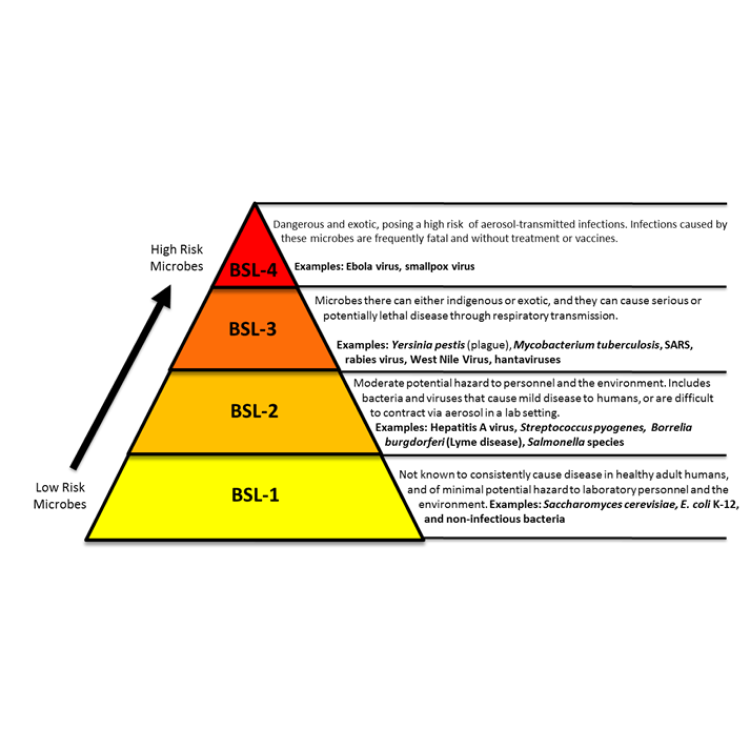
The CDC opened an expanded maximum containment lab (hot lab) for highly dangerous viruses
In 1978, the U.S. Centers for Disease Control and Prevention (CDC) completed construction of a new hot lab…
In 1978, the Norris Cotton Cancer Center in New Hampshire received National Cancer Institute (NCI) designated in recognition…
On Apr. 6, 1977, the Department of Health, Education, and Welfare (now Department of Health and Human Services)…
In 1977, the first national cancer patient education program (I Can Cope) was founded by the National Cancer…
In 1977, the National Cancer Institute (NCI) established the first electronic registry of cancer clinical trials (CLINPROT). This…
In 1977, Joseph A. Califano, Jr., Secretary of the Dept of Health, Education, and Welfare (later Health and…
On Apr. 22, 1976, the U.S. Congress passed the Vitamin-Mineral Amendment to the Federal Food, Drug, and Cosmetic…
In 1976, the National Cancer Institute’s (NCI) Cancer Information Service (CIS) began operation. Launched in Connecticut in 1976,…
In 1975, Virginia Commonwealth University Massey Cancer Center received National Cancer Institute (NCI) designation. Massey is the only…
On Dec. 17, 1974, CANCERLINE, a national database of published cancer research, was established by the National Cancer…
On Sept. 10, 1974, the Division of Cancer Control and Rehabilitation (DCCR) was established by the National Cancer…
On Jul. 23, 1974, the National Cancer Act Amendments of 1974 (P.L. 93-352) were signed by the President…
In 1974, the National Cancer Institute (NCI) chose the Pacific Health Research Institute (PHRI) to undertake the ‘Breast…
In 1974, The Massachusetts Institute of Technology (MIT) Center for Cancer Research (CCR) received National Cancer Institute (NCI)…
In 1974, Albert Einstein Cancer Center’s Liver Research Center — now the interdisciplinary Marion Bessin Liver Research Center…
In 1973, The Surveillance, Epidemiology, and End Results (SEER) Program was established. The SEER Program was a sequel…
In 1973, the Norris Cancer Center was designated a National Cancer Institute (NCI) Comprehensive Cancer Center, one of…
In 1973, The Salk Cancer Center received a National Cancer Institute comprehensive cancer center designation. it was one…
In 1973, UChicago established the University of Chicago Comprehensive Cancer Center (UCCCC), receiving its initial designation as a…
In 1973, The Johns Hopkins Cancer Center, now known as the Sidney Kimmel Cancer Center (SKCCC) was founded….
In 1973, the Ohio State University Cancer Center (OSUCCC) was established in Columbus. The patient care arm of…
On Jul. 1, 1972, the Regulation of Biologics–including serums, vaccines, and blood products–was transferred from the NIH to…
In 1972, by action of the Nebraska Legislature, the Eppley Cancer Center became an independent research institute with…
In 1972, The Albert Einstein Cancer Center (AECC), now known as Montefiore Einstein Comprehensive Cancer Center (MECCC), obtained…
In 1972, the Division of Biologics Standards was transferred from the National Institutes of Health (NIH) to the U.S….
On Dec. 23, 1971, the National Cancer Act enacted by President Richard Nixon as part of the nation’s…
In 1971, the Public Health Service (PHS) Bureau of Radiological Health was transferred to U.S. Food and Drug…
In 1966, the Drug Efficacy Study of the National Research Council’s Division of Medical Sciences, which was tasked…
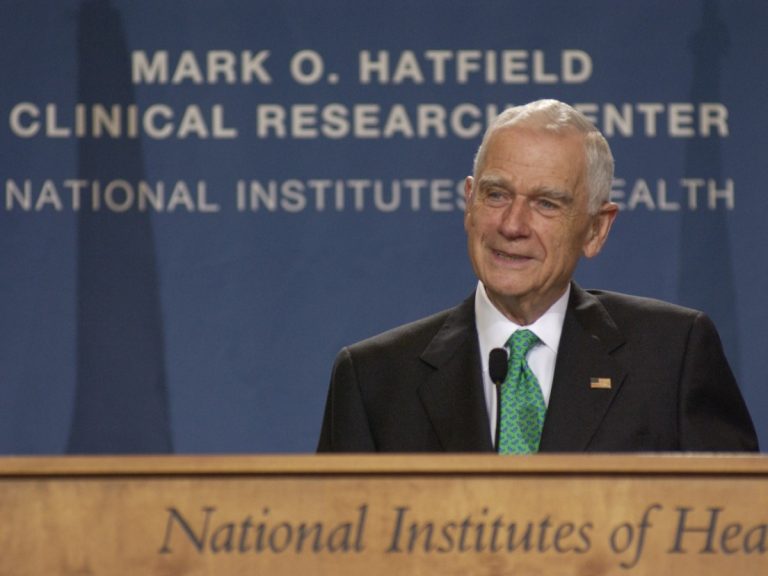
In 1966, Mark Hatfield served in the Oregon State Legislature from 1951-1957; was secretary of state from 1957-1959….
In 1965, the rubella virus was attenuated by a NIH research team lead by Paul Parkman and Harry…