Universal Declaration on Human Genome and Human Rights adopted unanimously at UNESCO
On Nov. 11, 1997, the Universal Declaration on the Human Genome and Human Rights was adopted unanimously and…

On Feb. 13, 1997, the American Association for the Advancement of Science (AAAS) Annual Meeting and Science Innovation…
In 1997, the Cancer Genome Anatomy Project (CGAP), created by the National Cancer Institute (NCI), is a multi-year…
On Jul. 5, 1996, Dolly, a Finn Dorset sheep was born at the Roslin Institute in Edinburgh, Scotland…
In 1996, the U.S. Centers for Disease Control and Prevention (CDC) launched PulseNet, a national network of laboratories,…
In 1996, deCODE genetics was funded in Reykjavik, Iceland. deCODE is a global leader in analyzing and understanding…
In Oct. 1995, 70 scientists from 20 countries met in Lexington, Kentucky to make a plan for mapping…
In 1995, researchers led by Dr. Peter St. George-Hyslop at the University of Toronto discovered and cloned two…
In 1995, Mary-Claire King, an internationally known human geneticist, was recruited to the University of Washington’s (UW) School…
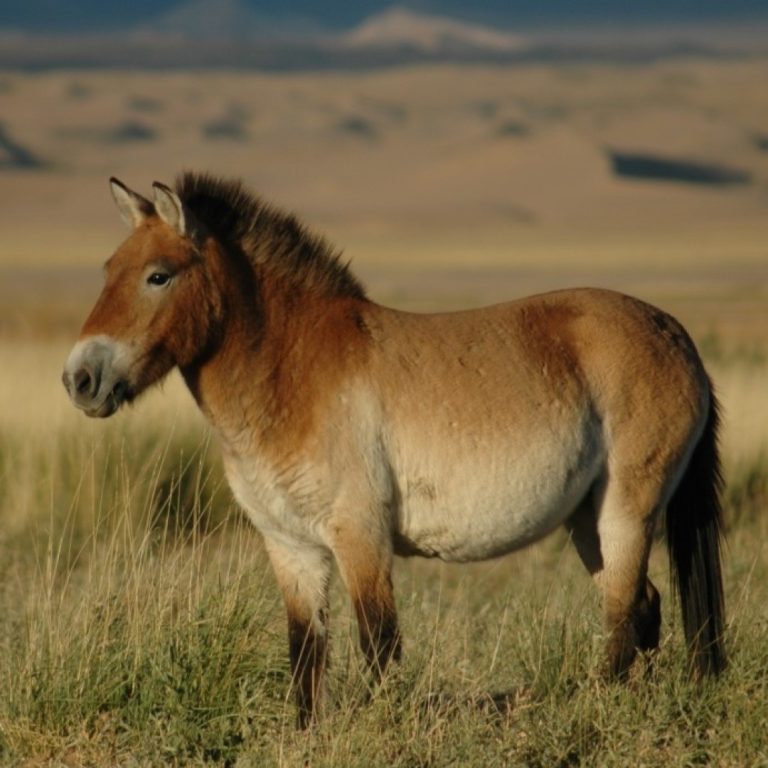
On Dec. 12, 2018, the scientists behind the Horse Genome Project released scientific standards for genetic testing. The…
On Oct. 7, 1994, a strong candidate for the 17q-linked BRCA1 gene, which influences susceptibility to breast and…
On Jun. 16, 1994, the University of Washington and ZymoGenetics scientists reported in Nature the discovery, isolation and…
In 1994, researcher Helen Donis-Keller and colleagues at Washington University – St. Louis announced they had for the…
In 1994, the Science Coalition was founded. The Science Coalition is a nonprofit, nonpartisan organization of more than…
On Aug. 9, 1993, Francisco Mojica published “Transcription at different salinities of Haloferax mediterranei sequences adjacent to partially…
On Jul. 25, 1993, Sandia Corp. became a Martin Marietta company, leaving the AT&T fold for the first…
In April 1993, James Watson resigned as head of National Human Genome Research Institute (NCHGR) following allegations that…
In 1992, DNA evidence was used to identify Josef Mengele from skeletal remains. Bone DNA analysis was therefore…
On Oct. 7, 1991, the University of Washington (UW) announced a $12 million gift from Microsoft co-founder Bill…
On Oct. 1, 1990, the U.S. Human Genome Project (HGP), a 13-year effort coordinated by the U.S. Department…
On Sept. 15, 1990, The Human Gene Mapping database was established at Johns Hopkins University. The database provides…
In 1990, Geneticist Mary-Claire King and her colleagues at the University of California, Berkeley (UC Berkeley) discovered BRCA1,…
In 1990, The Whitehead Institute/MIT Center for Genome Research (WICGR) was founded. The institute soon became an international…
In 1990, the National Institutes of Health (NIH) established a Human Genome Center at Washington University School of…
In 1990, Washington University – St. Louis researcher Stanley J. Korsmeyer, MD co-discovered the gene ‘bcl-2’, a pivotal…
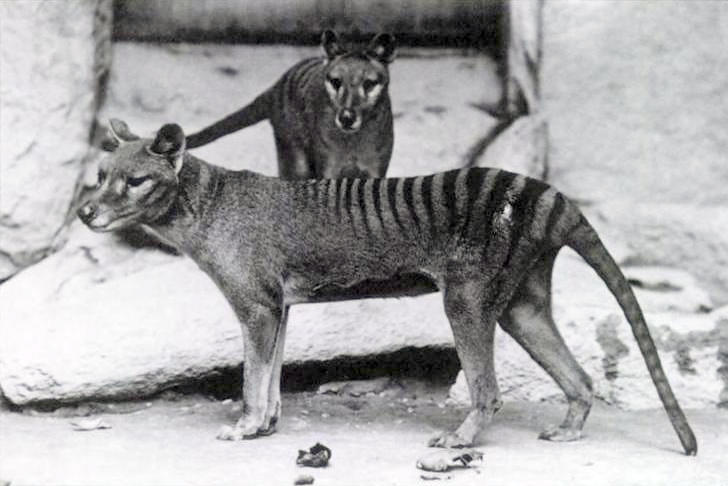
In 1989, Allan Wilson and Svante Paabo analyzed DNA of the now-extinct Tasmanian tiger to demonstrate they could…
On Aug. 15, 1988, a program advisory committee on the human genome was established to advise the National…
On Jun. 30, 1988, The California Genetic Resources Conservation Program was closed by the Division. In 1985, California…
In 1988, the first detailed description of the rate of mutation in humans at the DNA level was…
In 1988, James C. Wang discovered DNA topoisomerases, which led to greater understanding of enzymes’ role in biological…