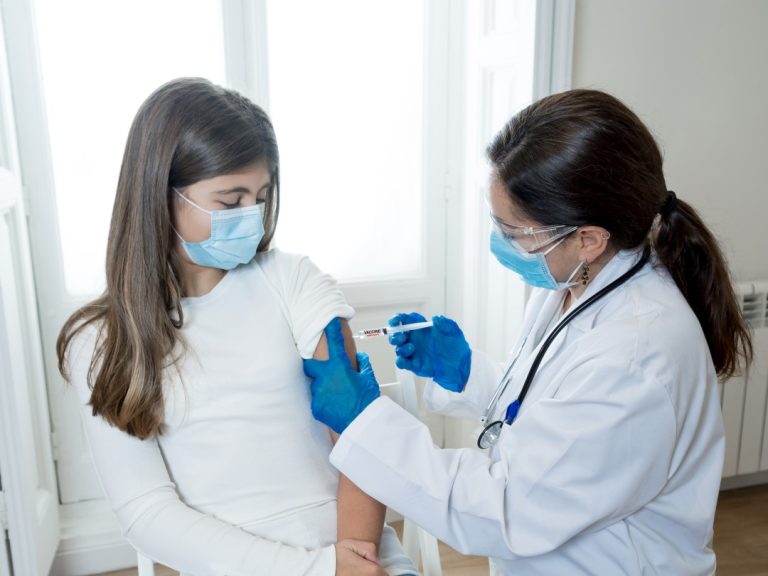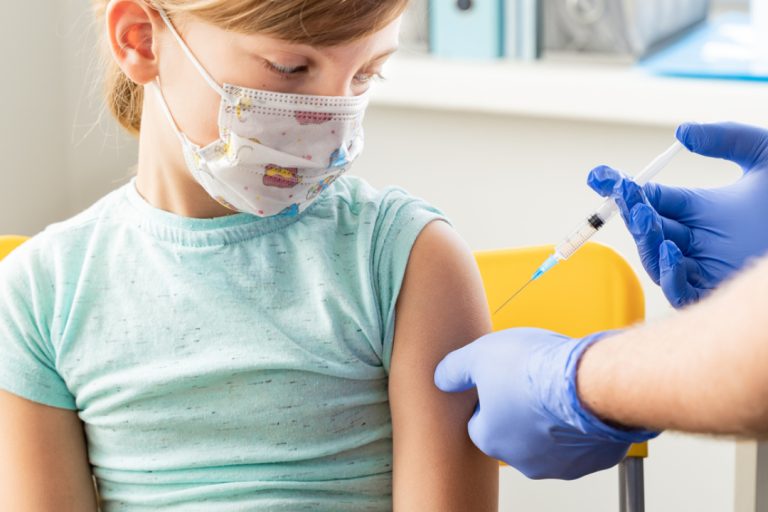
The first recombinant vaccine for humans, a vaccine for hepatitis B, was approved
In May 1986, the vaccine Recombivax HB, which protects against hepatitis B infection, was approved for marketing in…
On Mar. 19, 1986, Eli Lilly acquired San Diego-based Hybritech for $300 million. Hybritech was a leading producer…
On Feb. 4, 1986, Bristol-Myers announced it would acquire Seattle-based Genetic Systems for $310 million. Genetic Systems was…
In February 1986, the U.S. Food and Drug Administration (FDA) approved Hybritech’s Tandem-R PSA assay (P850048) with calibration…
In 1986, the Visible Human Project® (VHP), an outgrowth of the National Library of Medicine (NLM) Long-Range Plan,…
In 1986, the U.S. Centers for Disease Control and Prevention (CDC) established the Division of Injury Epidemiology and…
In 1986, the University of Michigan Cancer Center received National Cancer Institute (NCI) designation. The Rogel Cancer Center…
In 1986, Dr. Stanley Cohen of the Vanderbilt University School of Medicine and Dr. Rita Levi-Montalcini each received…
In 1986, The University of Utah Cancer program earned National Cancer Institute (NCI) designation as a Cancer Center,…
In 1986, the University of British Columbia (UBC) approved an agreement with the BC Centre for Disease Control…
In 1986, Dr. Marilyn Hughes Gaston while deputy branch chief of the Sickle Cell Disease Branch at the…
In 1986, while teaching a graduate course at the University of Alberta, Dr. Tyrrell found clues that might…
In 1986, President Ronald Reagan designated the month of March as Hemophilia Awareness Month to bring attention to…
In 1986, scientists independently identified the structure of a nerve cell receptor, now called CB1, which responded to…
In 1986, BC Transplant (BCT) was established. BCT directs, delivers or contracts for all organ transplant services across…
In 1986, University of California San Diego Center for AIDS Research (CFAR) was designated one of eight national…
In 1986, the Moffitt Cancer Center was established by the Florida Legislature to meet a clear and compelling…
In 1986, philanthropist Harcourt Sylvester Jr. pledged $27.5 million to benefit cancer programs at the medical school, and…
In Dec. 1985, the first clinical tests were held at the University of Washington of erythropoietin (EPO), the…
On Nov. 20, 1985, the Health Research Extension Act of 1985 (P.L. 99-158) was signed into law by…
On Oct. 18, 1985, Genentech received U.S. Food and Drug Administration (FDA) approval of its first medicine, Protropin…
On Aug. 29, 1985, Dr. Jack Copeland, a cardiac surgeon at University Medical Center (now Banner—University Medical Center…
On Apr. 6, 1985, Bill Schroeder from Jasper, Indiana, the second human recipient of the Jarvik 7 artificial…
In Apr. 15, 1985, the first International AIDS conference, held in Atlanta, Georgia, was organized by the WHO,…
On Jan. 18, 1985, ground was broken for a new 1.2 million square foot, 414-bed Madigan Army Medical…
In 1985, the Comprehensive Cancer Center of Metropolitan Detroit was named in honor of Meyer L. Prentis, a…
In 1985, Dr. Anthony Pawson discovered the SH2 protein domain involved in controlling cell behavior, leading to targeted…
In 1985, the University of Pittsburgh Cancer Institute (UPCI) was founded in Pittsburgh. UPCI has 320 faculty members…
In 1985, nerve-sparing prostatectomy, designed to preserve potency and urinary continence, was introduced. This procedure resulted in markedly…
In 1985, Lumpectomy plus radiation therapy was found equivalent to mastectomy for early breast cancer. Lumpectomy followed by…