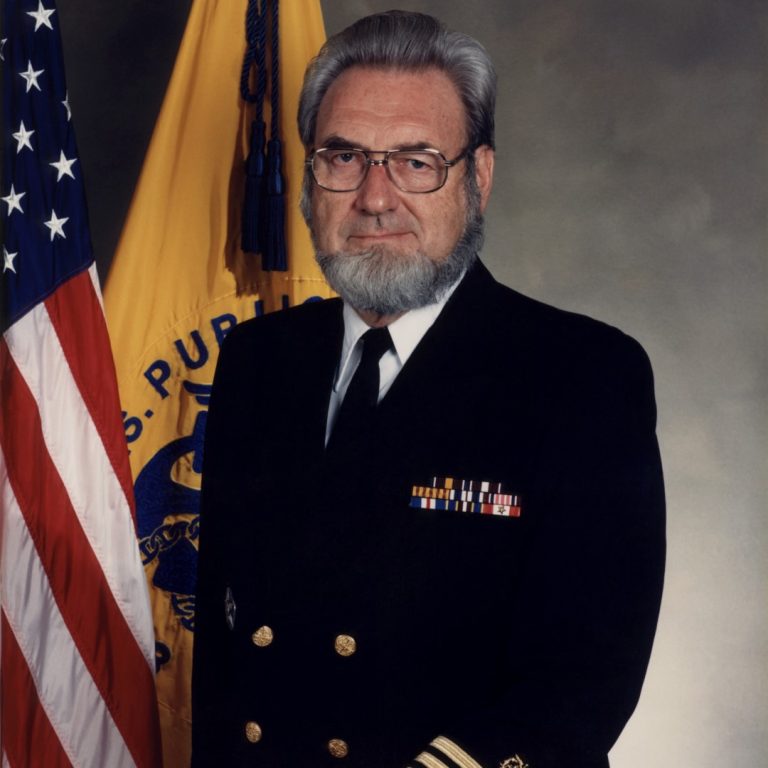
President Reagan swore in C. Everett Koop as U.S. Surgeon General
On Jan. 21, 1982, C. Everett Koop was appointed U.S. Surgeon General by President Ronald Reagan. In 1984,…
In 1982, the WISEST (Women in Scholarship, Engineering, Science & Technology) began at the University of Alberta when…
In 1982, Steven Lindow from the University of California, Berkeley, was the first to ask permission to deliberately…
In July 1981, the U.S. Department of Health and Human Services assigned implementation of the Superfund Act to…
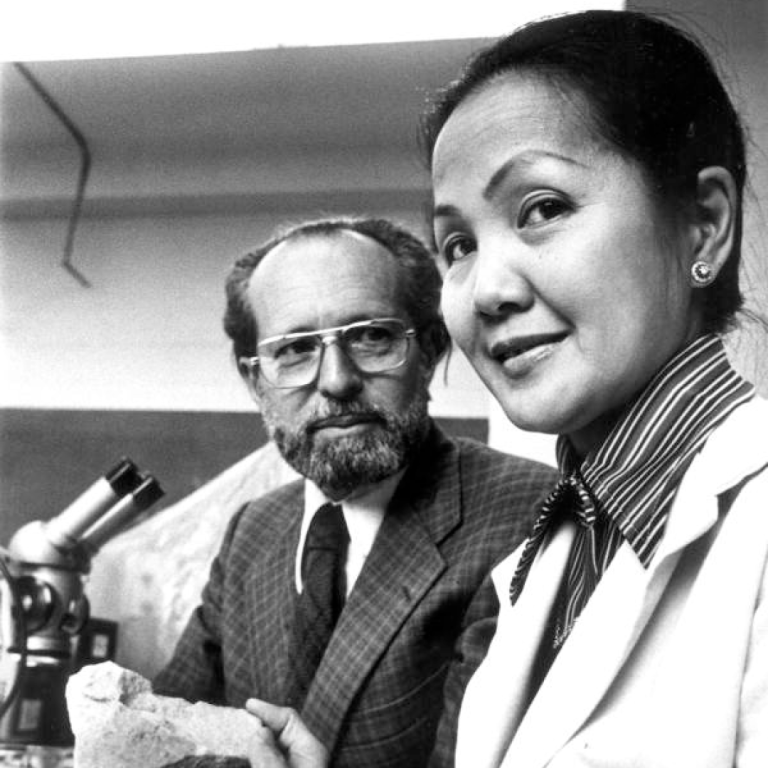
In 1981, Filipino and American scientist Dr. Roseli Ocampo-Friedmann received the U.S. Congressional Antarctic Service Medal for her…
On Dec. 11, 1980, the Comprehensive Environmental Response, Compensation, and Liability Act (CERCLA), commonly known as Superfund, was…
On May 30, 1980, the U.S. Centers for Disease Control and Prevention (CDC) released a report of health…
In 1980, the U.S. Centers for Disease Control and Prevention (CDC) established the National Center for Environmental Health…
In 1980, faculty members in the Stanford University’s Department of Pharmacology publicly expressed their opposition to the proposed…
Om Mar. 28, 1979,the Three Mile Island Unit 2 (TMI-2) reactor, near Middletown, Pa., partially melted down resulting…
On Mar. 28, 1979, the U.S. Centers for Disease Control and Prevention (CDC) investigated health effects related to…
On Nov. 9, 1978, the President Jimmy Carter signed the Community Mental Health Centers Act (P.L. 95-622) amending…
In 1978, Carl Woese, an American microbiologist defined Archaea as a new domain based upon genetic relationships that…
In 1976, The U.S. Congress passed the Toxic Substances Control Act (TSCA) which provided the U.S. Environmental Protection…
In 1976, the U.S. Centers for Disease Control and Prevention’s (CDC) Environmental Services Division revealed blood lead levels…
On Nov. 28, 1973, the Environmental Protection Agency (EPA) Administrator Russell E. Train announced the final regulations to…
In 1973, the publication “Biohazards in Biological Research,” was edited by S. Hellman, M. Oxman, and R. Pollack. …
On Jun. 14, 1972, an end to the continued domestic usage of the pesticide DDT was decreed when…
On Jun. 5, 1972, the United Nations Conference on the Human Environment in Stockholm, Sweden was the first…
In 1971, the U.S. Centers for Disease Control and Prevention (CDC) investigated lead exposure in El Paso, Texas,…
On Dec. 2, 1970, the US Environmental Protection Agency (EPA) was established by President Richard Nixon with an…
On Nov. 6, 1970, President Nixon nominated William D. Ruckelshaus to be the first Administrator of the U.S….
On Jun. 30, 1970, the Olin Corporation stopped manufacturing DDT after intense pressure from the Army and environmental…
On Apr. 22, 1970, the first Earth Day was held and the modern environmental movement was born. A…
On Jan. 1, 1970, President Richard Nixon signed the National Environmental Policy Act (NEPA) into law and launched…
In 1970, the Southern Corn Leaf Blight (SCLB) sweeps across the South, destroying 15% of the U.S. corn…
In 1970, the National Communicable Disease Center (NCDC) was renamed the Center for Disease Control (CDC). The scope…
On Oct. 3, 1969, a proposal to establish “Earth Day” was submitted by John McConnell to Peter Tamaris…
On Mar. 8, 1968, the term Green Revolution was coined by William Gaud during a speech as administrator…
In March 1968, a reorganization of federal health programs placed the U.S. Food and Drug Administration (FDA) in…