Lawrence Livermore National Laboratory announced Lawrence Livermore Microbial Detection Array
On May 5, 2010, Lawrence Livermore National Laboratory (LLNL) biologists and informatics experts announced the Lawrence Livermore Microbial Detection Array (LLMDA) that can simultaneously identify thousands of known viruses and bacteria within 24 hours.
Unlike current detection systems, which focused on small, prioritized sets of high-risk biological pathogens, LLMDA enabled identification of a broad range of organisms, including pathogens on a priority screening list, DNA-sequenced bacteria or viruses, or even emerging pathogens containing DNA sequences previously identified in other pathogens.
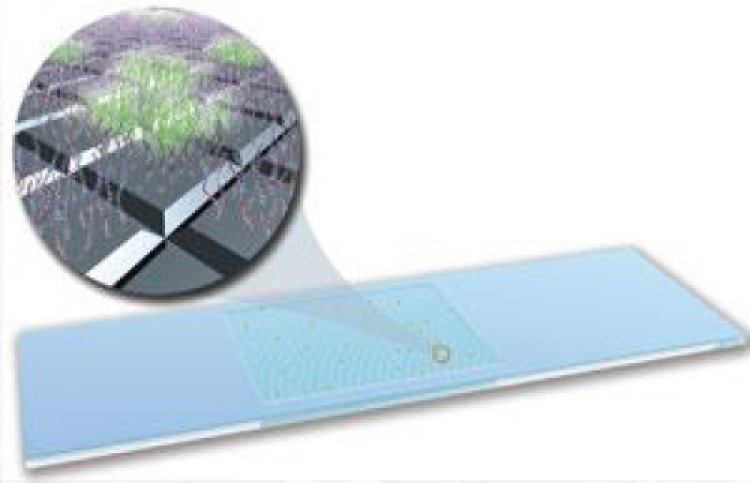
Developed between October 2007 and February 2008, the LLMDA detects viruses and bacteria with the use of 388,000 probes that fit in a checkerboard pattern in the middle of a one-inch wide, three-inch long glass slide. The current operational version of the LLMDA contains probes that can detect more than 2,000 viruses and about 900 bacteria.
Current plans call for the detection array to be evaluated for operational bioforensic use at the Frederick, Md.-based National Biodefense Analysis and Countermeasures Center of the U.S. Department of Homeland Security.
As the cost of the array is reduced, the LLMDA technology could be used to improve public health diagnostics, Slezak said, adding that dozens of bacteria and viruses can be detected in a single test from the entire spectrum of sequenced organisms.
One advantage of the Livermore array is that it provides researchers with the capability of detecting pathogens over the entire range of known viruses and bacteria. Current multiplex polymerase chain reaction (PCR) techniques can at most offer detection from among 50 organisms in one test.
In April, in a Journal of Virology article, Livermore researchers working with a scientist from the San Francisco-based Blood Systems Research Institute said they used the LLMDA technology to confirm the presence of an apparently benign pig virus in a vaccine.
Tags:
Source: Lawrence Livermore National Laboratory
Credit: