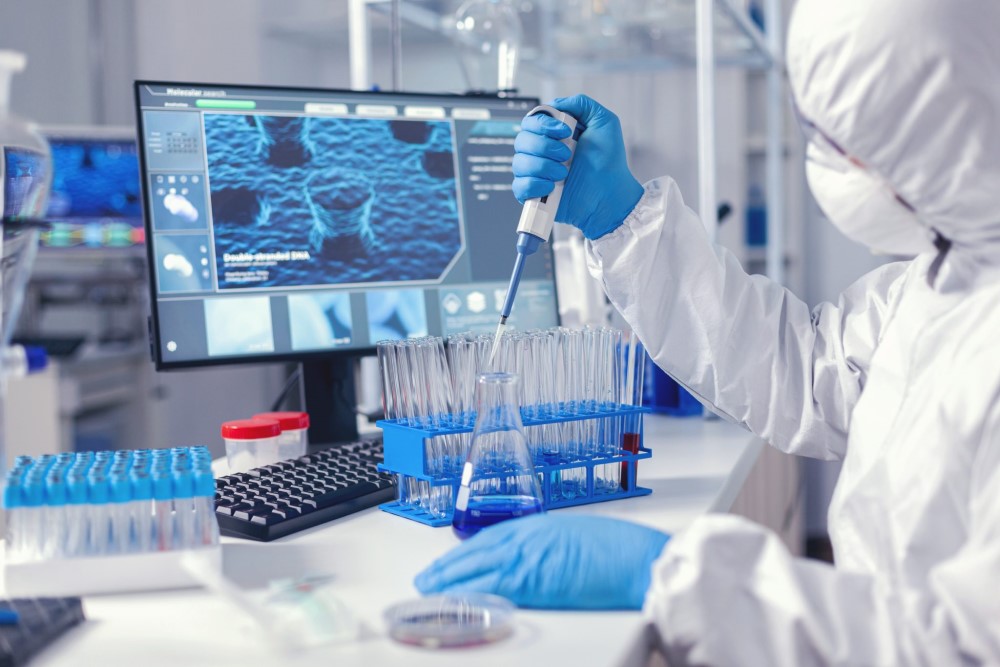
Virginia Tech researchers established a reverse genetics system to facilitate COVID-19 research
On Jun. 4, 2020, with funding from the Fralin Life Sciences Institute at Virginia Tech, researchers James Weger-Lucarelli and Nisha Duggal, from the Virginia-Maryland College of Veterinary Medicine, established a reverse genetics system for SARS-CoV-2 that will serve as the basis for vaccine design and for studying viral mutations associated with COVID-19 severity and viral transmission.
Having studied Zika and mosquito-borne viruses in the past using reverse genetics systems, Weger-Lucarelli and Duggal, who are both affiliated faculty of the Fralin Life Sciences Institute, will create a new reverse genetics system for SARS-CoV-2 that will provide a blueprint for making vaccines and reporter viruses.
SARS-CoV-2 stores its genetic material in ribonucleic acid (RNA), as opposed to deoxyribonucleic acid (DNA), making it difficult for scientists to study and manipulate the viral genome. With a reverse genetics system, scientists can convert the virus’s RNA back into DNA through a process called reverse transcription.
Recent studies have shown that SARS-CoV-2 does not infect wild-type mice; the researchers will eventually study transgenic mice that are susceptible to the virus, but they are not readily available at this time. In the meantime, Weger-Lucarelli and Duggal will modify the virus to a mouse-adapted strain so that they can conduct research effectively. This model will recapitulate human disease for in vivo studies of vaccine efficacy and antiviral therapeutics.
The Weger-Lucarelli lab is tasked with producing molecular tools to study SARS-CoV-2 and for testing antivirals. The lab is also working with Irving Coy Allen, an associate professor of inflammatory disease in the Department of Biomedical Sciences and Pathobiology, as they investigate the role of obesity and diabetes in COVID-19 severity.
Tags:
Source: Virginia Tech
Credit: