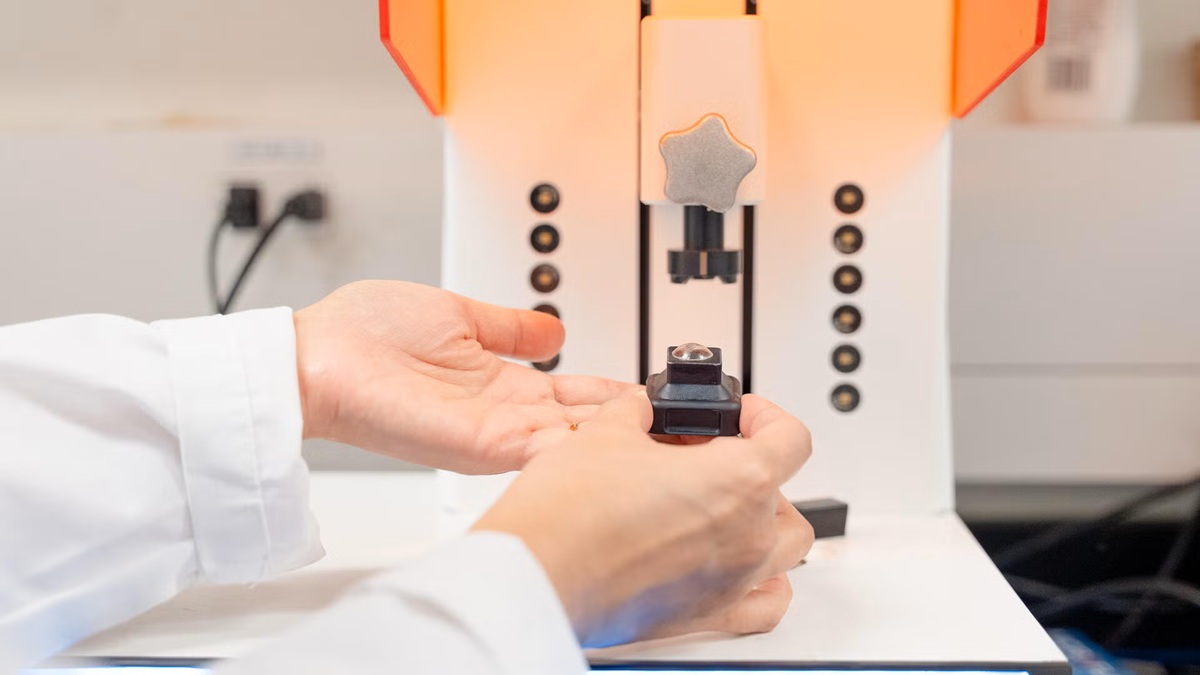
University of Waterloo Announce 3D-printed Custom contact lenses in just 20 minutes
On Jul. 14, 2026, University of Waterloo researchers announce a breakthrough combination of new silicone materials and advanced 3D printing technology could transform how contact lenses are manufactured. The award-winning innovation can produce patient-specific contact lenses in as little as 20 minutes, paving the way for specialized lenses to be designed, manufactured and dispensed during a single visit to the optometrist.
Most contact lenses are manufactured in a limited range of sizes and shapes rather than being custom-made for each person’s eye. While soft lenses are suitable for many wearers, patients with irregularly shaped corneas often require rigid lenses to achieve clear vision. Finding the right fit can require several appointments over weeks or months before patients receive lenses that fit properly and provide the function they need.
Researchers in Waterloo’s Department of Chemistry developed the digital manufacturing platform to address these challenges. The platform combines custom lens design software, a newly developed silicone material, and advanced manufacturing techniques.
Silicone is widely used in contact lenses because it is safe, biocompatible and highly oxygen permeable. However, conventional silicone materials are generally not compatible with 3D printing. To overcome this barrier, the Waterloo team developed a new hydrophilic silicone formulation specifically designed for additive manufacturing while maintaining the properties required for contact lens applications.
Because 3D-printed objects are built layer by layer, tiny stair-step imperfections can form on curved surfaces and reduce optical clarity and wearer comfort. To address this issue, the team developed an ultra-thin, non-contact coating process that smooths the surface without altering the customized shape of the lens or compromising its optical performance.
Laboratory testing confirmed the lenses are biocompatible and the team is preparing for in vivo studies. Researchers have filed a provisional patent for the hydrophilic silicone material and are preparing a full patent application. Working with the Centre for Vision and Eye Research (CEVR), a joint research institute of the University of Waterloo and the Hong Kong Polytechnic University, the researchers are advancing the technology toward commercialization.
The study, “Patient-specific hard contact lenses fabricated by vat photopolymerization printing and non-contact fluidization coating,” was recently published in Materials & Design.
Tags:
Source: University of Waterloo
Credit: Photo: 3D-printed contact lenses. Courtesy: Shirley Tang, University of Waterloo.