Uganda opens state of the art wildlife and timber forensics laboratory to strengthen fight against crime
On Apr. 29, 2026, the Uganda Wildlife Forensics and Timber Laboratory was officially opened at the Uganda Wildlife Conservation Education Centre (UWEC) in Entebbe, expanding its mandate to include timber forensics alongside its established work on wildlife crime.
Wildlife forensic science plays a vital role in strengthening law enforcement and ensuring compliance with the Convention on International Trade in Endangered Species of Wild Fauna and Flora (CITES). Advanced techniques such as DNA profiling enable authorities to turn seized wildlife and timber specimens into scientifically robust, court‑admissible evidence – linking illegal products to crime scenes and suspects, supporting successful prosecutions, and disrupting organized criminal networks that profit from wildlife crime.
The laboratory builds on a foundation established in 2019, when the United Nations Office on Drugs and Crime (UNODC), in collaboration with the TRACE Wildlife Forensics Network and the Uganda Wildlife Authority (UWA), launched a pilot wildlife forensics facility in Uganda. Since then, the laboratory has evolved into a national training and technical support hub, assisting hundreds of investigations and prosecutions related to illegal wildlife trade.
Through a UNODC project, funded by the European Union (EU), and supported by Denmark, the laboratory’s mandate has been expanded to include forensic analysis of protected Ugandan timber species.
Deforestation and timber trafficking are increasingly recognized as forms of serious organized crime, posing significant threats to Uganda’s environment, economy, and national security. According to Ministry of Water and Environment reports, over the past three decades, forest cover has declined dramatically—from 24 per cent in 1990 to roughly 13 per cent in 2025—undermining biodiversity, livelihoods, and climate resilience.
The expanded scope of work prompted the relocation of the laboratory to UWEC’s National Wildlife Hospital and Quarantine Centre, where the facility has been refurbished to enhance security, infrastructure and compliance with international forensic quality standards. UNODC and TRACE, working alongside UWA and the Ministry of Water and Environment, are supporting the laboratory with specialized forensic equipment, advanced training, ongoing mentoring and the development of standard operating procedures for wildlife and timber forensic methods.
Speaking at the official opening, Mr. Giovanni Broussard, Africa Coordinator for the UNODC Global Programme on Crimes that Affect the Environment, underscored the global implications of wildlife and timber trafficking, which are driven by transnational organized crime networks that operate across borders. By strengthening forensic capacity in Uganda, UNODC is helping to close critical evidence gaps, enhance accountability and ensure that criminals who exploit nature for profit are brought to justice.
Tags:
Source: United Nations
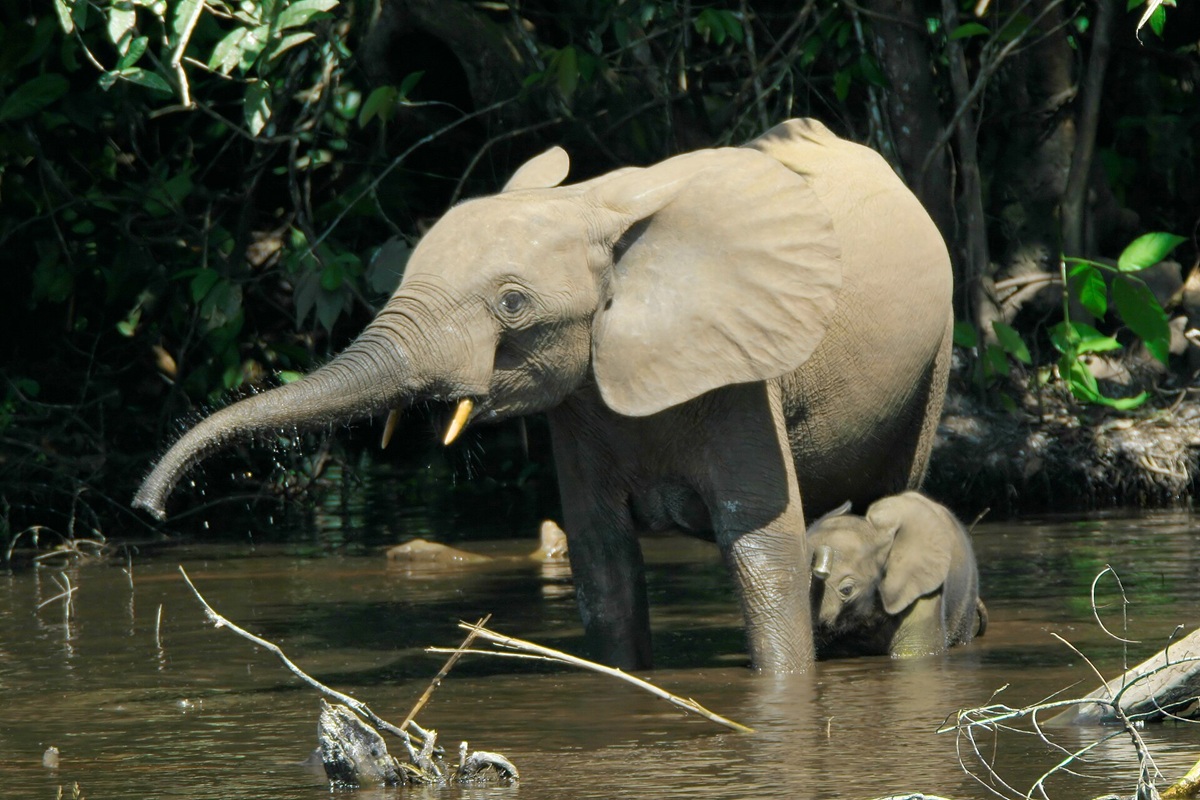
Credit: Photo: Forest elephants (Loxodonta cyclotis) in the swamp Mbeli Bai, Nouabalé-Ndoki National Park, Congo. Courtesy: Thomas Breuer, PLoS Biology Vol. 5, No. 4, e115 and Wikipedia.