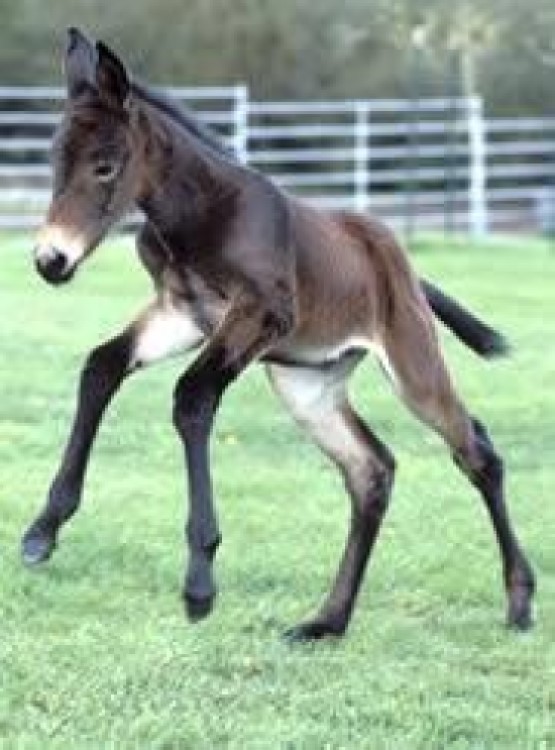
The first member of the horse family was cloned
On May 4, 2003, University of Idaho-Utah State University researchers became the first in the world to clone a member of the horse family when Idaho Gem, the first clone of a hybrid animal, and Utah Pioneer and Idaho Star his genetically identical brother clones. The second mule, Utah Pioneer, was born in June.
A mule is a cross between a female horse, a mare, and a male donkey, a jack. As hybrids, mules are sterile, except in very rare cases. The foal’s DNA was from a fetal cell culture first established in 1998 at the University of Idaho. Both cloned foals are full siblings of the racing mule Taz, owned by Donald Jacklin. An Idaho businessman and mule enthusiast, Jacklin provided the primary funding for the project, believing it had a lot to offer the mule industry, especially mule racing.
Several horse regulatory bodies, including the Jockey Club and the American Quarter Horse Association, have made regulations in recent years that prohibit the registration and racing of clones. “The Jockey Club is an organization that believes that the short-term and long-term welfare of the Thoroughbred breed is better served without the use of these prohibited practices, including cloning,” explained Bob Curran Jr., vice president of corporate communications for The Jockey Club.
The mule cloning success is long in coming. Researchers have been working toward the goal since 1998 but have had difficulties because equine oocytes don’t mature well in a dish, and embryonic cells don’t divide easily. When the group found that calcium concentrations in equine red blood cells are low, compared with those from humans, they suspected that low calcium concentrations could be key in inhibiting embryo growth. After increasing the calcium concentrations in the cultures and several more tries, they finally succeeded.
The foals carry identical DNA from a fetal cell culture established five years ago at the UI-Moscow, using Taz’s mother and father. The team took somatic cells from the fetus, fused them with an enucleated horse oocyte, and then inserted this into a mare.
Tags:
Source: American Veterinary Medical Association
Credit: