Study Analyzed Potato-Pathogen ‘Arms Race’ After Irish Famine
On Aug. 5, 2024, North Carolina State University researchers revealed that an examination of the genetic material found in historic potato leaves showed more about the tit-for-tat evolutionary changes occurring in both potato plants and the pathogen that caused the 1840s Irish potato famine.
The study used a targeted enrichment sequencing approach to simultaneously examine both the plant’s resistance genes and the pathogen’s effector genes – genes that help it infect hosts – in a first-of-its-kind analysis.
The study’s results show that the pathogen, Phytophthora infestans, is very adept at fighting off potato late blight disease resistance. For example, the study shows that the FAM-1 strain of the pathogen had the ability to defeat the resistance provided by the plant’s R1 resistance gene – even before plant breeders deployed it in potato.
The study also shows that many of the pathogen’s effector genes have remained stable, although different mutations have occurred to increase its infection prowess as plant breeders attempted to breed resistance – specifically after 1937 when more structured potato breeding programs commenced in the United States and other parts of the globe.
The study also shows that the pathogen added a set of chromosomes between 1845 and 1954, the period of time in which the study’s plant samples were collected.
Tags:
Source: North Carolina State University
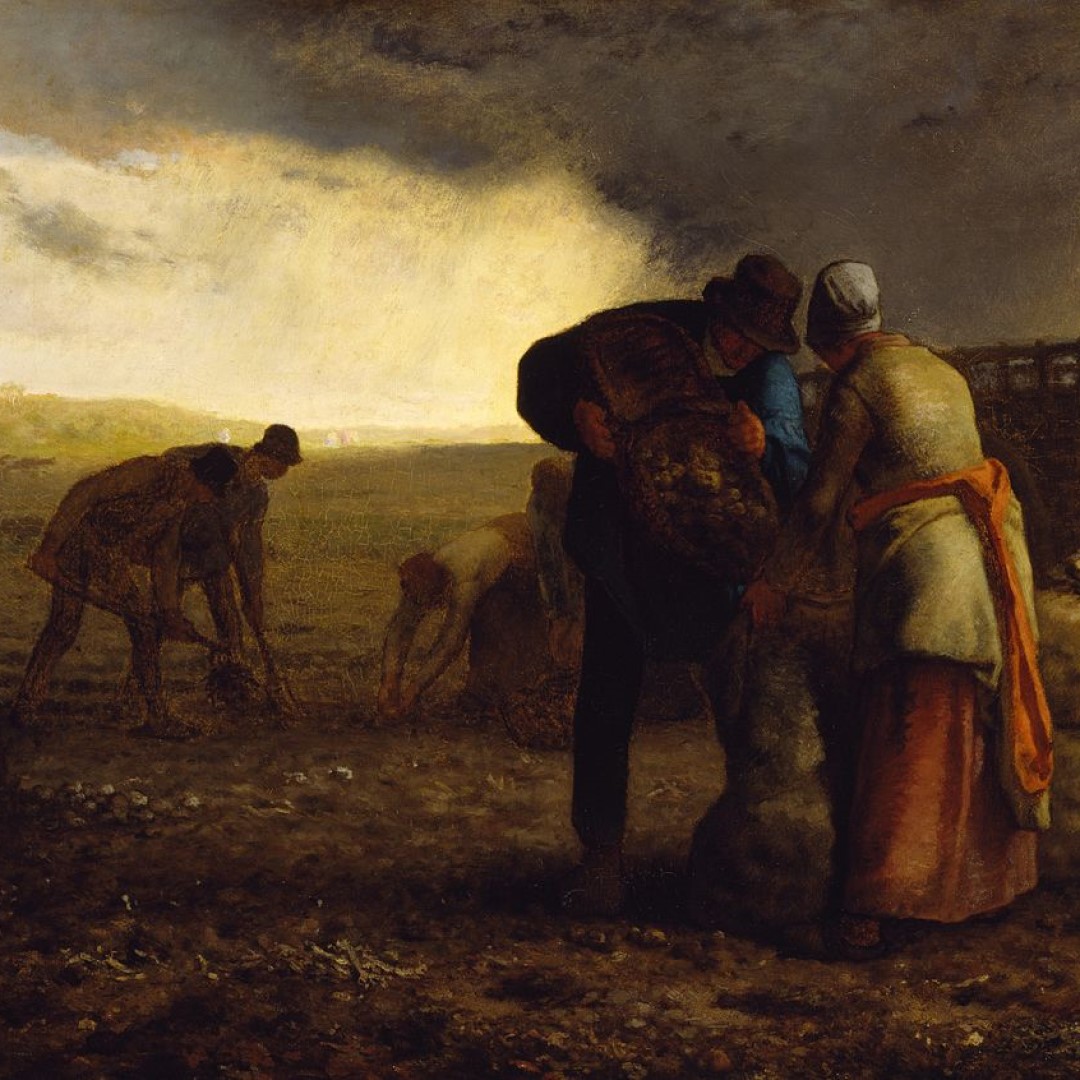
Credit: Image: The Potato Harvest by Jean-François Millet , 1885, courtesy Wikipedia..