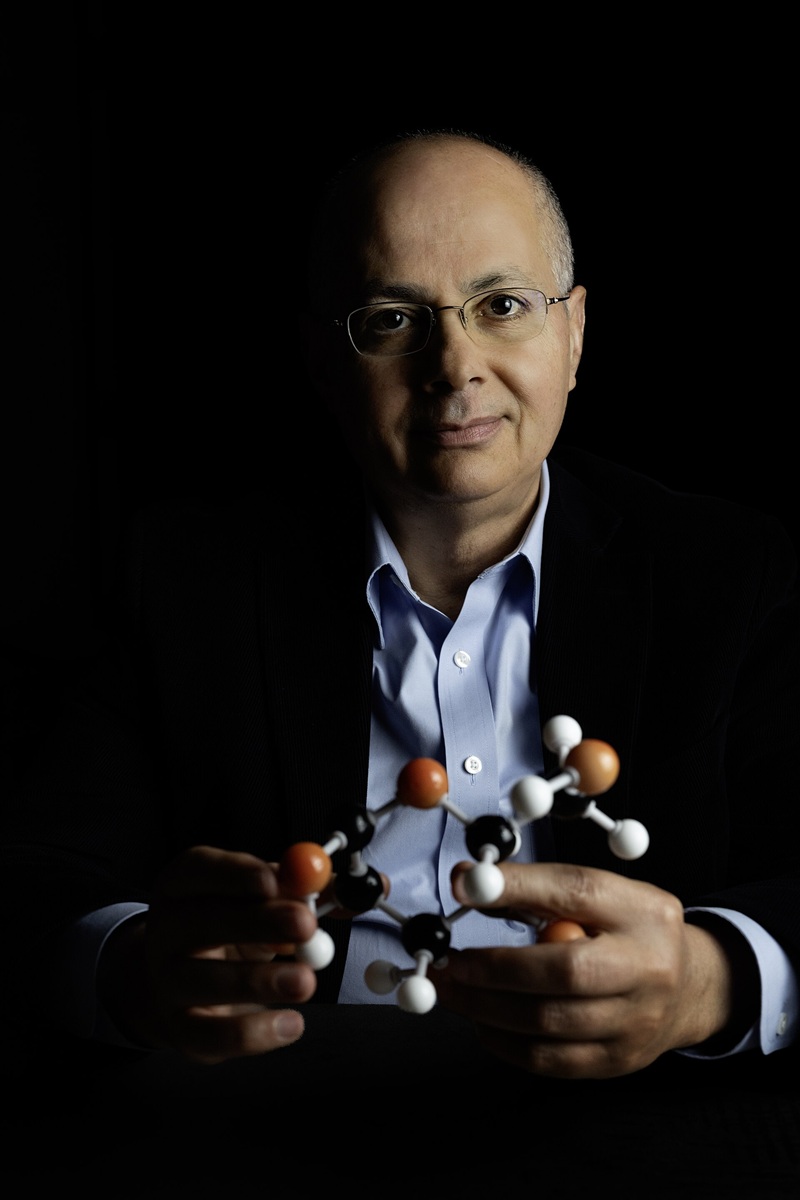
Nobel-Winning U.S. Chemist Moves to China to Lead A.I. Institute
On Jul. 9, 2026, it was announced that Omar Yaghi, an immigrant to the United States who shared last year’s Nobel Prize in Chemistry, has left his faculty post at the University of California, Berkeley, for one in China, where he will lead an institute using artificial intelligence to accelerate the discovery of new materials.
Dr. Yaghi’s move comes amid the Trump administration’s continuing disruptions of U.S. science funding and China’s efforts to woo international scientists with hefty budgets. Last week, Tsinghua University in Beijing welcomed Dr. Yaghi in an appointment ceremony, calling him one of the world’s foremost chemists. The university said he saw his new post as an opportunity “not to slow down, not to repeat what has already been done, but to do science with more energy, more intensity, and more ambition than ever before.”
“China is increasing its investment in science overall, including chemistry,” said Alessandra Zimmermann, a budget analyst at the American Association for the Advancement of Science, a scientific group based in Washington, D.C. The best measures of scientific accomplishment, she added, show that China “has been outperforming the U.S. in top chemistry papers.”
Last year, three of America’s six winners of science Nobels were born outside the country. In this century, overall, the émigré fraction for U.S. Nobels in physics, chemistry and medicine now stands at 40 percent. In an interview, Ram Seshadri, a professor of chemistry and materials science at the University of California, Santa Barbara, said Dr. Yaghi’s move to China shed light on a fast-emerging dynamic between the two nations. “They’ve overtaken us in many areas of materials science and chemistry,” he said, referring to China. “They’re willing to invest very large sums of money to attract new talent.”
Dr. Yaghi joined the University of California, Berkeley, in 2012, and while there earned many awards for his scientific advances. He received his Nobel Prize for helping discover a world of chemistry in which molecular building blocks are assembled into structures that possess vast internal surface areas — the largest of any known substance. His porous structures can act like sponges that readily absorb, store and release gases and vapors.
He named them metal-organic frameworks. The metal atoms form an adjustable framework that can hold chemicals associated with life — carbon atoms in particular. While deeply theoretical, the frameworks are so radical, innovative and flexible in nature that materials experts and companies foresee many commercial uses for them.
The frameworks can, for instance, harvest water from desert air. In 2018, Dr. Yaghi’s students at Berkeley tested the idea in the Mojave Desert in California, finding that a small passive harvester could each day produce nearly three cups of pure, drinkable water. The device is now nearing commercialization.
Tags:
Source: New York Times
Credit: Photo: Omar Yagh by Christopher Michel, 2025, Courtesy: Wikipedia.