NIH scientists discovered key pathway in lysosomes that coronaviruses use to exit cells
On Oct. 28, 2020, researchers at the National Institutes of Health (NIH) announced that they had discovered a biological pathway that the novel coronavirus appears to use to hijack and exit cells as it spreads through the body. A better understanding of this important pathway may provide vital insight in stopping the transmission of the virus—SARS-CoV-2—which causes COVID-19 disease.
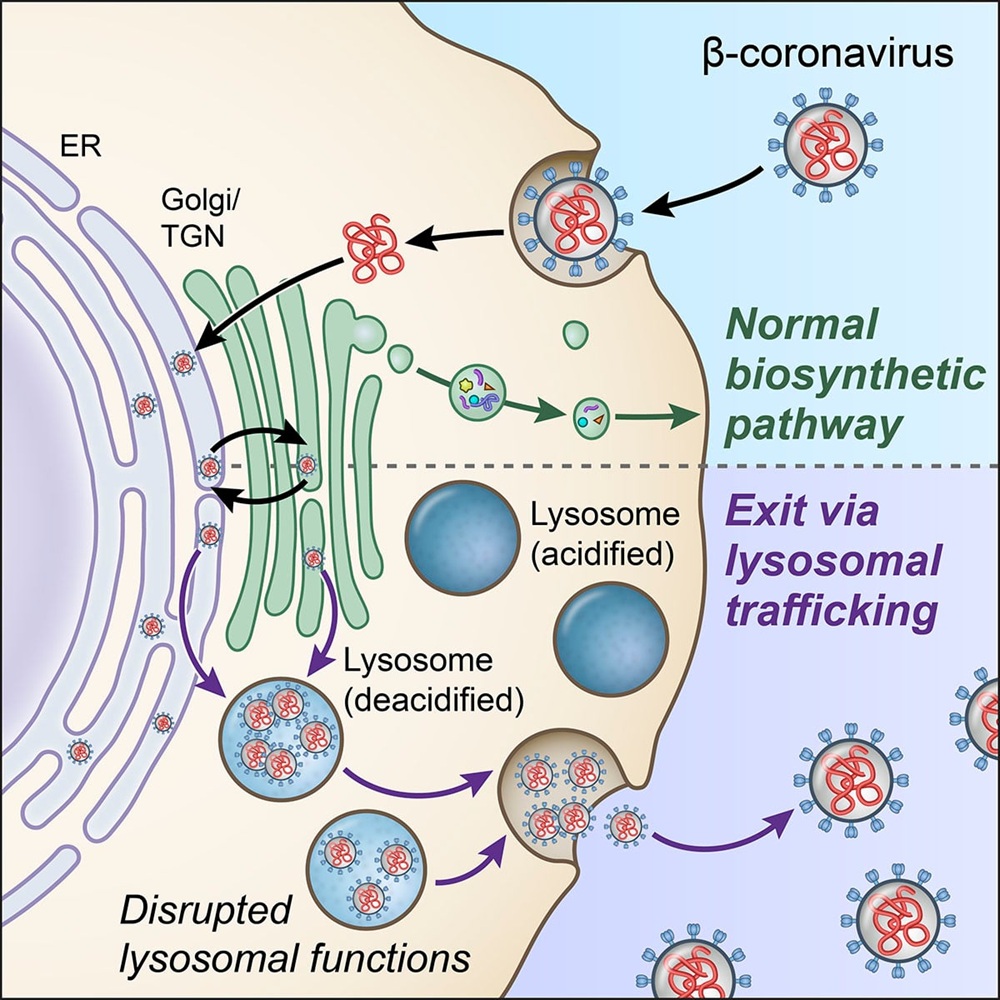
In cell studies, the researchers showed for the first time that the coronavirus can exit infected cells through the lysosome, an organelle known as the cells’ “trash compactor.” Normally the lysosome destroys viruses and other pathogens before they leave the cells. However, the researchers found that the coronavirus deactivates the lysosome’s disease-fighting machinery, allowing it to freely spread throughout the body.
Targeting this lysosomal pathway could lead to the development of new, more effective antiviral therapies to fight COVID-19. The findings, published today in the journal Cell, come at a time when new coronavirus cases are surging worldwide, with related U.S. deaths nearing 225,000.
Scientists have known for some time that viruses enter and infect cells and then use the cell’s protein-making machinery to make multiple copies of themselves before escaping the cell. However, researchers have only a limited understanding of exactly how viruses exit cells.
Conventional wisdom has long held that most viruses—including influenza, hepatitis C, and West Nile—exit through the so-called biosynthetic secretory pathway. That’s a central pathway that cells use to transport hormones, growth factors, and other materials to their surrounding environment. Researchers have assumed that coronaviruses also use this pathway.
The researchers also discovered that disrupting normal lysosome function appears to harm the cells’ immunological machinery. “We think this very fundamental cell biology finding could help explain some of the things people are seeing in the clinic regarding immune system abnormalities in COVID patients,” Altan-Bonnet said. This includes cytokine storms, in which an excess of certain pro-inflammatory proteins in the blood of COVID patients overwhelm the immune system and cause high death rates.
Now that this mechanism has been identified, researchers may be able to find ways to disrupt this pathway and prevent lysosomes from delivering viruses to the outside of the cell; or re-acidify lysosomes in order to restore their normal functions in coronavirus-infected cells so they can fight COVID. The authors have already identified one experimental enzyme inhibitor that potently blocks coronaviruses from getting out of the cell.
Tags:
Source: National Institutes of Health
Credit: Illustration: Illustration: Components of the lysosome exocytosis pathway, which coronaviruses use to exit cells. Also shown are components of the normal biosynthetic secretory pathway. Courtesy: National Institutes of Health.