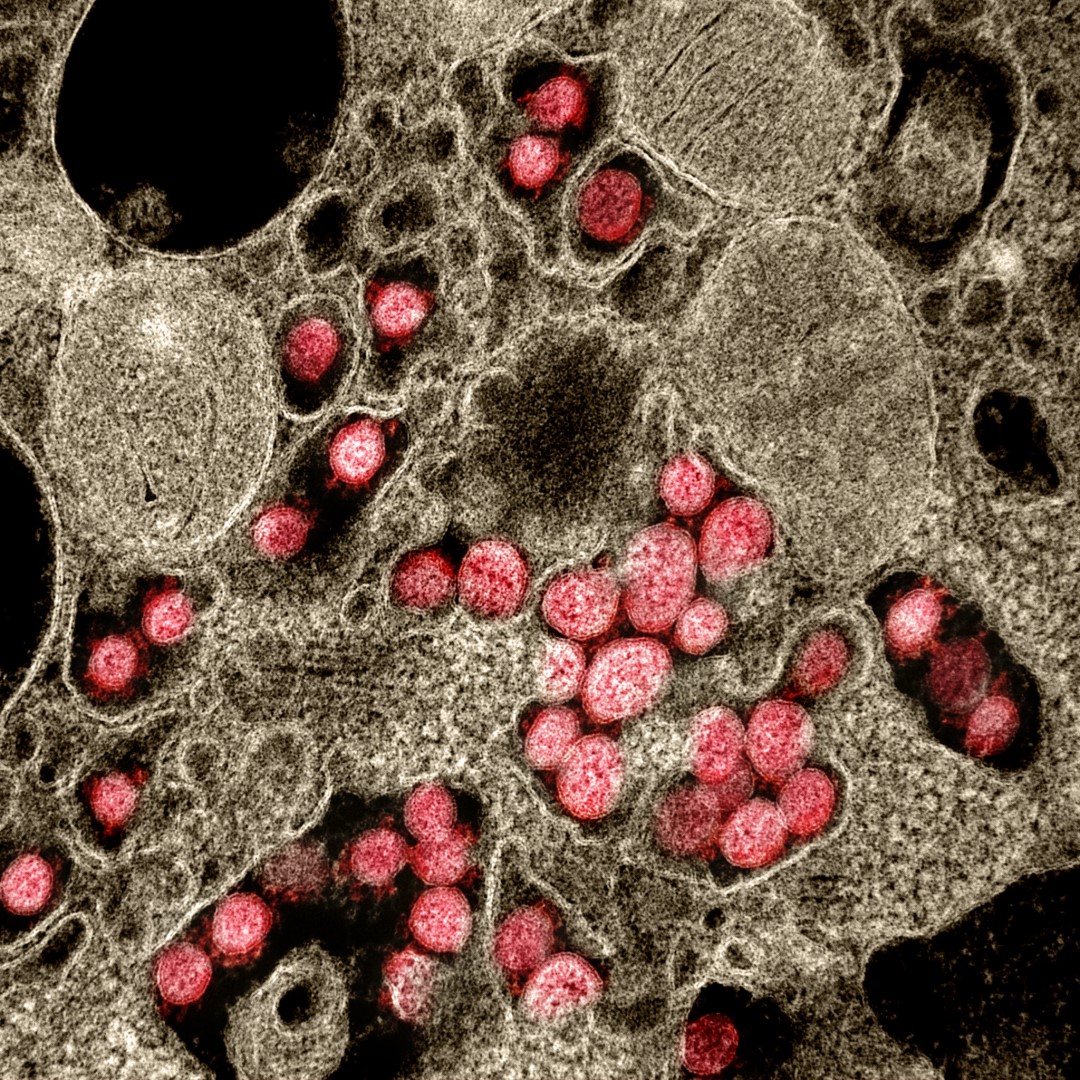
Mutated coronavirus shows significant boost in infectivity
On Jun. 12, 2020, a tiny genetic mutation in the SARS coronavirus 2 variant circulating throughout Europe and the U.S. significantly increases the virus’ ability to infect cells, lab experiments performed at Scripps Research show.
The mutation had the effect of markedly increasing the number of functional spikes on the viral surface, she adds. Those spikes are what allow the virus to bind to and infect cells.
The spikes give the coronavirus its crown-like appearance and enable it to latch onto target cell receptors called ACE2. The mutation, called D614G, provides greater flexibility to the spike’s “backbone,” explains co-author Michael Farzan, PhD, co-chairman of the Scripps Research Department of Immunology and Microbiology.
There has been much debate about why COVID-19 outbreaks in Italy and New York have so quickly overwhelmed health systems, while early outbreaks in places like San Francisco and Washington state proved more readily managed, at least initially. Was it something about those communities and their response, or had the virus somehow changed?
All viruses acquire minute genetic changes as they reproduce and spread. Those changes rarely impact fitness or ability to compete. The SARS-CoV-2 variant that circulated in the earliest regional outbreaks lacked the D614G mutation now dominating in much of the world.
The addition of the D614G mutation means that the amino acid at that location is switched from aspartic acid to glycine. That renders it more bendable, Farzan says. Evidence of its success can be seen in the sequenced strains that scientists globally are contributing to databases including GenBank, the duo reports. In February, no sequences deposited to the GenBank database showed the D614G mutation. But by March, it appeared in 1 out of 4 samples. In May, it appeared in 70 percent of samples, Farzan says.
It is still unknown whether this small mutation affects the severity of symptoms of infected people, or increases mortality, the scientists say. While ICU data from New York and elsewhere reports a preponderance of the new D614G variant, much more data, ideally under controlled studies, are needed, Choe says.
Tags:
Source: Scripps Research
Credit: