Interferon became the first anticancer drug produced through biotechnology
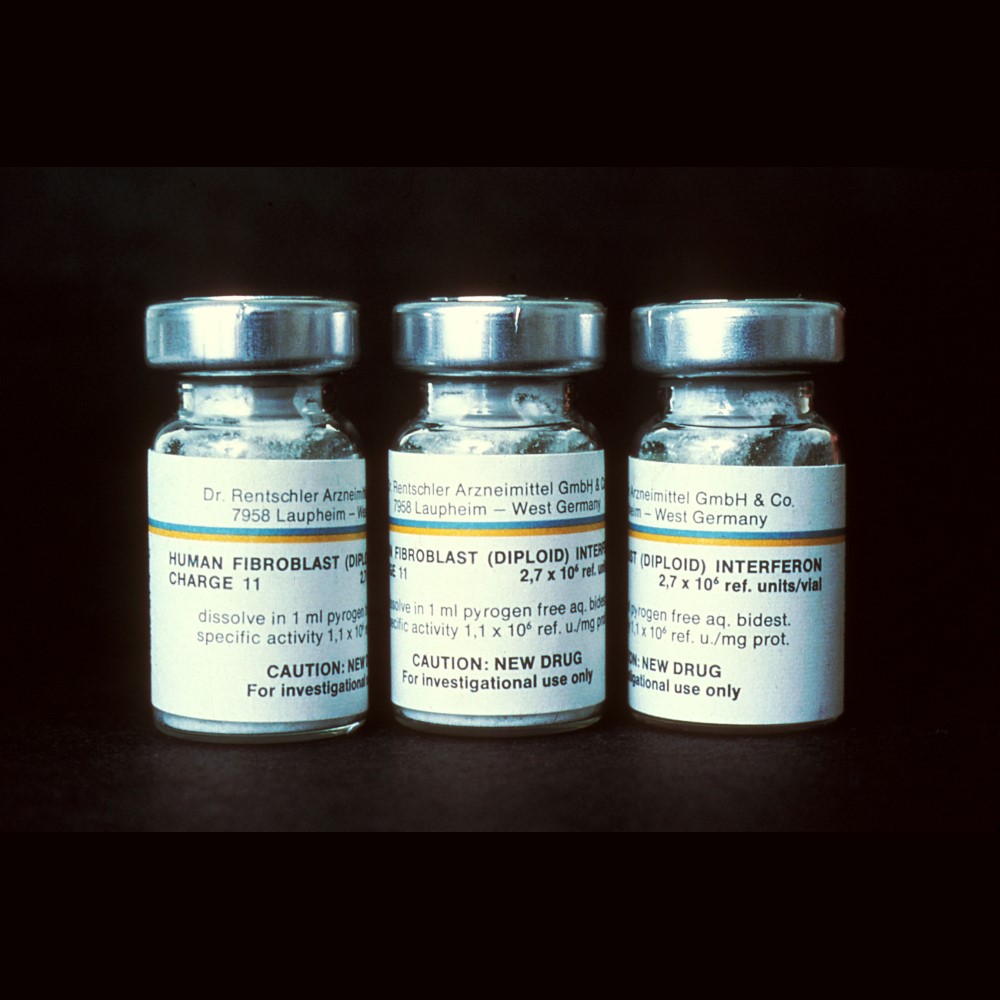
On Jun. 5, 1986, the U.S. Food and Drug Administration (FDA) approved Hoffmann La Roche’s Interferon initially for treatment of hairy cell leukemia, and later for chronic myelogenous leukemia, non-Hodgkin’s lymphoma, malignant melanoma, and Kaposi’s sarcoma. Interferon alpha (IFN-a), a cytokine that is responsible for regulating and activating the immune response, became the first anticancer drug produced through biotechnology for cancer treatment.
The trial results for the handful indications for which Roferon A was approved in 1986 were good, but for common ‘solid’ cancers such as breast, colon or lung cancer—the big killers—results were disappointing.
Rather than being administered as a single agent, interferon was included in a growing number of combination treatment regimes, both experimental and routine, for a variety of conditions. However, rather than one of many immunomodulators as initially envisaged, Roferon A remained the only compound of this type in Roche’s product portfolio.
While it did not bring the expected immunomodulator revolution in cancer therapy and the treatment of viral disease, though, it marked the beginning of a different kind of transformation, much slower but no less significant for the company. By the early twenty-first century, Roche was the leading producer world-wide of cancer medicines, with a portfolio of targeted cancer drugs and major investments in diagnostic technologies, wholeheartedly embracing the ideas associated with the label ‘personalised medicine.’
While developing recombinant human interferon alpha into Roferon A, a declared goal of Roche’s research managers was to not depend on Genentech in the future, but acquire the expertise needed to produce protein compounds with recombinant DNA technology in-house.
Tags:
Source: U.S. National Library of Medicine
Credit: Photo: Interferon Bottles, Courtesy: Linda Bartlett, National Cancer Institute, 1980.