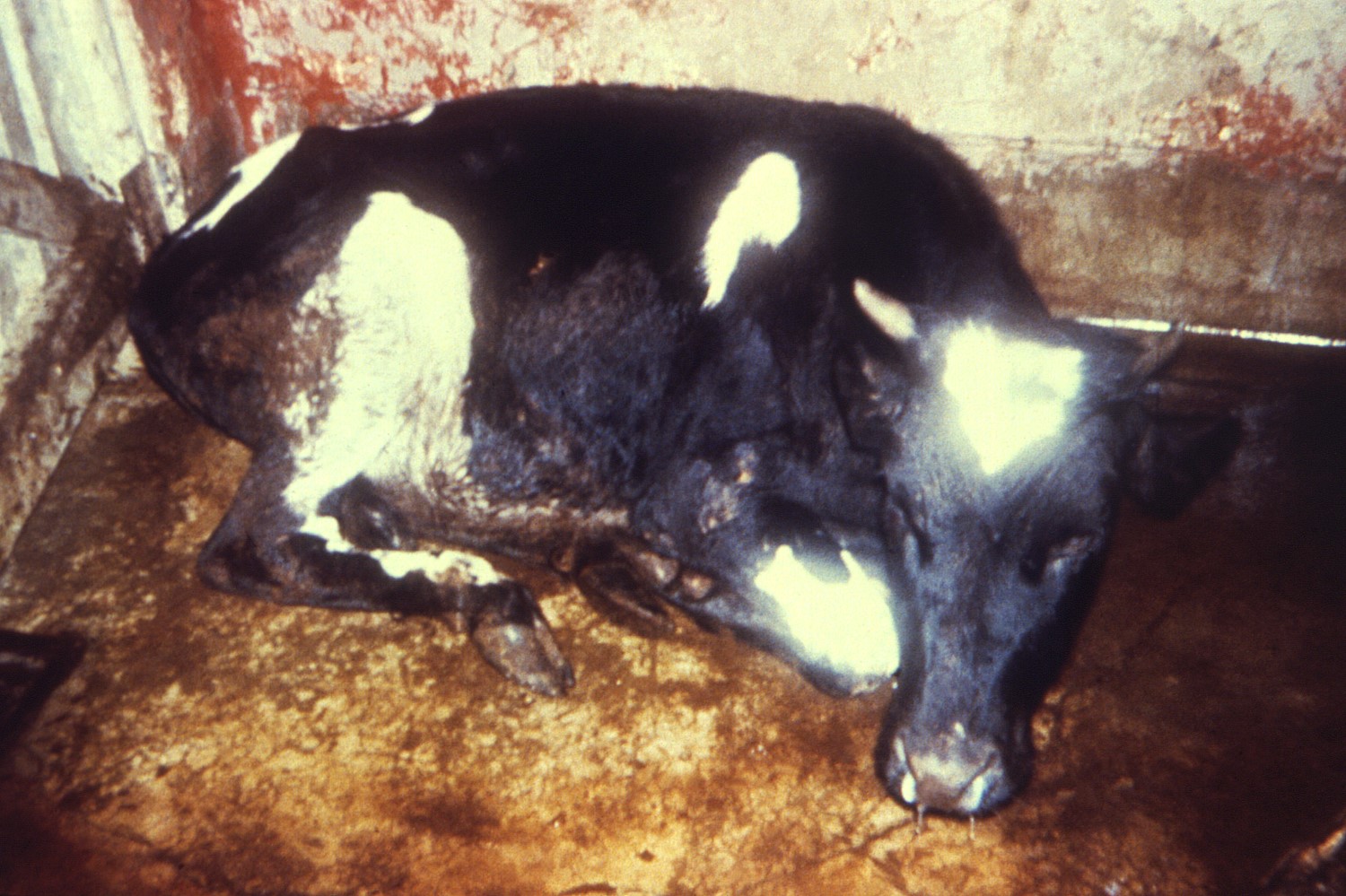
Global eradication of rinderpest (cattle plague) was declared
On Jun. 28, 2011, during the 37th United Nations Food and Agriculture Organization Conference, the 192 Member countries of the Food and Agriculture Organization adopted a Resolution declaring global freedom from rinderpest, making it the first animal disease to be eliminated thanks to human efforts, and only the second disease of any kind, after smallpox in humans.
Rinderpest (a.k.a. cattle plague or steppe murrain) is a contagious and highly-fatal disease of cattle, including antelope, buffaloes, deer, giraffes, wildebeests, warthogs and yaks. Rinderpest is caused by a morbillivirus related to human measles, canine distemper and peste des petits ruminants.
RPV transmission typically results from close contact with an infected animal via inhalation of virus-containing nasal, oral, or fecal secretions. Classical disease progression includes a silent incubation period lasting 8–11 days, prodromal fever, a mucosal phase beginning 4–5 days after fever onset, and a violent diarrheal stage lasting 1–2 days, followed by either dehydration and death or gradual recovery. Mortality rates approaching 100% have been documented, but milder forms of enzootic disease, attributed to stable strains of reduced virulence, sometimes cause mortality rates as low as 5%–10%.
Tags:
Source: U.S. National Library of Medicine
Credit: