Custom face shields aimed to block droplets, tackled COVID-19 for football players
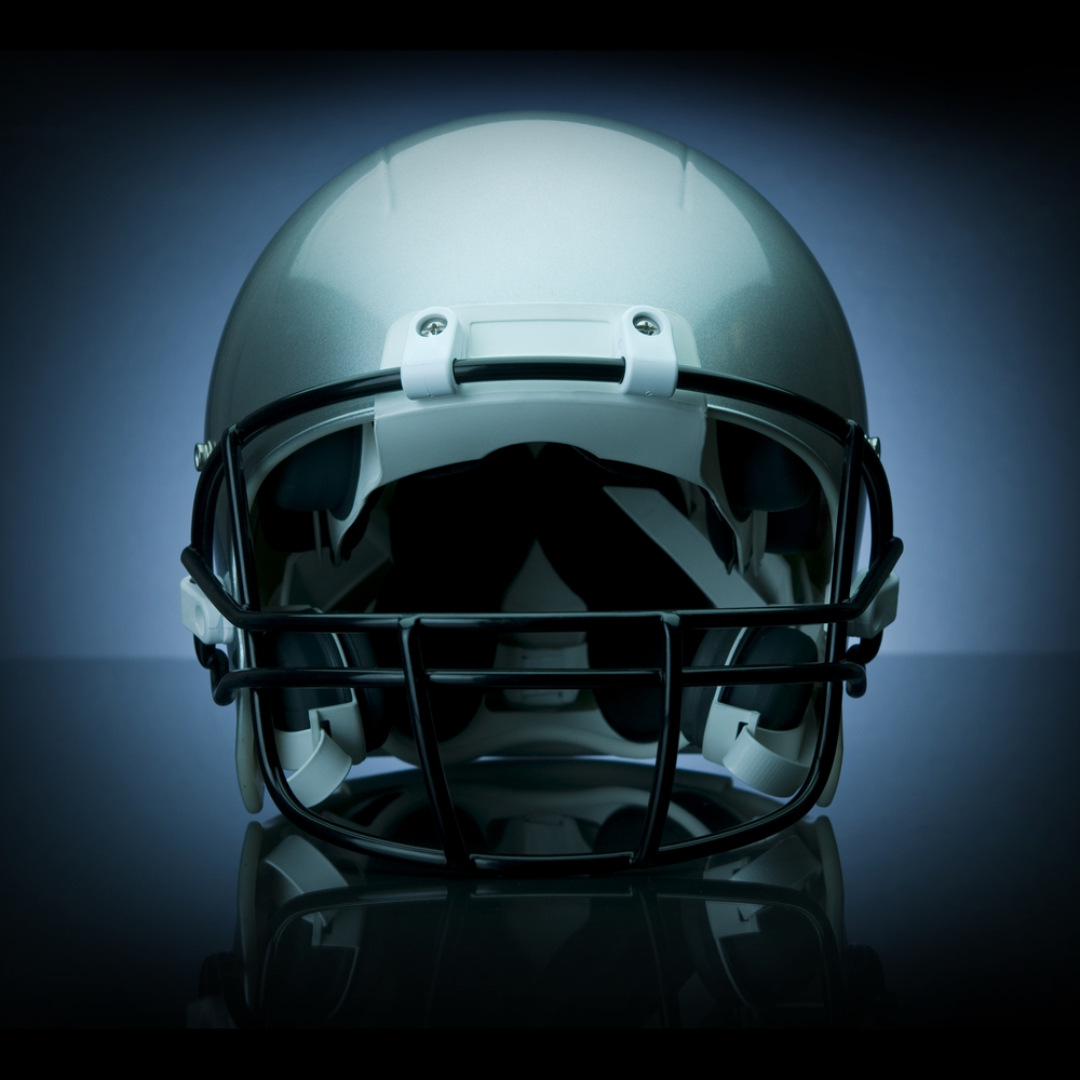
On Sept. 2, 2020, researchers from the Virginia Tech Helmet Lab announced the development of a football helmet that will reduce the risk of COVID-19. The Virginia Tech Helmet Lab is known for its Virginia Tech Helmet Ratings.
Football is a contact sport. Tackles and huddles and scrimmages position players inches from each other’s faces over and over again. Close contact is integral to the game, but it’s also the primary way that SARS-CoV-2, the novel coronavirus that causes COVID-19, finds new hosts, carried in respiratory droplets released by someone with an infection.
Stefan Duma, the Harry Wyatt Professor of Engineering and the founding director of the Virginia Tech Helmet Lab; Mike Goforth, the associate athletics director for sports medicine; and Mark Rogers, the chief medical officer for Virginia Tech Athletics, have spent years working to reduce risk in football. Now, the group whose long collaboration has pushed the frontier of head-impact research in collegiate sports and produced the respected Virginia Tech Helmet Ratings has turned their attention to reducing the risk of COVID-19.
The team worked their way through multiple designs over the early weeks of the project, working long hours and weekends to compress months of work into weeks. Football players came in every day to test out prototypes, weighing in on visibility and breathability. Ultimately, the design that met their criteria of efficacy, wearability, and ease of production was a deceptively simple solution: a shield pieced together from two visors. The upper half is a commercially available visor — in fact, many players already wear one for eye protection. A second visor, turned upside down and trimmed to fit the helmet, sits directly below the first one and covers the lower half of the face.
The test setup Hull developed for the shield was inspired in part by a line of scrimmage, where players face each other across a football-sized gap. The time players linger here, Hull reasoned, might make this one of the riskiest formations for coronavirus transmission. With that as a real-world reference point, Hull reworked a typical face-shield testing protocol, conducting spray tests in NanoSafe’s cleanroom in the Corporate Research Center. The tests measured how many droplets could escape from a helmet fitted with the dual-visor shield, and how many could make it in from outside.
The research team was particularly interested in droplets smaller than 300 nanometers, the standard that’s used to certify the N95 masks used by frontline workers. The dual-visor shield blocked more than 99 percent of them. Meanwhile, impact tests in the helmet lab verified that the visors could withstand the forces that regularly pummel players’ helmets on the field.
A Kelly Hall conference room, vacated as meetings have migrated to Zoom, now holds a makeshift assembly line where the shields are trimmed, filed, and installed in helmets for any Virginia Tech football player who wants one. The team is working on streamlining the process so it can be scaled up and has shaved the production time down to about five minutes per shield. They’re also exploring the idea of treating the shields with a coating developed by a Virginia Tech chemistry professor that has inactivated the coronavirus in lab tests.
Tags:
Source: Virginia Tech
Credit: