CDC Reports 1,645 confirmed Cyclosporiasis Cases in Multiple U.S. States, 600% increase over Last Year
On Jul. 14, 2026, the Centers for Disease Control and Prevention announced it is notifying clinicians, public health practitioners, and laboratorians of cases of domestically acquired in multiple U.S. states.
Since May 1, 2026, CDC has received reports of 1,645 confirmed domestic cases of cyclosporiasis and is aware of more than 5,100 cases that require further analysis to confirm the illness as domestically acquired cyclosporiasis. This is substantially higher than the 249 cases reported nationally by this same time last year. Of the 1,645 case-patients with available information, 141 (9%) were hospitalized, and none have died.
The CDC, the U.S. Food and Drug Administration (FDA), and state and local health departments are working together to investigate multistate outbreaks of Cyclospora infections and to identify the sources of illness. Because cyclosporiasis is often underdiagnosed and underreported, the true number of illnesses is likely higher than what has been reported to CDC. This Health Advisory provides background information about cyclosporiasis, current U.S. surveillance data, and recommendations for clinicians, laboratorians, and public health departments to support recognition, diagnosis, and reporting.
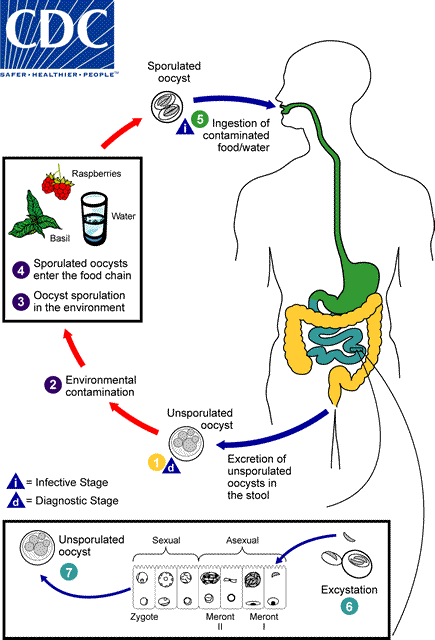
Cyclosporiasis is a gastrointestinal illness caused by the microscopic parasite Cyclospora. People can become infected by consuming food or water contaminated with the parasite. This illness is not usually spread directly from person to person. C
ase counts typically rise during spring and summer months, and CDC considers May 1-August 31 the annual cyclosporiasis season. Previous outbreaks have been linked to consuming contaminated fresh produce.
Tags:
Source: U.S. Centers for Disease Control and Prevention
Credit: