Artificial Womb Construction Nearing Completion
On May 19, 2026, Colossal Biosciences announced it is developing a functional artificial womb capable of growing a mammal entirely outside the body of another animal — and the de-extinction company says it has now cleared every major technical hurdle except one. The progress, disclosed during a visit to Colossal’s 55,000-square-foot headquarters in February 2026, represents what company leadership describes as the final step toward making animal reproduction fully “productionized” at industrial scale.
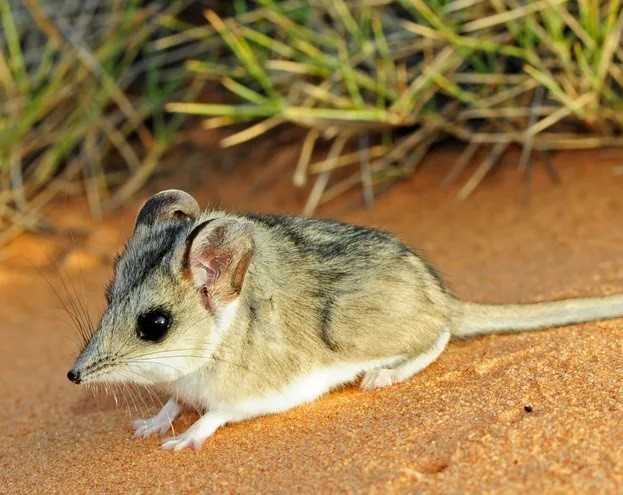
The artificial womb project at Colossal Biosciences is designed to eliminate the need for a living surrogate animal to carry a pregnancy to term. The system, overseen by Chief Biology Officer Andrew Pask at Colossal’s Australian laboratory, uses a dialysis-like apparatus of inputs and outputs paired with proprietary algorithms and AI to measure chemical signals from developing embryos, determine what gases and nutrients are needed, and deliver those inputs robotically in real time. The platform was developed initially to support the fat-tailed dunnart, an Australian marsupial with a 13-day gestation period — one of the shortest of any mammal — chosen as a development model because of that compressed timeline.
Colossal Biosciences included artificial womb development in its founding roadmap because surrogacy cannot scale to the company’s production targets for revived species. The woolly mammoth — one of Colossal’s four flagship de-extinction projects, with a target birth date of late 2028 — has a 22-month gestation period, and its closest living relative, the Asian elephant, is itself an endangered species whose reproductive capacity should not be diverted to mammoth pregnancies. “We don’t want to do a thousand elephant IVFs, right?” Lamm said. “But eventually we want to do thousands of mammoths. So artificial wombs have been on the plan from day one.”
Tags:
Source: Colossal Biosciences
Credit: Photo: Sandhill Dunnart (Sminthopsis psammophila). Courtesy: Alinytjara Wilurara Landscape Board & Wikipedia.