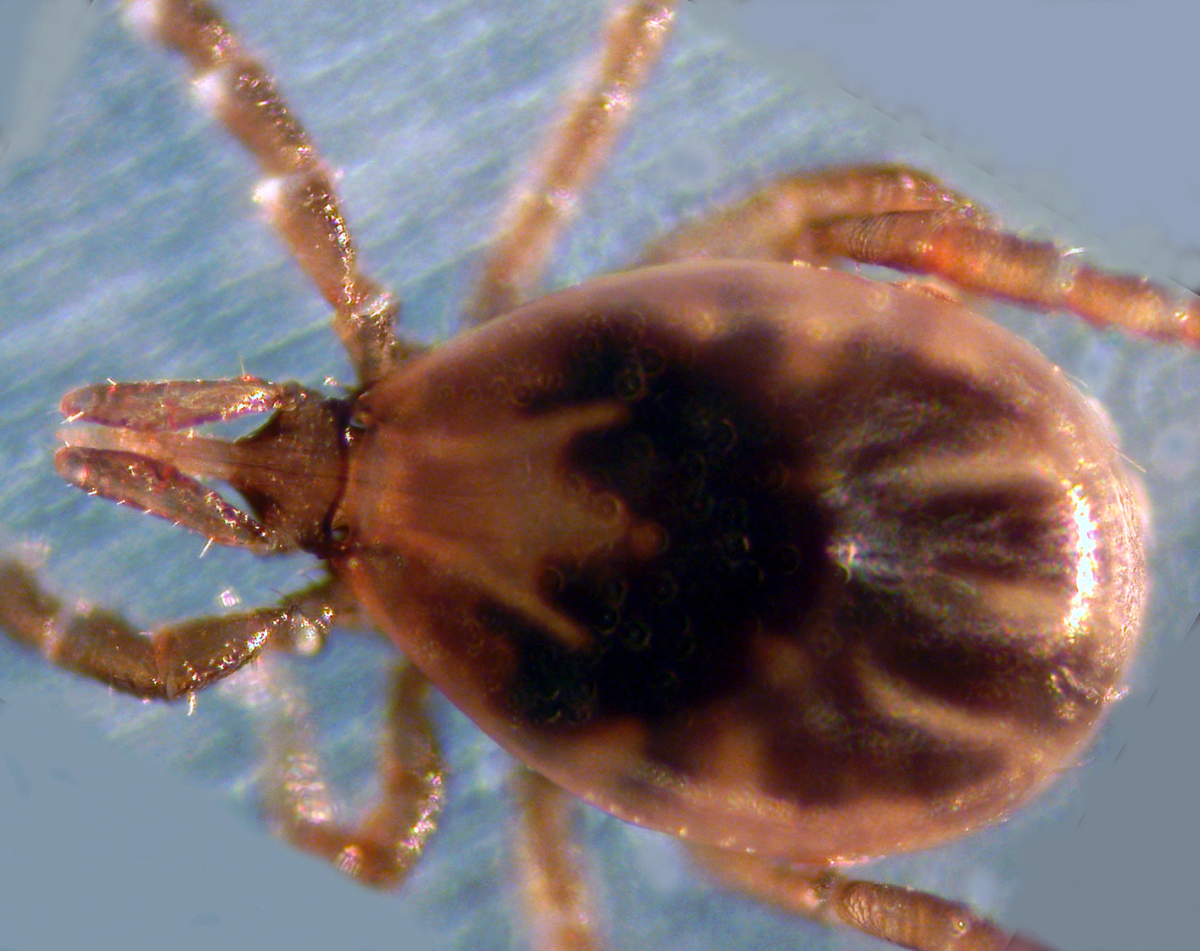
Ancient History of Lyme Disease in North America Revealed with Bacterial Genomes
On Aug. 28, 2017, a team of researchers led by the Yale School of Public Health announced they had found that the Lyme disease bacterium is ancient in North America, circulating silently in forests for at least 60,000 years—long before the disease was first described in Lyme, Connecticut, in 1976 and long before the arrival of humans. For the first time, the full genomes of the Lyme disease bacterium, Borrelia burgdorferi, were sequenced from deer ticks to reconstruct the history of this invading pathogen.
The finding shows that the ongoing Lyme disease epidemic was not sparked by a recent introduction of the bacterium or an evolutionary change—such as a mutation that made the bacterium more readily transmissible. It is tied to the ecological transformation of much of North America. Specifically, forest fragmentation and the population explosion of deer in the last century have created optimal conditions for the spread of ticks and triggered this ongoing epidemic.
Katharine Walter conducted the research while a doctoral student at Yale School of Public Health and is lead author of the study published in Nature Ecology and Evolution. “The Lyme disease bacterium has long been endemic,” she said. “But the deforestation and subsequent suburbanization of much of New England and the Midwest created conditions for deer ticks—and the Lyme disease bacterium—to thrive.”
Lyme disease is the most common vector-borne disease in North America. Since it was first described in the 1970s, the disease has rapidly spread across New England and the Midwest. Reported cases of Lyme disease have more than tripled since 1995 and the Centers for Disease Control and Prevention now estimate that more than 300,000 Americans fall ill each year.
This findings clarify that the bacterium is not a recent invader. Diverse lineages of B. burgdorferi have long existed in North America and the current Lyme disease epidemic is the result of ecological changes that have allowed deer, ticks and, finally, bacterium to invade.
The explosion of deer in the twentieth century into suburban landscapes, free of wolf predators and with strict hunting restrictions, allowed deer ticks to rapidly invade throughout much of New England and the Midwest. Climate change has also contributed. Warmer winters accelerate ticks’ life cycles and allow them to survive an estimated 28 miles further north each year.
Ticks expanded into suburbanized landscapes—full of animals like white-footed mice and robins, excellent hosts for B. burgdorferi. The expansion of ticks into habitats with ideal hosts allowed the bacterium to spread.
Tags:
Source: Yale University
Credit: