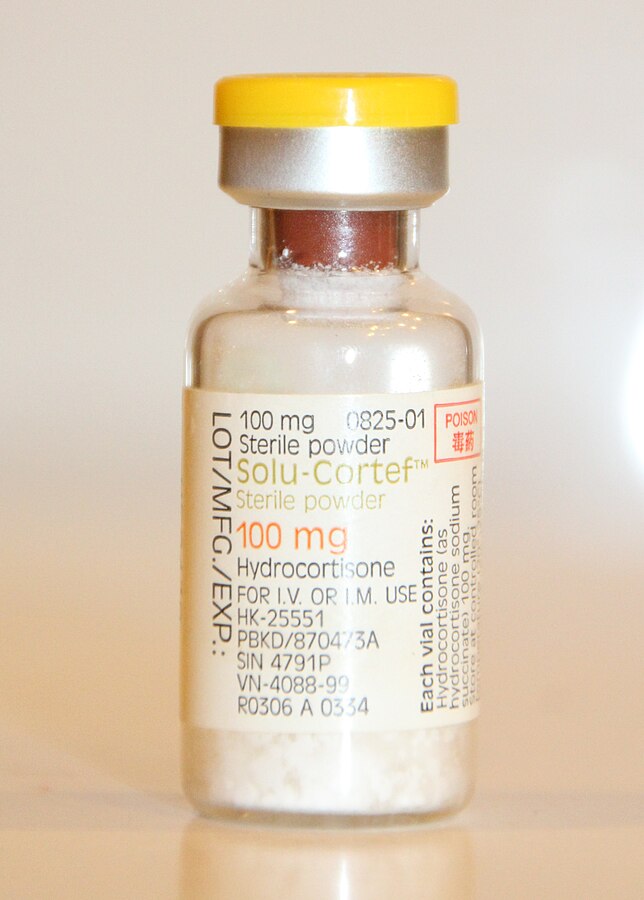
A patient at Saint Marys Hospital received the first injection of Compound E (Cortisone) for rheumatoid arthritis
On Sept. 21, 1948, a 28-year-old woman at Saint Marys Hospital (Mayo Clinic) in Rochester, MN received the first injection of Compound E (Cortisone) for rheumatoid arthritis.
This dose was continued daily for some days. She began to feel better by the second day, and by the third day few symptoms remained. On September 28, 1948, a week after the first patient was treated, Hench left Rochester to give a lecture in London at the Heberden Society, according to a previous agreement. Thus, he was absent during the early phases of the trial
Because of the unexpectedly good results in the first patients, it was decided that a placebo-controlled study should be performed. Cholesterol suspensions, which looked like cortisone suspensions, were prepared by a Mayo endocrinologist who was not involved in the clinical care of the patients and was skeptical of the early results. Cholesterol or cortisone injections were assigned randomly to a series of patients with rheumatoid arthritis during the next months. The 2 clinical investigators, Slocumb and Polley, as well as the patients, were “blinded” to which injection was administered. It was easy to distinguish which patient got the cortisone injections, especially at the daily dosage of 100 mg to 300 mg.
The initial report of cortisone treatment in Mayo Clinic Proceedings in April 1949 included results of 14 patients with moderately severe or severe rheumatoid arthritis.80 All showed marked improvement while receiving cortisone. Two also received ACTH (adrenocorticotropic hormone), and their improvement was similar to that with cortisone.
In 1949 the effect of cortisone was evaluated in acute rheumatic fever.83 In the first 3 patients, the symptoms of fever, tachycardia, and polyarthritis rapidly disappeared, and the erythrocyte sedimentation rate normalized, as did abnormalities on the electrocardiograms.
Tags:
Source: U.S. National Library of Medicine
Credit: