Scientists Sequence Genome of Watermelon seeds
On Jul. 30, 2022, scientists announced they had sequenced the genome of a 6,000-year-old Citrullus seeds that revealed the use of a bitter-fleshed species prior to watermelon domestication. The findings were published in Molecular Biology and Evolution.
The team generated genome sequences from 6,000- and 3,300-year-old seeds from Libya and Sudan, and from worldwide herbarium collections made between 1824 and 2019, and analyzed these data together with resequenced genomes from important germplasm collections for a total of 131 accessions. Phylogenomic and population-genomic analyses reveal that much of the nuclear genome of both ancient seeds is traceable to West African seed-use “egusi-type” watermelon (Citrullus mucosospermus) rather than domesticated pulp-use watermelon (Citrullus lanatus ssp. vulgaris); the 6,000-year-old watermelon likely had bitter pulp and greenish-white flesh as today found in C. mucosospermus, given alleles in the bitterness regulators ClBT and in the red color marker LYCB; and both ancient genomes showed admixture from C. mucosospermus, C. lanatus ssp. cordophanus, C. lanatus ssp. vulgaris, and even South African Citrullus amarus, and evident introgression between the Libyan seed (UMB-6) and populations of C. lanatus.
An unexpected new insight is that Citrullus appears to have initially been collected or cultivated for its seeds, not its flesh, consistent with seed damage patterns induced by human teeth in the oldest Libyan material.
This study revealed the Neolithic use in Libya of a form of Citrullus that was genetically close to today’s seed use, bitter-fleshed, egusi-type watermelon (Citrullus mucosospermus), now restricted to Ghana, Benin, and Nigeria in West Africa.
Tags:
Source: Oxford University Press
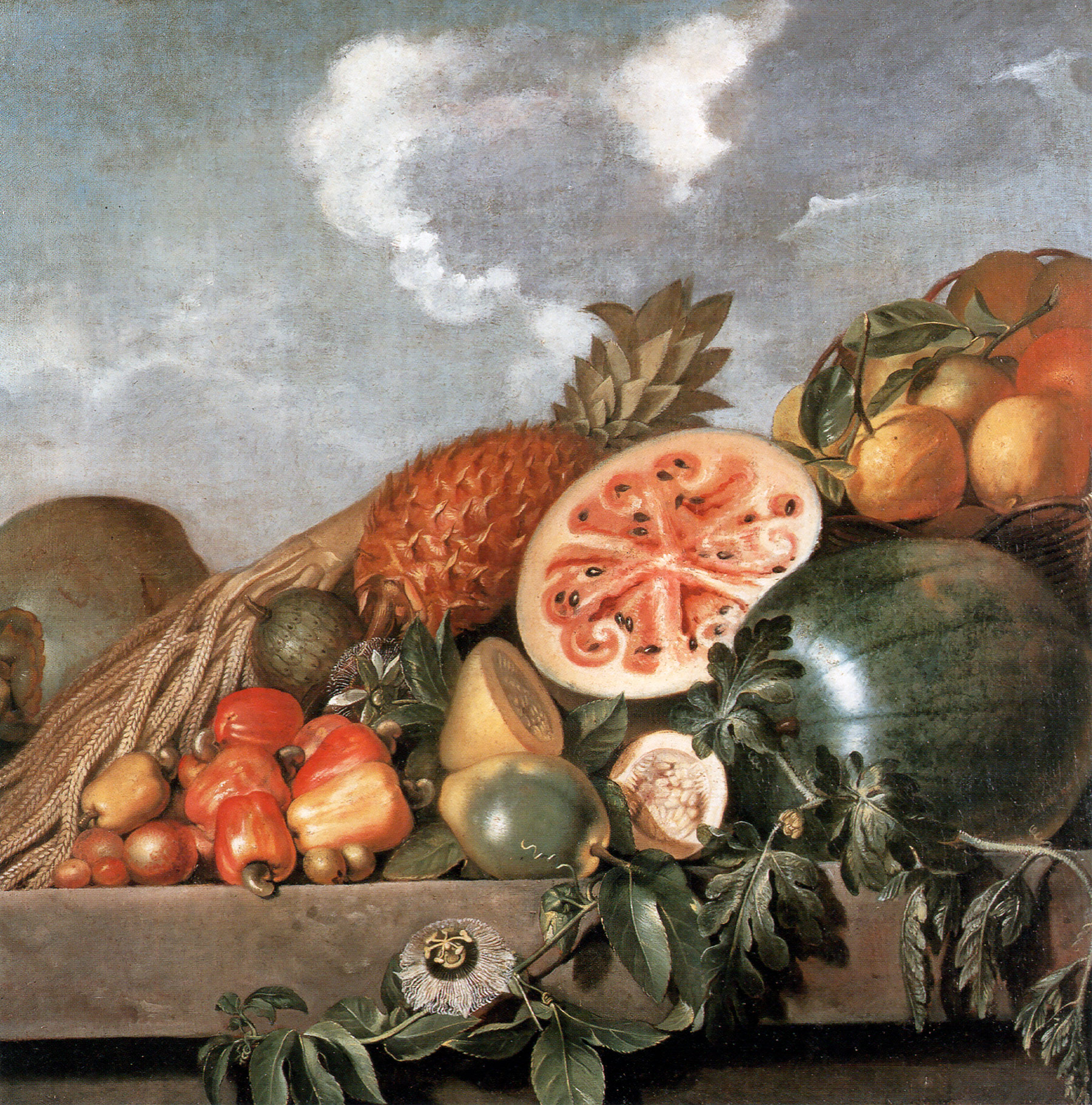
Credit: Still Life with Watermelons, Pineapple and Other Fruit by Albert Eckhout, a Dutch painter active in 17th-century Brazil.