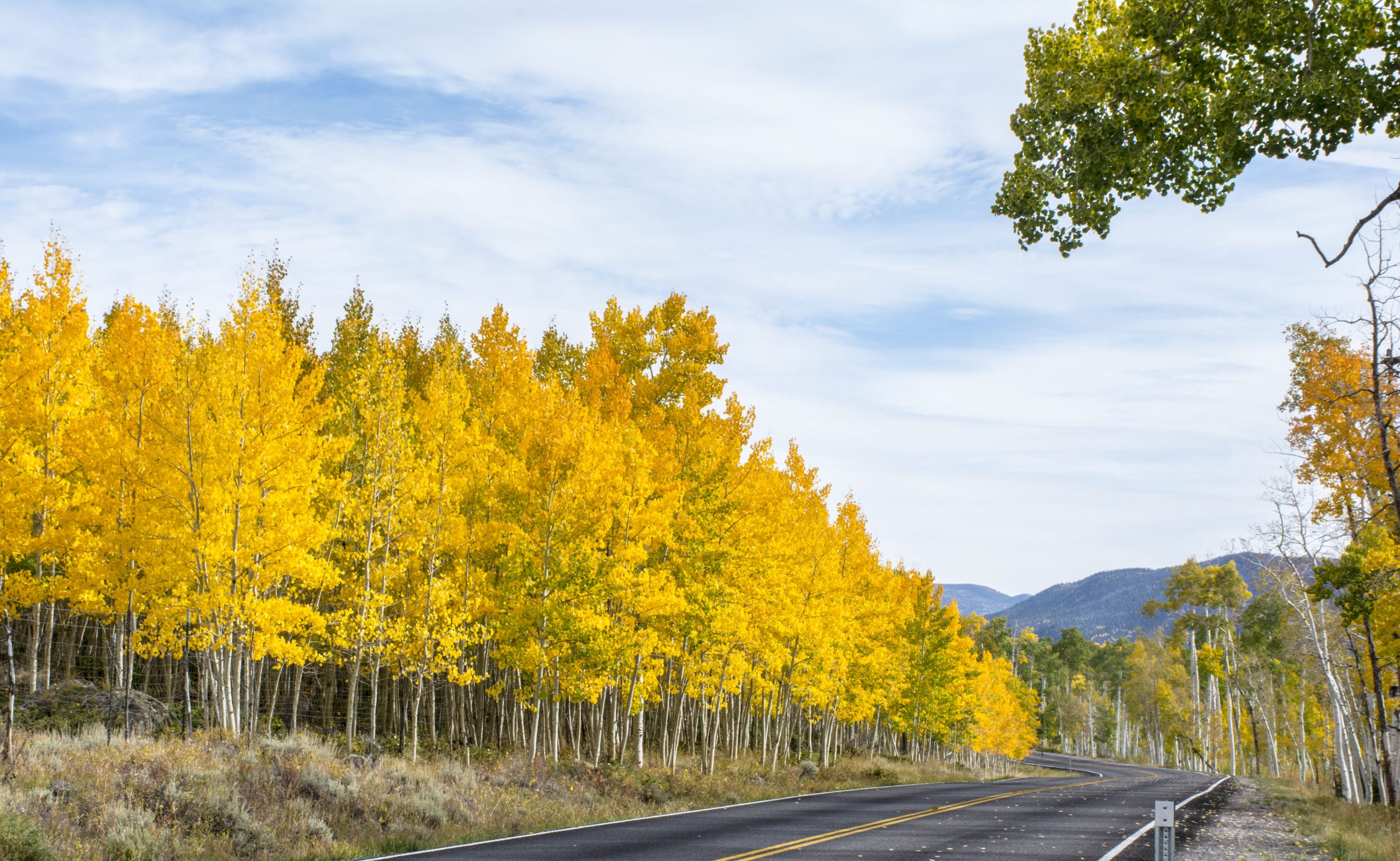
Utah State University Scientist Identified World’s Largest Organism
On Sept. 30, 2010, Utah State University geneticist Karen Mock announced that testing of a forest-size collection of Quaking aspen trees, which covers 106 acres in south central Utah’s Fishlake National Forest, has confirmed the clone’s genetic identity as one enormous plant.
The forest named Pando, which means “I spread” in Latin, consists of more than 47,000 genetically identical above ground stems or “ramets” originating from a single underground parent clone. Anyone who has battled stray aspen suckers in their lawns or under their decks will have no trouble envisioning this stand of trees.
Despite its tremendous size and longevity (scientists suspect the parent clone’s age spans thousands of years), the clone may be threatened by problems impacting many aspen forests of the American West. It’s having difficulty reproducing.
Paul Rogers, adjunct faculty member in USU’s College of Natural Resources and director of the Western Aspen Alliance, recently visited Pando as part of the U.S. Forest Service-chartered Utah Forest Restoration Working Group.
“We were alarmed by what we observed,” he says. “We saw die-off of older trees, which is part of the plant’s natural life cycle. What we didn’t see were many mid-level aspen or much regeneration of stems. There’s very little understory and this could impact the clone’s long-term survival.”
Pando is under intense and ongoing browsing pressure, he says, primarily from deer and elk and possibly from livestock. While it’s too soon to jump to conclusions about the causes, the colony’s condition points to an ecosystem out of balance.
Tags:
Source: Utah State University
Credit: Photo: Pando aspen clone derived forest. Courtesy: U.S. Forest Service.