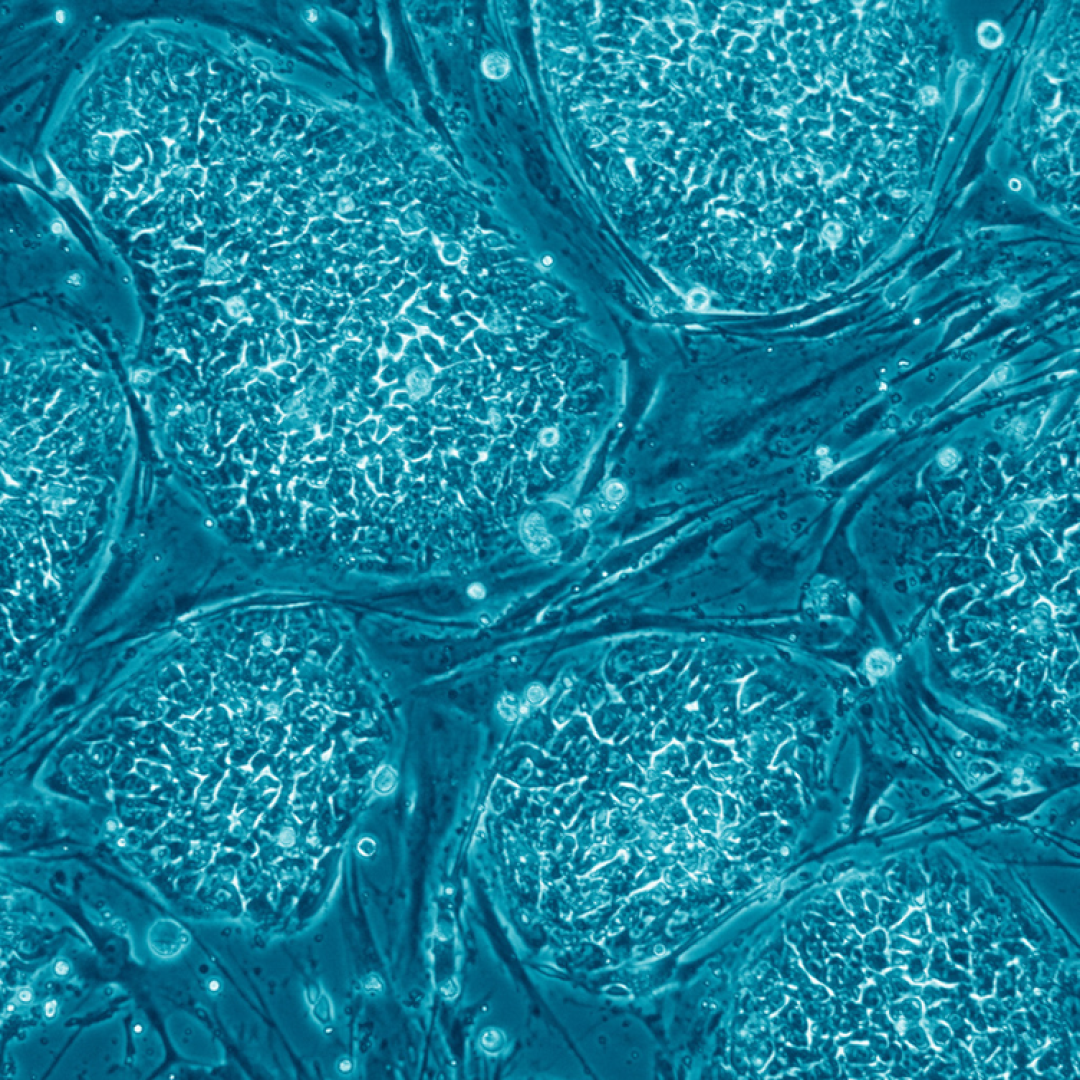
UGA received $8.3 million grant from the NIH to research stem cells and cancer cells
On Oct. 8, 2008, the National Institutes of Health (NIH) announced it had awarded the University of Georgia (UGA) a five-year, $8.3 million grant to further its research into the role cell-surface sugars known as glycans play in the development of stem cells and cancer cells. The grant allowed UGA to continue its role as a National Center for Research Resources Center for Biomedical Glycomics.
“The UGA Complex Carbohydrate Research Center is one of the few comprehensive facilities in the world equipped to study the role of glycans in human health,” said Michael Pierce, the principal investigator on the grant and Mudter Professor in Cancer Research. “With this grant, our team will continue to develop state of the art technology to analyze cell-surface markers of stem cells and cancer cells.”
While genomics seeks to understand an organism’s genes and proteomics concentrates on proteins, the field of glycomics focuses on the sugars that adorn cells and proteins and the role these sugars play in processes as diverse as development, the immune response and the formation and spread of tumors.
Pierce explained that while DNA is made up of just four nucleic acids in a double helix and proteins are made up of 20 amino acids arranged in a linear chain, human glycans can be comprised of more than ten sugar building blocks arranged in different branching patterns, with each sugar subject to additional modifications. “The best way to think of it is like branches on a tree,” said Pierce, who also directs the UGA Cancer Center. “Not only do you have to figure out how many branches there are, you also have to figure out which sugars are present on each branch, and then where each branch starts and stops.”
UGA became an NIH-designated Center for Biomedical Glycomics in 2003 after receiving a $6.2 million grant from the agency. Since then, UGA researchers have used mouse cells to understand the role glycans play in the differentiation of stem cells into more specialized cells and to find specific glycans that have the potential to serve as markers for stem cells and for various cancers. With the latest grant, Pierce and his colleagues will follow the same line of research, but now using human cells.
Tags:
Source: University of Georgia
Credit: