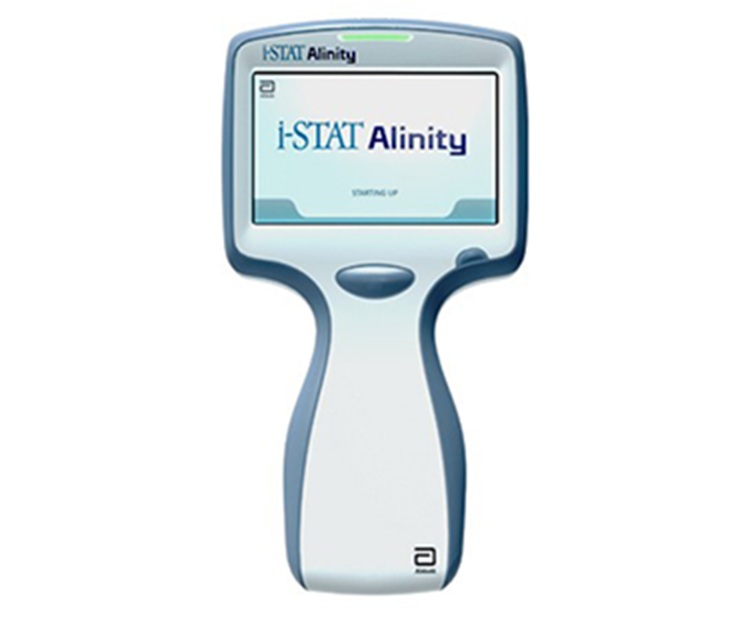
U.S. Army receive new medical equipment to detect TBIs faster
On Jul. 16, 2026, U.S. Army medical leaders in Europe announced they were fielding a new handheld diagnostic tool that can identify traumatic brain injuries in as little as 15 minutes. The i-STAT Alinity by Abbott uses a small blood sample to detect biomarkers released after a brain injury occurs.
“This is probably the single most important advancement in traumatic brain injury care in the last 15 to 20 years,” said Lt. Col. Bradley A. Dengler, the neurosurgery consultant to the Army Surgeon General and director of the Military Traumatic Brain Injury Initiative at the Uniformed Services University. “Historically, we’ve missed a lot of these injuries.”
Unlike traditional concussion evaluations that are subjective questioning, the new system gives medics an objective way to determine whether a Soldier has suffered neural damage. For Soldiers operating in remote environments, that speed and accuracy can mean the difference between returning safely to duty, receiving immediate treatment, or avoiding a potentially life-threatening delay in care.
The system is currently being integrated into forward units under 10th Army Air and Missile Defense Command. Air defense formations are highly dispersed, frequently operating in austere locations hours away from advanced medical facilities and computed tomography, or CT, scanners.
The handheld device functions by measuring two brain-specific proteins that leak through the blood-brain barrier following trauma. The first is glial fibrillary acidic protein, which originates from astrocytes, rises slowly, and remains elevated for five to seven days. The second is ubiquitin carboxyl-terminal hydrolase L1, which originates from neurons, spikes quickly, and clears rapidly. Medics draw blood, place a drop onto a testing cartridge, and insert it into the analyzer. If the proteins are elevated, brain injury is confirmed, even if a standard CT scan misses it.
Because the cartridges require refrigeration, they cannot be kept in every individual tactical vehicle, but they will be maintained at established Role 1 frontline care sites. This allows forward medics, who are integrated with the unit, to pull an objective metric and immediately consult remote neurosurgery experts, effectively pushing elite medical expertise directly to the front lines.
The new test represents a historic milestone as one of the first major Army-funded research efforts to start at the Walter Reed Army Institute of Research, advance through clinical trials, achieve Food and Drug Administration approval, and successfully deploy to operational combat units.
Tags:
Source: U.S. Army
Credit: