Tufts Silklab Created Leather-like Material from Silk Proteins
On May 5, 2021, researchers at Tufts University School of Engineering announced they had developed an alternative to leather, with similar texture, flexibility and stiffness, yet focused on materials that are sustainable, non-toxic, and friendly to the environment. The Tufts engineers were able to break down the fibers from silkworm cocoons into their protein components, and re-purpose the proteins to form the leather-like material. The process for making silk-based leather was described in a study published in the journal Materials & Design.
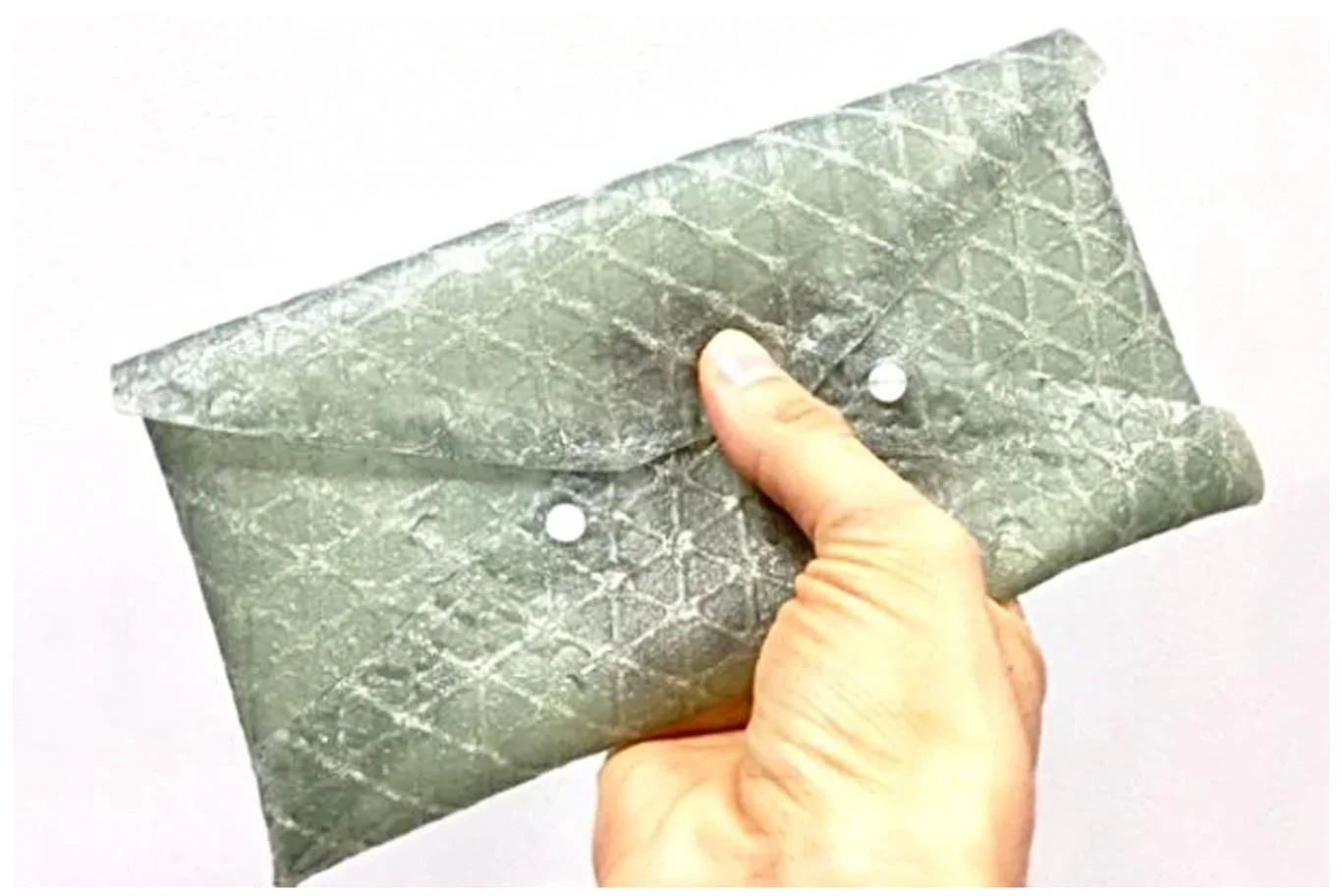
The silk-based leather can be printed into different patterns and textures, has similar physical properties to real leather, and can withstand the folding, piercing, and stretching typically used to create leather goods, including the ability to stitch together pieces of material and attach hardware such as rivets, grommets, handles and clasps.
The process of making the silk leather starts with silk fibers that are commonly used in the textile industry. These fibers are made up of silk fibroin protein polymers, and they can be broken down to its individual protein components in a water-based slurry. A base layer of chitosan containing a non-toxic plasticizer glycerol and dye is printed by extrusion through a tiny bore nozzle onto a surface to provide flexibility and strength to the material. Chitosan is itself derived from natural sources such as the shells of crabs lobsters and shrimp. A layer of silk fibroin combined with plasticizer and a thickener (from vegetable gum) is printed on top of the base layer.
Extruding the fibroin slurry through the printer nozzle creates shear forces that may contribute to arranging the proteins in a way that that strengthens the material, making it ductile rather than brittle, and mimics the natural extrusion that occurs in the silk gland of a worm or spider. Changing the printed pattern of the silk layer can provide a range of appearance, tunable strengths and other physical qualities.The printing method, also referred to as “additive manufacturing” is known to be very conservative in the use of materials and waste produced compared to other methods like injection molding or subtractive manufacturing (like carving or shaving from a block).
The Silklab at Tufts has developed a wide range of other products from silk, from implantable medical devices to architectural materials that can sense and respond to the environment by changing color. In fact, much of the technology that has been developed in the lab to derivatize the silk proteins can be applied to the silk-based leather, including attaching and embedding molecules that can sense and respond to the surrounding environment.
Tags:
Source: Tufts University
Credit: Photo: Silk derived leather like material made into purse. Courtesy: Tufts University.