The Worm Institute for Research and Medicine was established at the Scripps Research Institute
On Sept. 26, 2005, San Diego business leader and philanthropist John J. Moores contributed $4 million to The Scripps Research Institute to establish the Worm Institute for Research and Medicine (WIRM) to combat the painful, disfiguring, and debilitating diseases borne by worms that afflict hundreds of millions of people in much of the world.
WIRM will look for ways to detect the presence of parasitic worms in a person’s body in the field as a diagnostic tool for public health efforts.
Moores’ gift to Scripps Research is an extension of his long-time interest in worm-carried conditions. He founded the River Blindness Foundation in 1989 to distribute a treatment for that disease in developing countries, principally in sub-Saharan Africa. In 1997, the foundation was absorbed into The Carter Center of Atlanta, where he has served on the Board of Trustees since its founding by former President Jimmy Carter and his wife, Rosalynn, in 1994. Moores became chairman of the board in March of this year, succeeding President and Mrs. Carter. Moores also serves on the Board of Trustees of Scripps Research and is a regent of the University of California, having served as chairman from 2002-2004.
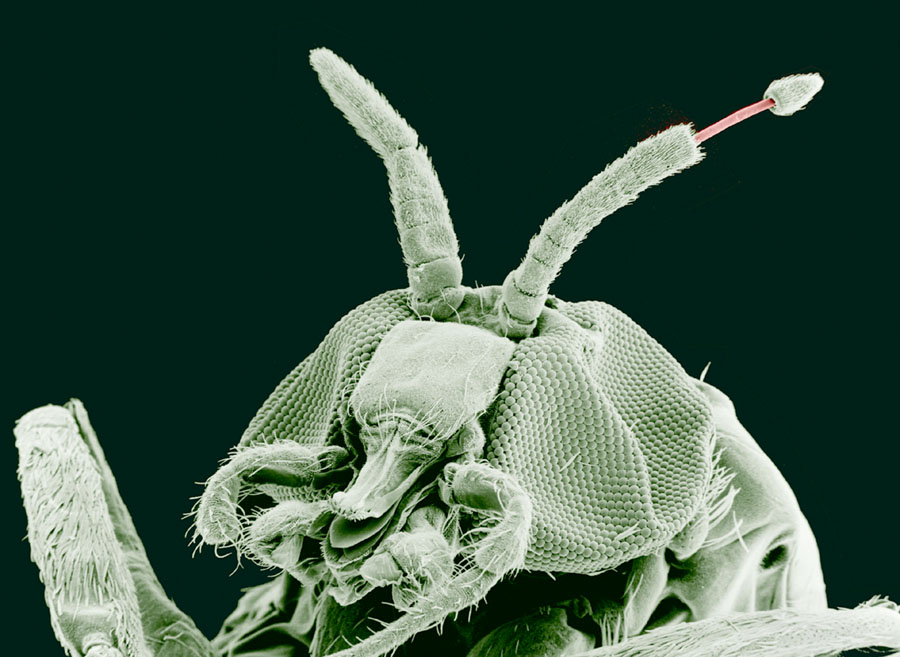
One of the first topics WIRM investigators will tackle is the nematode (worm) that causes onchocerciasis, one of the world’s leading causes of blindness. Onchocerciasis is often referred to as “river blindness” because it occurs in areas close to fast flowing water where the black flies transmitting the parasite—a tiny worm called Onchocerca volvulus—like to lay their eggs.
When the black fly bites a person suffering from river blindness, it ingests microscopic O. volvulus worms living in that person’s skin. These worms move through the body of the black fly until they reach the fly’s snout, and when that same fly bites another person, worm larvae can be left behind to infect a new host. The larvae grow under the skin to become parasitic worms, which can live in an infected person for as long as 14 years. During this time, they can produce hundreds of millions of new larvae and young worms that can move through the body and cause intense, persistent itching, rashes, and lesions.
In severe cases, the worms cause lesions and massive inflammation in the eyes of the infected person, leading to vision problems and blindness. The disease is a major problem in many African nations, where 99 percent of all cases occur. It is also endemic in parts of Latin America and the Middle East. According to the World Health Organization, some 18 million people in 35 countries are infected with the worm that causes river blindness, and about half a million people are blinded by their infection.
River blindness can be treated effectively with a drug that the manufacturer has provided free of charge for nearly two decades. However, there is a need to find ways to detect the worms in the field to help public health efforts curtail new infections.
Tags:
Source: Scripps Research Institute
Credit: