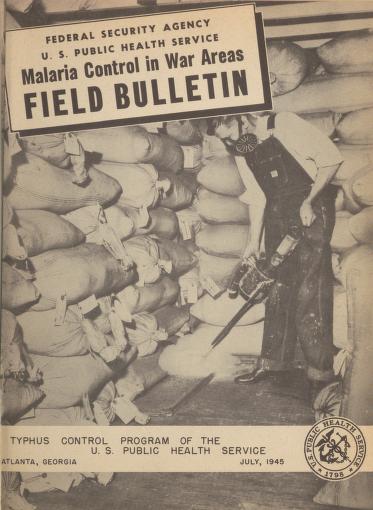
The National Malaria Eradication Program commenced operations
On Jul. 1, 1947, the Communicable Disease Center (now the CDC) began its mission to combat malaria. The National Malaria Eradication Program was a cooperative undertaking by state and local health agencies of 13 southeastern states and the CDC of the U. S. Public Health Service, originally proposed by Dr. Louis Laval Williams.
The CDC, stemmed from Malaria Control in War Areas (MCWA). Thus, much of the early work done by CDC was concentrated on the control and elimination of malaria in the United States. With the successful reduction of malaria in the United States, the CDC switched its malaria focus from elimination efforts to prevention, surveillance, and technical support both domestically and internationally.
The program consisted primarily of DDT application to the interior surfaces of rural homes or entire premises in counties where malaria was reported to have been prevalent in recent years.
By the end of 1949, more than 4,650,000 houses were treated. It also included drainage, removal of mosquito breeding sites, and spraying (occasionally from aircrafts) of insecticides.
In 1947, 15,000 malaria cases were reported. By 1950, only 2,000 cases were reported. By 1951, malaria was considered eliminated from the U.S.
Tags:
Source: U.S. Centers for Disease Control and Prevention
Credit: