A New Step In Evolution was Discovered
On Jun. 2, 2008, Carl Zimmer from the Long-Term Evolution Experiment (LTEE) reports the discovery of a a new step in evolution. The findings from a paper by Zack Blount, Christina Borland, and on the unexpected evolution of the ability to consume citrate in one of the LTEE lines.
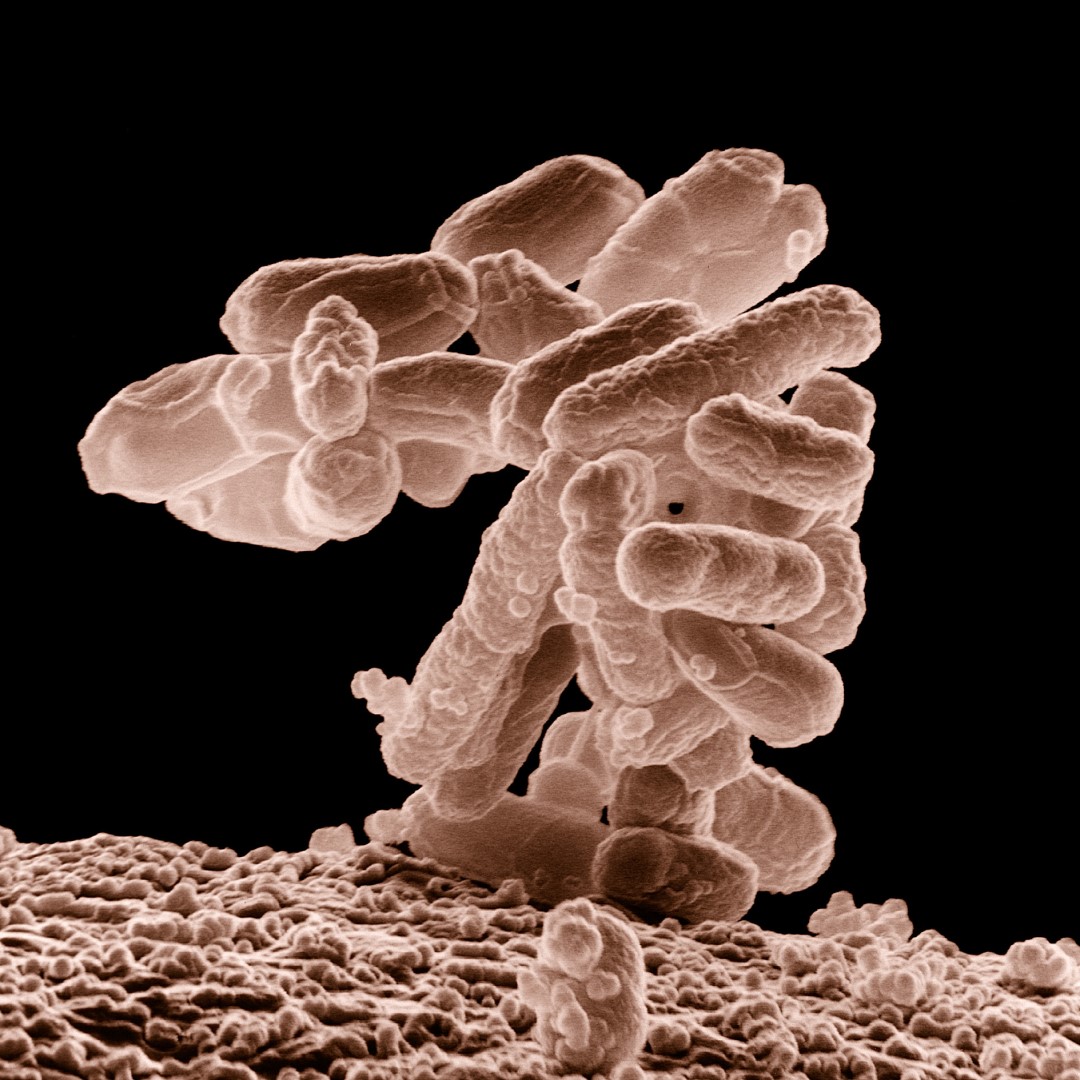
One of the most important experiments in evolution is going on right now in a laboratory in Michigan State University. A dozen flasks full of E. coli are sloshing around on a gently rocking table. The bacteria in those flasks has been evolving since 1988–for over 44,000 generations. And because they’ve been so carefully observed all that time, they’ve revealed some important lessons about how evolution works. The experiment was launched by MSU biologist Richard Lenski.
Lenski started off with a single microbe. It divided a few times into identical clones, from which Lenski started 12 colonies. He kept each of these 12 lines in its own flask. Each day he and his colleagues provided the bacteria with a little glucose, which was gobbled up by the afternoon. The next morning, the scientists took a small sample from each flask and put it in a new one with fresh glucose. And on and on and on, for 20 years and running.
Over the generations, in fits and starts, the bacteria did indeed evolve into faster breeders. The bacteria in the flasks today breed 75% faster on average than their original ancestor. Lenski and his colleagues have pinpointed some of the genes that have evolved along the way; in some cases, for example, the same gene has changed in almost every line, but it has mutated in a different spot in each case. Lenski and his colleagues have also shown how natural selection has demanded trade-offs from the bacteria; while they grow faster on a meager diet of glucose, they’ve gotten worse at feeding on some other kinds of sugars. Last year Lenski was elected to the National Academy of Sciences.
Out of the blue, their bacteria had abandoned Lenski’s their glucose-only diet and had evolved a new way to eat. After 33,127 generations Lenski and his students noticed something strange in one of the colonies. The flask started to turn cloudy. This happens sometimes when contaminating bacteria slip into a flask and start feeding on a compound in the broth known as citrate. Citrate is made up of carbon, hydrogen, and oxygen; it’s essentially the same as the citric acid that makes lemons tart. Our own cells produce citrate in the long chain of chemical reactions that lets us draw energy from food. Many species of bacteria can eat citrate, but in an oxygen-rich environment like Lenski’s lab, E. coli can’t.
But in one remarkable case, however, they discovered that a flask had turned cloudy without any contamination. It was E. coli chowing down on the citrate. The researchers found that when they put the bacteria in pure citrate, the microbes could thrive on it as their sole source of carbon. In nature, there have been a few reports of E. coli that can feed on citrate. But these oddballs all acquired a ring of DNA called a plasmid from some other species of bacteria. Lenski selected a strain of E. coli for his experiments that doesn’t have any plasmids, there were no other bacteria in the experiment, and the evolved bacteria remain plasmid-free. So the only explanation was that this one line of E. coli had evolved the ability to eat citrate on its own.
In nature, E. coli swaps lots of genes with other species. In just the past 15 years or so, for example, one disease-causing strain of E. coli acquired hundreds of genes not found in closely related E. coli strains. Another hallmark of E. coli is its ability to break down lactose, the sugar in milk. But several strains have lost the ability to break it down. (In fact, these strains were originally given a different name–Shigella–until scientists realized that they were just weird strains of E. coli.) Nevertheless, Lenski and his colleagues have witnessed a significant change. And their new paper makes clear that just because the odds of such a significant change are incredibly rare doesn’t mean that it can’t happen. Natural selection, in fact, ensures that sometimes it does. And, finally, it demonstrates that after twenty years, Lenski’s invisible dynasty still has some surprises in store.
Tags:
Source: Discovery Magazine
Credit: