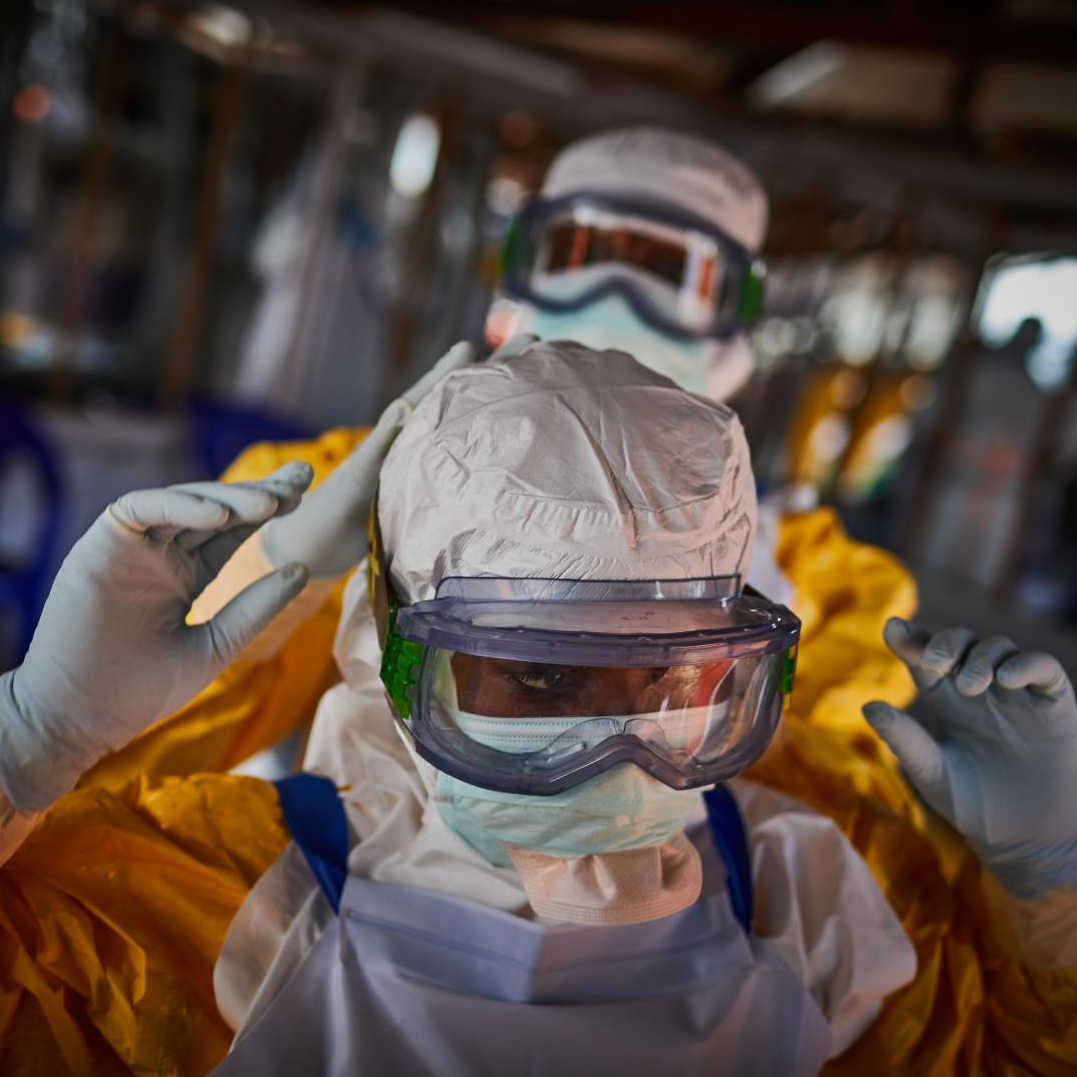
The CDC activated its Emergency Operations Center to respond to the largest Ebola outbreak in history
On Jul. 9, 2014, the U.S. Centers for Disease Control and Prevention (CDC) activated its Emergency Operations Center to respond to the largest Ebola outbreak in history affecting multiple countries in West Africa. The CDC coordinated the response at the national level, and trained teams to perform contact tracing.
Ten years ago, the Ebola epidemic in West Africa shook the world, claiming more than 11,000 lives. The outbreak cost the U.S. more than 2 billion dollars and more than 10,000 jobs tied to exports. The epidemic’s size and scope illustrated the need for stronger, sustainable disease detection and prevention capacity worldwide and was the catalyst for investment in strengthening systems to protect global health security.
CDC’s core capabilities yielded immediate returns in West Africa and continue to prevent local outbreaks from spiraling into epidemics. When Guinea faced Ebola again in 2021, they identified the outbreak in 15 days and received laboratory confirmation in one day. Instead of international experts, 179 CDC-trained local disease detectives investigated. The outbreak was stopped after only 23 cases.
The outbreak cost the U.S. more than 2 billion dollars and 10,000+ jobs tied to exports.
The magnitude and rapid spread of the 2014 Ebola outbreak showed that the U.S. is vulnerable if we aren’t prepared. It redefined our understanding of high-consequence pathogens and demonstrated their significant potential to threaten national security. Investing in comprehensive core capabilities at home and abroad – including genomic sequencing, advanced molecular detection, and wastewater surveillance – is the most effective and least expensive way to stop infectious disease threats before they can harm Americans and people across the globe.
Tags:
Source: U.S. Centers for Disease Control and Prevention
Credit: