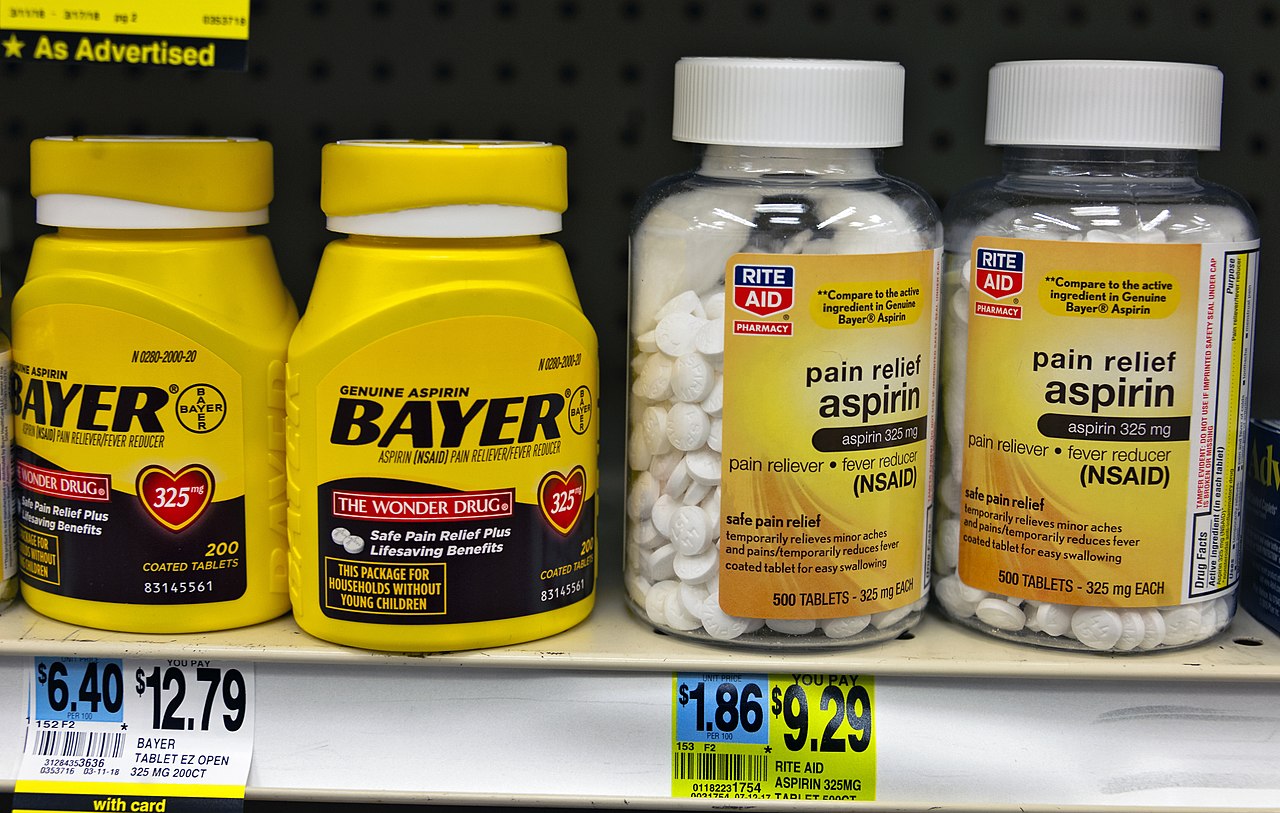
Taking daily aspirin for as little as 3 years was shown to reduce the development of colorectal polyps
On Mar. 5, 2003, taking daily aspirin for as little as 3 years was shown to reduce the development of colorectal polyps by 19% to 35% in people at high risk for colorectal cancer in two randomized, controlled National Cancer Institute clinical trials.
Epidemiologic and experimental studies have suggested that aspirin intake reduces the risk for colorectal carcinogenesis. However, the available data are not sufficient to serve as the basis for firm recommendations.
The team randomly assigned 272 patients with a history of colorectal adenomas (at least one more than 5 mm in diameter, or more than 3) to daily lysine acetylsalicylate (160 or 300 mg/day) or placebo for 4 years. The primary end points were adenoma recurrence after 1 and 4 years. These results are those of the year 1 colonoscopy.
Among the 238 patients who completed the year 1 colonoscopy, at least one adenoma was observed in 38 patients of the 126 (30%) in the aspirin group and in 46 of the 112 (41%) in the placebo group; relative risk was 0.73 (95% confidence interval [CI]: 0.52–1.04; P = 0.08). At least one adenoma of more than 5 mm diameter was observed in 13 patients (10%) in the aspirin group and 26 (23%) in the placebo group (P = 0.01). The corresponding numbers for adenomas more than 10 mm in diameter were one (1%) and 7 (6%) (P = 0.05). Stepwise regression showed that independent factors associated with lower adenoma recurrence are aspirin treatment (adenoma >5 mm, P = 0.01), absence of personal history of adenoma before the entry colonoscopy (P = 0.01), and initial adenomatous polyp burden less than 10 mm (P = 0.001).
The researchers concluded daily soluble aspirin is associated with a reduction in the risk for recurrent adenomas found at colonoscopy 1 year after starting treatment. The study findings were published in the New England Journal of Medicine.
Tags:
Source: American Gastroenterological Association
Credit: