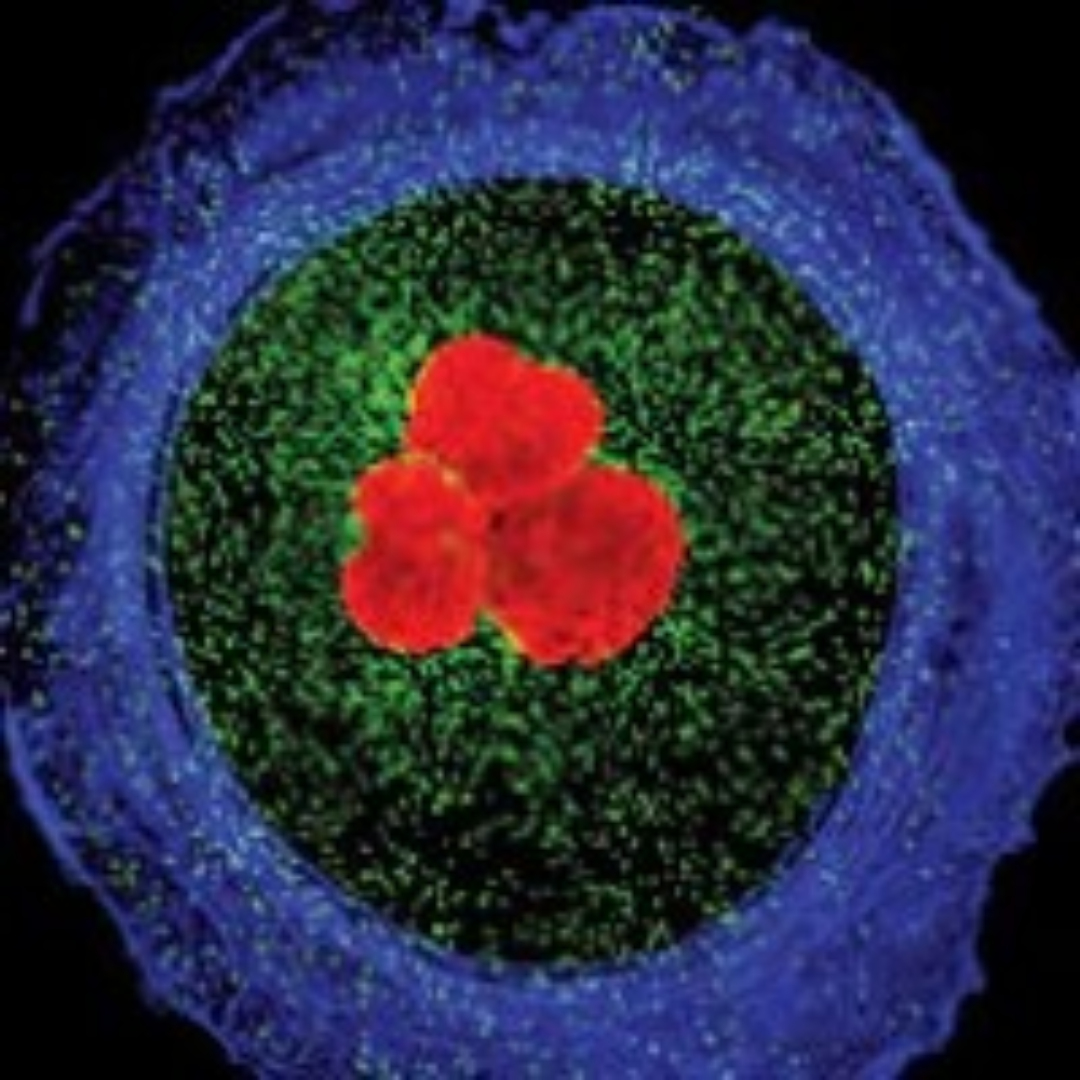
Stanford researchers discovered the first human bladder cancer stem cell
On Aug. 3, 2009, researchers at Stanford’s School of Medicine announced they had identified the first human bladder cancer stem cell and revealed how it works to escape the body’s natural defenses.
“This is first time we’ve found this ‘don’t eat me signal’ in a stem cell of a solid cancer,” said Irving Weissman, MD, the Virginia & D.K. Ludwig Professor for Clinical Investigation in Cancer Research at the medical school. “We’re now moving as fast as we can to look at other tumors to see if this is a universal strategy of all or most cancer stem cells.” If so, the signal may be a valuable therapeutic target for many types of cancers.
Weissman, who directs Stanford’s Stem Cell Biology and Regenerative Medicine Institute, is also a member of Stanford’s Cancer Center. He is the senior author of the work, published in the Proceedings of the National Academy of Sciences on Aug. 3. His laboratory recently published two studies in the journal Cellshowing that human leukemia stem cells use the same protective molecular signature on their surface to evade cells called macrophages that engulf and destroy sick or cancerous cells.
Like queen bees, cancer stem cells are constantly replenishing their “hive” of tumor cells. Therapies that kill off the workers might reduce the size of the tumor and the symptoms of the disease, but will ultimately be unsuccessful unless they also eliminate the stem cells working behind the scenes.
Support for the current research came from a gift from Jim and Carolyn Pride. In 2002, the couple attended a talk by Weissman in which he discussed the then-emerging idea of cancer stem cells. Jim Pride, who had been diagnosed with bladder cancer, approached Weissman after the talk and offered to sponsor a post-doctoral fellow — Keith Syson Chan, PhD — to investigate whether there was a bladder cancer stem cell.
There are two main types of bladder cancer: one that invades the muscle around the bladder and metastasizes to other organs, and another that remains confined to the bladder lining. Unlike the more-treatable non-invasive cancer — which comprises about 70 percent of bladder cancers — the invasive form is largely incurable. Although about 15 percent of non-invasive cancers eventually become invasive, there is no current diagnostic method that can predict which will progress.
Chan used breast cancer stem cell markers to identify a subpopulation of human bladder cancer cells with stem cell qualities: The cells formed tumors when transplanted into mice with compromised immune systems. He then looked to see which genes were more highly expressed in these cells than in other bladder cancer cells from the same tumor. He found that most, but not all, non-invasive bladder cancers expressed lower levels of these genes than did invasive cancers. Further research showed that the anomalous non-invasive cancers with higher levels of gene expression behaved more aggressively: About 80 percent recurred within 25 months of initial diagnosis, whereas only about 20 percent of the low-expressing tumors did so.
Tags:
Source: Stanford Medicine
Credit: