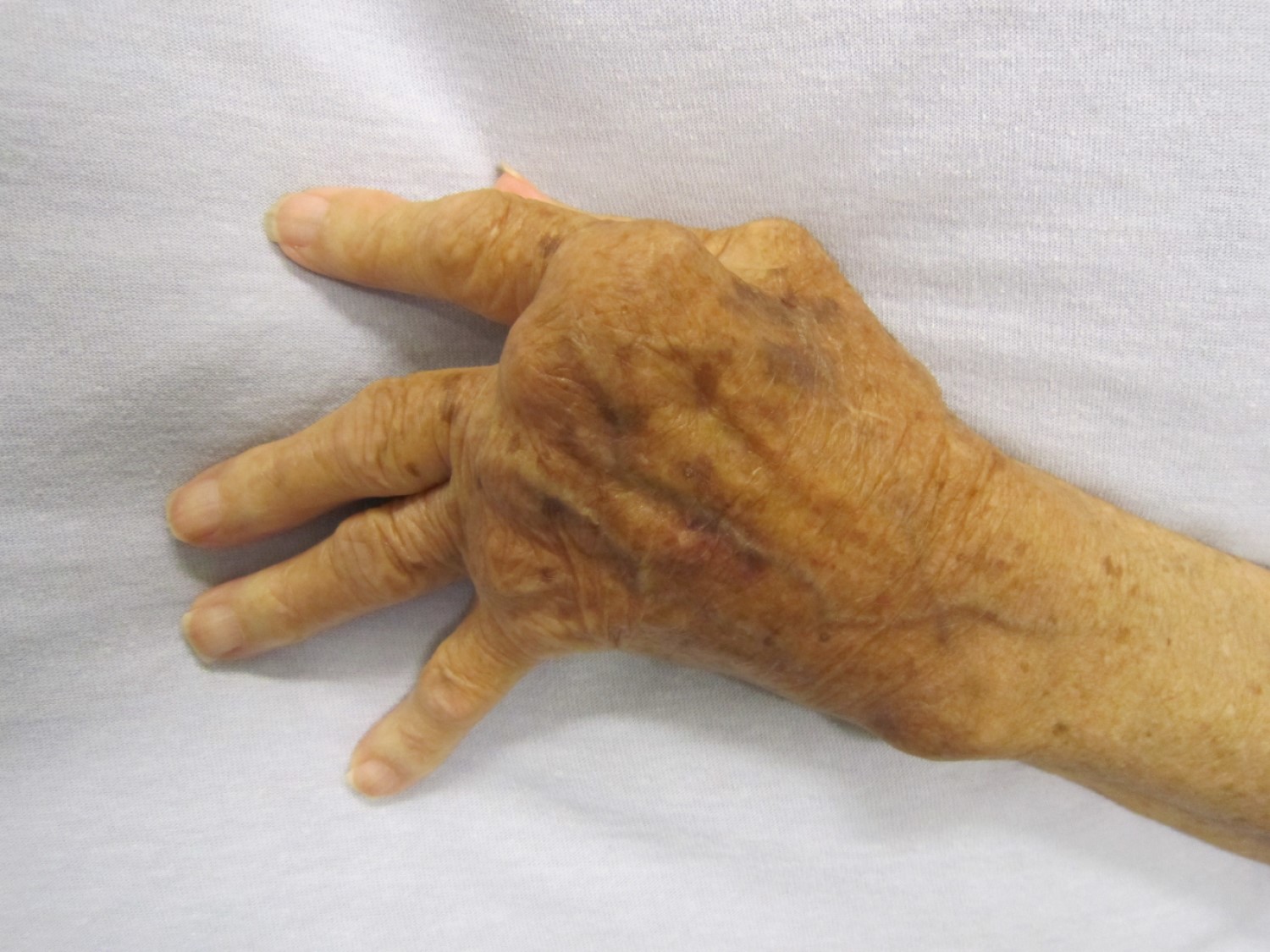
Stanford researchers discovered hereditary arthritis gene
On Jul. 11, 2000, Stanford researchers announced they had identified a substance commonly added to toothpaste to prevent tartar build-up on our teeth may be the same material our bodies use to prevent calcium and minerals accumulating in our joints and forming the deposits associated with arthritis.
Stanford scientists have found a mouse gene that transports this substance, pyrophosphate, into and out of cells. If the gene is defective, the animals have severe arthritis. The researchers also identified the human version of the gene and confirmed that it lies in a region of DNA previously implicated in human joint disease, suggesting that disruptions in this gene may underlie arthritis in many different animals.
‘The ank gene may provide a natural form of tartar control for the joints of vertebrates,’ said David Kingsley, PhD, a Stanford developmental biologist and Howard Hughes Medical Institute investigator. Kingsley is senior author of a paper describing the findings in the July 14 issue of Science.
Arthritis is one of the most common human health problems. Its underlying causes are not well understood but genetic factors are believed to account for half to two thirds of human arthritis cases, including the most common types such as osteoarthritis, rheumatoid arthritis and ankylosing spondylitis, says Kingsley. The incidence of osteoarthritis, the most common joint disease of humans, increases with age and is most frequent in people greater than 60 years old.
His group is the first to pinpoint the ank gene, identify the protein encoded by it and construct a model explaining how the ank protein may be involved in arthritis. The researchers found the human version of the protein using the mouse ank protein as a guide. They are almost identical in the two species suggesting that the function of the ank gene may be same in all vertebrates.
Kingsley’s group uses genetics to study the development of bones and joints in vertebrates, or animals with backbones. ‘Very little is known about how joints are formed and how they’re maintained after birth. And maintenance of joints, or lack of it, is a very common problem in humans,’ said Kingsley.
Kingsley and his team are now trying to determine whether the defect in the ank gene found in these mice is exactly the same as that found in people who suffer from particular forms of inherited arthritis. They are also planning to study the gene in patients with other kinds of arthritis and painful joint disorders.
Tags:
Source: Stanford Medicine
Credit: