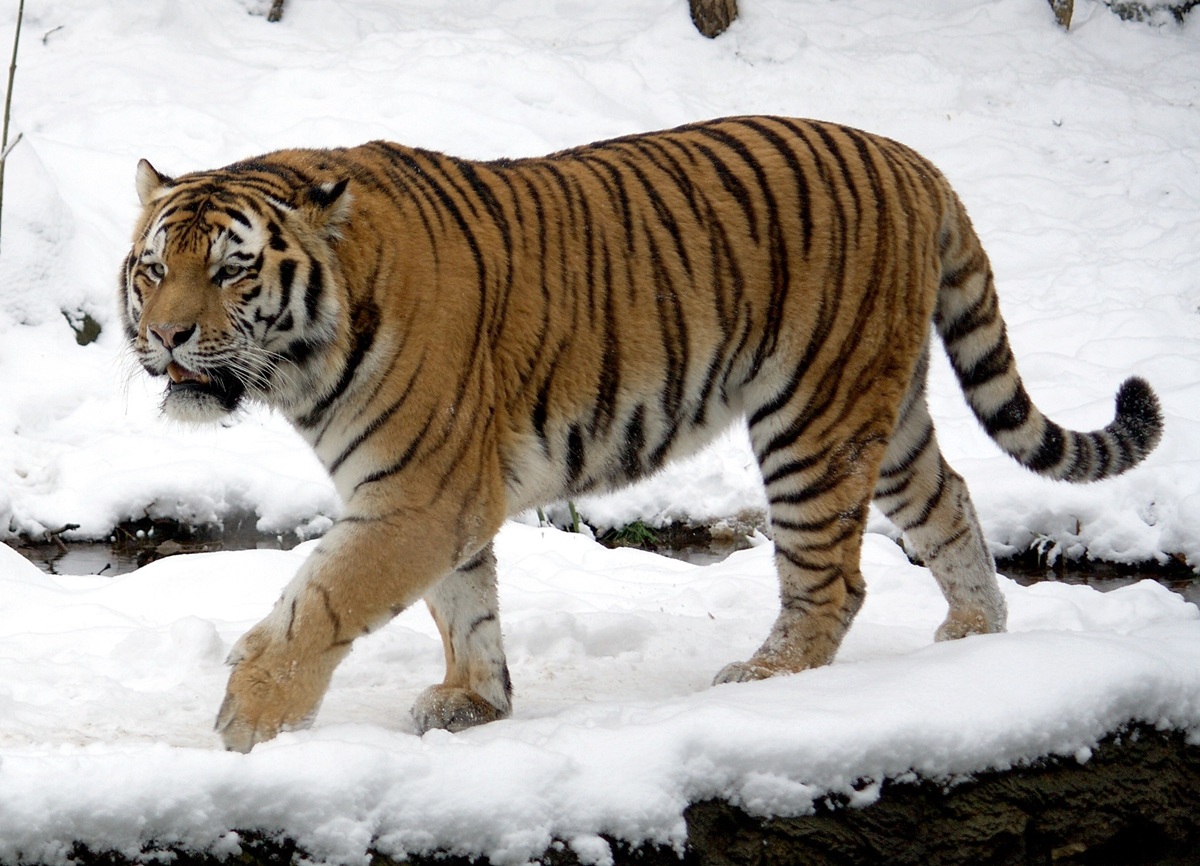
Siberian tiger genome sequenced
On Sept. 17, 2013 researchers at the South Korea’s Personal Genomics Institute in Suwon reported the mapping of the Siberian tiger genome. Scientists mapped the genes of the endangered Siberian tiger (or Amur tiger), both to understand the genes that make big cat species distinct from one another and to aid efforts to preserve genetic diversity in wild tiger populations.
The largest tiger subspecies, Siberian tigers weigh as much as 660 pounds (300 kilograms) and grow to some ten feet (three meters) in length. Only about 450 Siberian tigers exist in the wild, and around 4,000 tigers total are thought to remain in their natural habitats.
Some gene differences are apparent in the mapping, such as two genes likely involved in adaptation to high altitudes and thin air in snow leopards and white fur in white African lions.
But overall, the cat family seems to rely on a narrow set of 1,376 genes linked to strong muscle fibers and digestion of protein, the study shows, seen widely across the study species. The genes likely originated in large part with the earliest common ancestor of big felines some 11 million years ago, the study authors suggest.
Wildlife officials from 13 nations agreed in 2010 at a Tiger Summit in St. Petersburg, Russia, to work toward saving the tiger in the wild amid increasing reports of poaching and declining wild populations in Asia.
Tags:
Source: National Geographic
Credit: