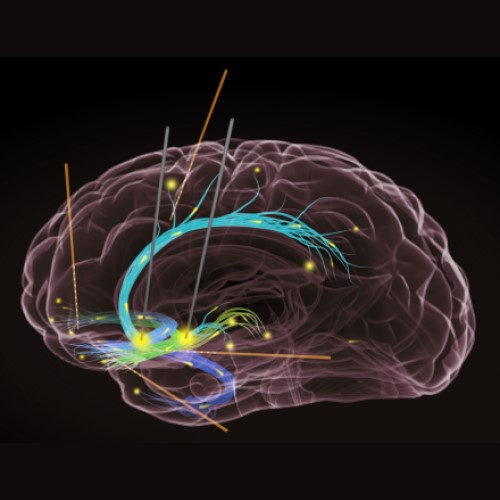
Scientists create landmark cellular atlas of one of the brain’s most important regions
On Nov. 12, 2026, in a massive, collaborative effort, dozens of labs and hundreds of scientists working together across nine countries and more than 50 institutions have unveiled a major advance in global neuroscience: the most detailed and comprehensive multi-species cellular atlas of the basal ganglia to date—an expansive library of brain cell types and datasets across human, macaque, marmoset, and mouse that serves as a powerful tool for understanding brain cells and what they do.
Using advanced single-cell molecular profiling technologies that measure the genetic expression of individual cells, researchers profiled 25.5 million of them from the brains of humans (21.0 million cells), rhesus and cynomolgus macaques (3.0 million cells), and marmosets (1.5 million cells). Their findings were published today in a package of 26 studies in the Cell Press family of journals. The massive body of work represents the first major working model of a standardized, cross-species brain cell reference atlas.
Parkinson’s disease, Huntington’s disease, schizophrenia, bipolar disorder, and addiction are all crippling conditions with genetic and molecular ties to the basal ganglia, an interconnected set of structures deep within the brain that are critical for movement, habit formation, decision making, and emotion.
The atlas is also the first major output in the ongoing work of the BRAIN Initiative Cell Atlas Network (BICAN), which is working to produce a complete parts list—an atlas of all the cell types in the entire human brain—something that is within reach thanks to this first major milestone.
Among the 26 studies that are part of the package, several key findings stand out:
- In one study, researchers discovered a new type of brain cell, STR D2 SMYD2-HTR7,that is tied to schizophrenia and bipolar disorder. “Schizophrenia has been associated with the striatum, but it has been difficult to define which neurons are vulnerable,” said Nelson Johansen, study author and assistant investigator at the Allen Institute. “Our study revealed a rare neuron type expressing the serotonin receptor HTR7 that was not found in previous studies, which carries elevated schizophrenia risk. This atlas narrows the genetic disease signal down to a specific population that researchers can now explore.”
- In another study, scientists successfully developed a new, “smarter” version of an existing gene therapy that reduces the hallmark tremors associated with Parkinson’s disease. The new approach was both more effective in animal models and less invasive (therefore more scalable) than current treatment approaches given to humans.
- A study led by researchers at the University of California, San Francisco revealed key genetic changes in specific cell types of the basal ganglia that could play a role in autism. This new insight has the potential to lead to new treatments and a deeper understanding of this neurological condition.
- Scientists at the Broad Institute discovered widespread, cell-type-specific changes in gene expression associated with aging. Remarkably, an individual’s age can be predicted from gene expression patterns across multiple cell types—a potential foundation for biological aging clocks based on brain cells.
Tags:
Source: Allen Institute
Credit: