Researchers mapped 50,000 of DNA’s mysterious ‘knots’ in the human genome
On Aug. 29, 2024, researchers at the Garvan Institute of Medical Research announced they had mapped 50,000 of DNA’s mysterious “knots” in the human genome. The innovative study of DNA’s hidden structures may open up new approaches for treatment and diagnosis of diseases, including cancer.
DNA is well-known for its double helix shape, but the human genome also contains more than 50,000 unusual knot-like DNA structures called i-motifs. The researchers found that i-motifs are not randomly scattered but concentrated in key functional areas of the genome, including regions that control gene activity.
Published in The EMBO Journal is the first comprehensive map of these unique DNA structures, shedding light on their potential roles in gene regulation involved in disease.
In a landmark 2018 study, Garvan scientists were the first to directly visualize i-motifs inside living human cells using a new antibody tool they developed to recognize and attach to i-motifs. The current research builds on those findings by deploying this antibody to identify i-motif locations across the entire genome.
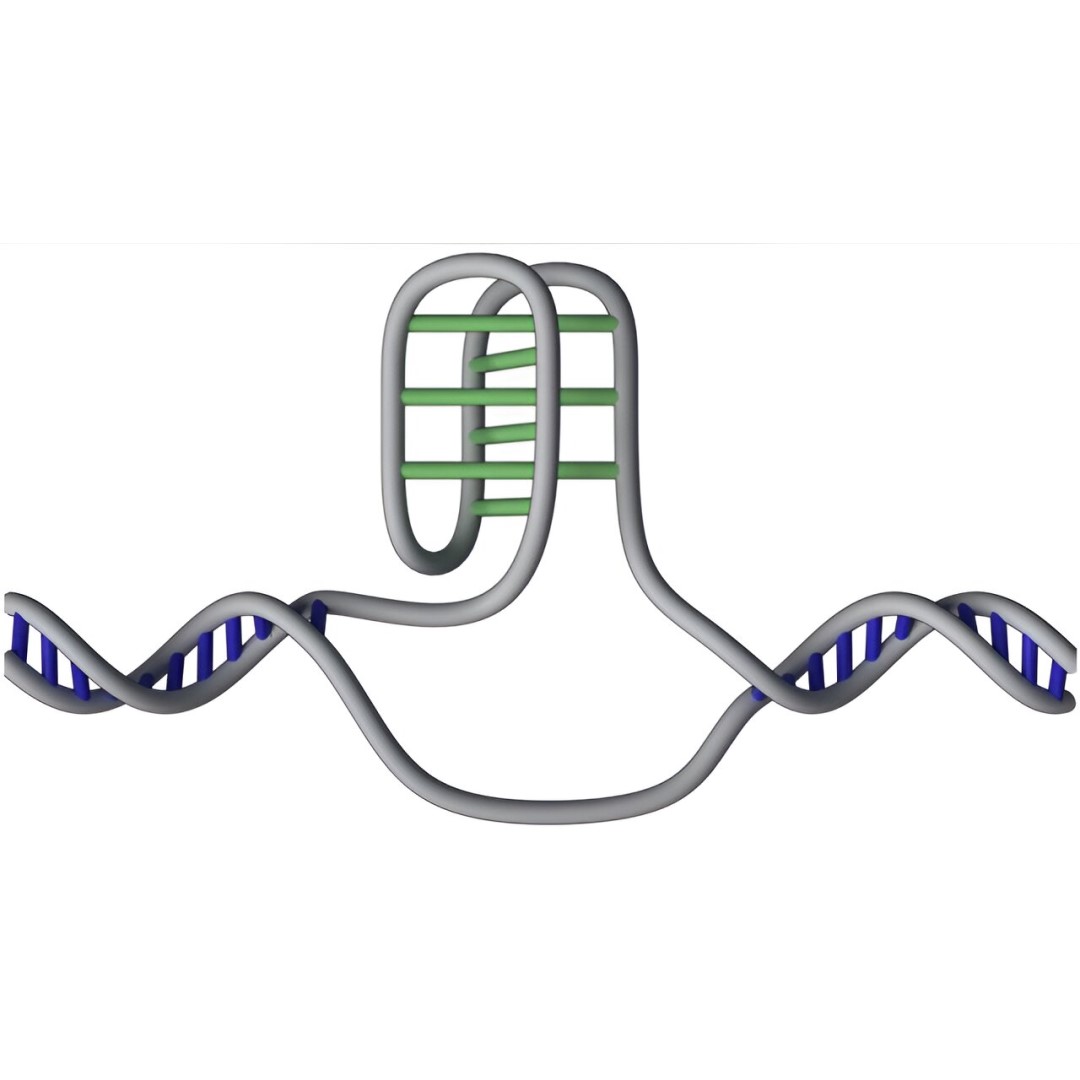
I-motifs are DNA structures that differ from the iconic double helix shape. They form when stretches of cytosine letters on the same DNA strand pair with each other, creating a four-stranded, twisted structure protruding from the double helix.
The researchers found that i-motifs are not randomly scattered but concentrated in key functional areas of the genome, including regions that control gene activity.
“We discovered that i-motifs are associated with genes that are highly active during specific times in the cell cycle. This suggests they play a dynamic role in regulating gene activity,” says Cristian David Peña Martinez, a research officer in the Antibody Therapeutics Lab and first author of the study.
Tags:
Source: Phys.org
Credit: Image: Knot-like i-motif structure protruding from DNA’s double helix has been mapped in 50,000 locations in the human genome, concentrated in key functional areas including regions that control gene activity, courtesy: Garvan Institute.