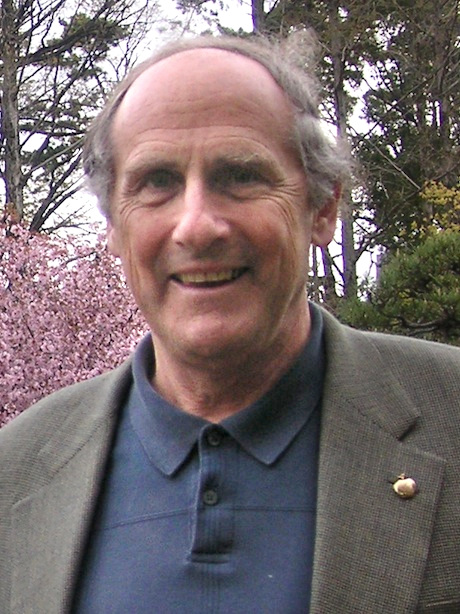
Ralph M Steinman at Rockefeller University received Albert Lasker Award for Basic Medical Research
On Sept. 15, 2007, Ralph M. Steinman at Rockefeller University received Albert Lasker Award for Basic Medical Research “for the discovery of dendritic cells-the preeminent component of the immune system that initiates and regulates the body’s response to foreign antigens.”
The immune system is an extraordinarily complex operation, employing numerous different types of cells capable of recognizing harmful foreign substances, organizing a response, carrying out attacks and ultimately guarding against future invasions. The coordination required for such a system to work is gargantuan in scope and attests to a high degree of evolutionary sophistication. In 1973, Rockefeller University scientist Ralph M. Steinman identified the cell type that is almost singularly responsible for commanding the efforts of all other immune cells: the dendritic cell.
While investigating the production of antibodies in the spleen, Dr. Steinman noticed an unusual cell that acted like a macrophage but looked nothing like it. Naming the newcomer “dendritic cell,” for its branching, tree-like shape, Dr. Steinman was initially unaware of the significance of his finding. However, his dedicated examinations of the cell over the next several years revealed not a minor player but one that had been quietly running the show the whole time. Dr. Steinman showed that dendritic cells, not macrophages, are the main T cell-stimulating cells. His in vivo studies in the 1990s found that immature dendritic cells position themselves at places in the body that are most vulnerable to invasion by microbes — the skin, the nasal passages and throat, the intestines, the genitals — and wait until they are needed. Then, as soon as a dendritic cell takes its first antigen prisoner, an incredible maturation process takes place in which its armor is strengthened and its antigen-presenting and signaling capabilities increase. He further demonstrated that in that first encounter, the chemical structure of the antigen influences which genes are expressed in the dendritic cell’s maturation process, enabling it to draft a highly specific mission for T cells to put into action. And not only do DCs train T cells how to fight foreign antigens, Dr. Steinman discovered, they also tolerize T cells to harmless self-antigens.
Aside from single-handedly creating a new field of immunological research, Dr. Steinman’s work on dendritic cells has provided therapeutic possibilities for a number of serious diseases. The ability of dendritic cells to defend the body against autoimmunity might be channeled for use in the treatment of allergies, transplantations and autoimmune diseases like type 1 diabetes, multiple sclerosis and psoriasis. Moreover, the techniques developed by Dr. Steinman to work with dendritic cells effectively in a test tube have enabled the development of numerous dendritic-cell tumor vaccines for various types of cancer, some of which are now in clinical trials.
Dr. Steinman received his undergraduate degree from McGill University in 1963 and his M.D. from Harvard Medical School in 1968. After an internship and residency at Massachusetts General Hospital, he joined Rockefeller University in 1970 as a postdoc in the Laboratory of Cellular Physiology and Immunology. He was appointed assistant professor in 1972, associate professor in 1976 and professor in 1988. In 1995 he was named the Henry G. Kunkel Professor, and in 1998 he was appointed director of the Christopher H. Browne Center for Immunology and Immune Diseases. In addition to the Lasker Award, Dr. Steinman received the Albany Medical Center Prize in Medicine and Biomedical Research in 2009, the New York City Mayor’s Award for Excellence in Science and Technology in 2004 and the Gairdner Foundation International Award in 2003. He was a member of the National Academy of Sciences and the Institute of Medicine. Dr. Steinman died in 2011.
Tags:
Source: Rockefeller University
Credit: