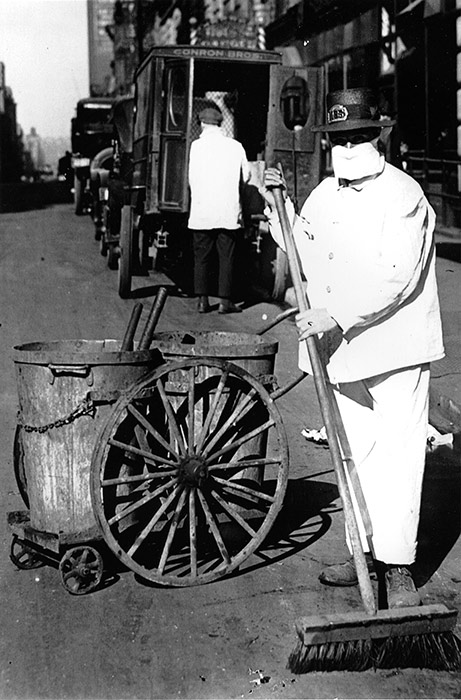
Number of influenza cases in Minneapolis reached about 3,000
On Oct. 19, 1918, the number of influenza cases in Minneapolis had reached about 3,000. City Health Commissioner Dr. H. M. Guilford, uncertain of what to do next, proclaimed that the chief preventative of influenza was cleanliness.
When the Retailer’s Association presented information that influenza germs lurked in dust, the City Council ordered all streets to be flushed with water. Having never truly supported the closure order, the Board of Education voted to re-open public schools beginning on October 21. The move was vehemently opposed by Minneapolis Guilford, who made it known that he intended to challenge the move. A legal battle soon ensued.
At the heart of the matter was the question of whether or not Guilford and the Board of Health had the legal authority to order schools closed.
To those who argued that schoolchildren would be better served in their classrooms where they could be monitored, Guilford responded with some cold statistics. At least 3,500 cases had been reported to him in the last two weeks, he told reporters. There were approximately 50,000 children in Minneapolis schools, and only thirty school nurses to monitor and examine all of them.
Under normal circumstances or during other epidemics, he stated, this number might be adequate to care for all the children. But the highly contagious nature of influenza made it impossible for only a handful of school nurses to ensure the health of so many schoolchildren.
Tags:
Source: Influenza Encyclopedia
Credit: Photo: Courtesy University of Michigan Center for the History of Medicine.