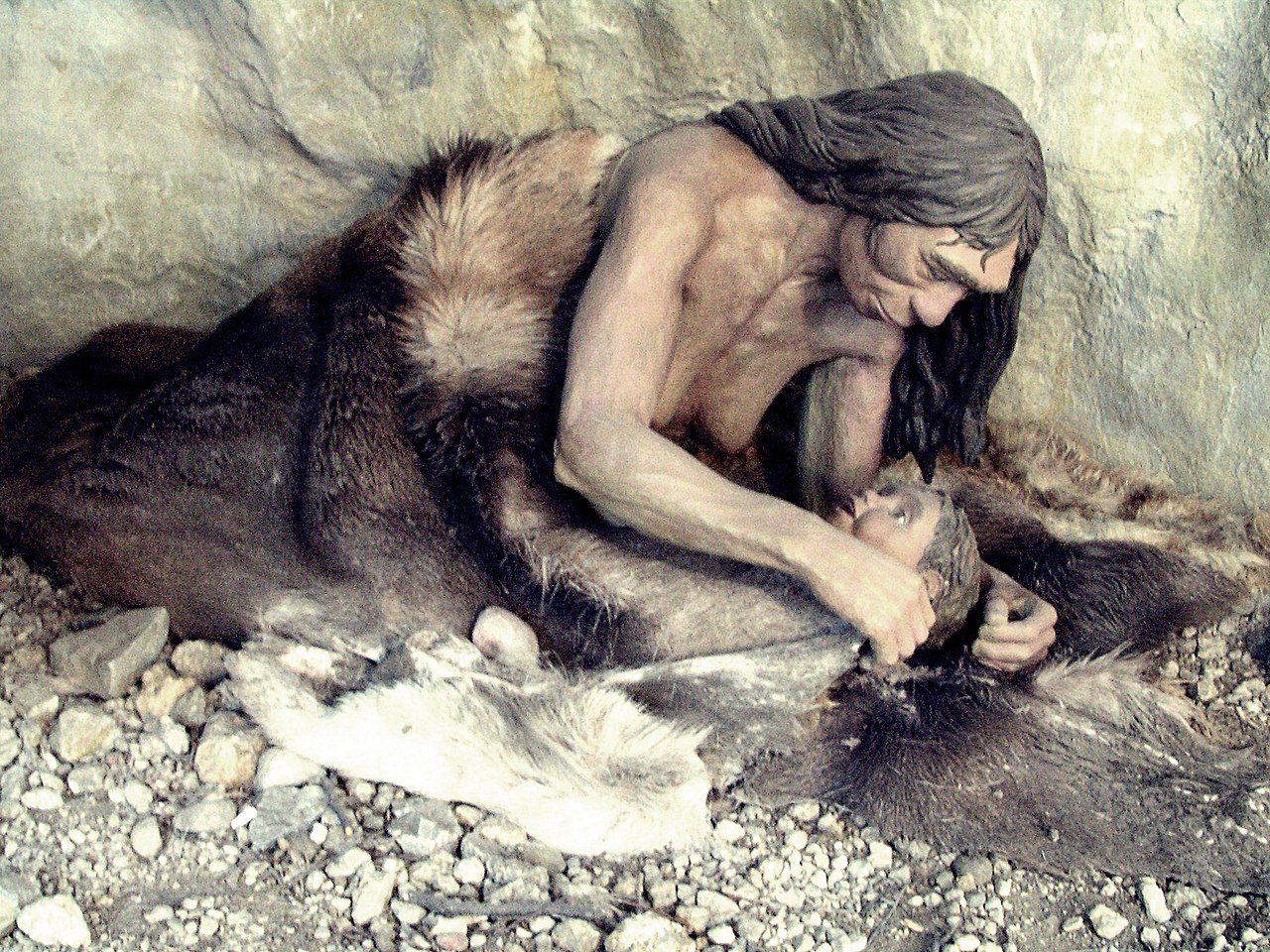
Neanderthal–human baby-making was recent — and brief
On May 21, 2024, an analysis of ancient and modern genomes suggested contemporary people’s Neanderthal DNA came from a single, prolonged period of mixing some 47,000 years ago. Most people of European ancestry alive today carry traces of genes inherited from Neanderthals—the enduring legacy of prehistoric hookups with our extinct cousins. But researchers have long debated when and where that mingling happened, and whether these were one-off romps or commonplace trysts.
The researchers concluded in the that Neanderthal genes began flowing into the ancestors of people alive today about 47,000 years ago. Modeling shorter and longer periods of gene flow, they found that a scenario in which Neanderthals and modern humans exchanged genes over a period of about 6000 to 7000 years best fit the data. The findings were published in a bioRxiv preprint.
Neanderthals and modern humans diverged perhaps 500,000 years ago, with Neanderthals concentrated in Eurasia and modern humans—our H. sapiens ancestors—in Africa. Then, modern human groups ancestral to all non-Africans today left the continent sometime about 70,000 years ago and spread out across Eurasia, likely encountering Neanderthals in what today is the Middle East or in Europe. Couplings between the two groups of humans may go way back, to 100,000 years ago or earlier, when some modern human pioneers took tentative journeys beyond Africa. But not all the inherited Neanderthal DNA from those early encounters survives in people today. Much was lost over time because of natural selection, chance, or lineages simply dying out.
Tags:
Source: American Association for the Advancement of Science
Credit: