First complete songbird genome reveals hidden biology
On Aug. 6, 2026, scientists at Rockefeller University’s Jarvis lab announced that they have assembled the first fully phased, diploid telomere-to-telomere genome of a songbird, which constitutes the most complete and accurate bird genome to date.
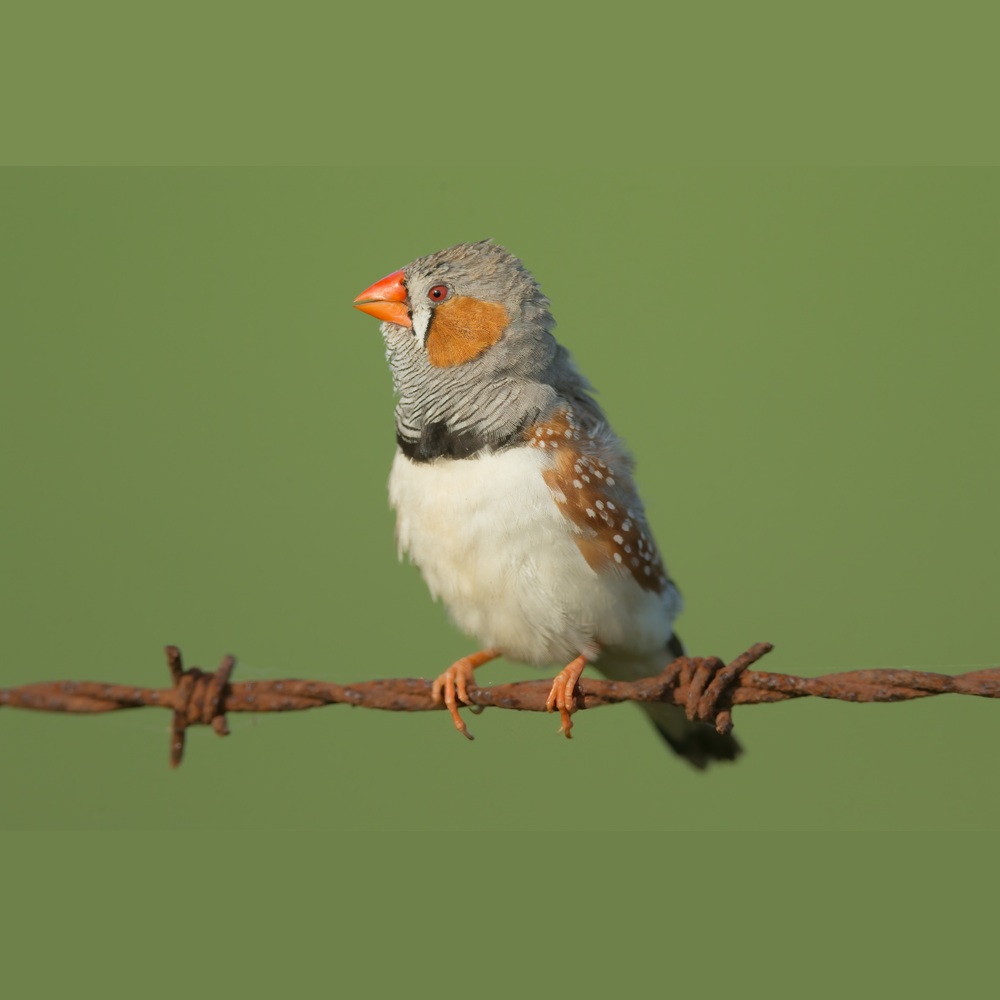
The zebra finch is one of the best-studied songbirds, and a model for understanding the biology of vocal learning. Now, researchers have produced the first complete genome assembly of the species, revealing thousands of previously hidden genes and chromosome structures.
It is the first songbird genome to capture every chromosome from end to end while distinguishing the DNA inherited from each parent, making it the most complete and accurate bird genome assembled to date. Part of a package of 10 papers being published simultaneously in Cell and Cell Genomics, this study, which appears in Cell, reveals 2,710 previously unknown genes, shows that birds and mammals share an organized centromere architecture, and resolves tiny chromosomes that provide clues to the evolution of vertebrates and vocal learning.
The resulting reference genome adds roughly 90 million previously missing DNA base pairs and closes nearly all remaining gaps, revealing biological features never before seen in birds. Across the newly assembled DNA, the team uncovered more than 2,700 previously hidden genes, ending decades of uncertainty over whether they had truly been lost during evolution or simply missed by earlier genome assemblies. The assembly also resolves all 11 of the zebra finch’s tiny dot chromosomes, revealing a consistent internal organization that may preserve the ancestral architecture of vertebrate genomes before larger chromosomes fused over hundreds of millions of years. It also delivers the first complete assembly of the female W chromosome, providing the clearest view yet of how avian sex chromosomes are organized and inherited.
Among the most important newly accessible regions were the centromeres. The centromere assembles the kinetochore and directs chromosome segregation: an essential, deeply conserved function that nonetheless sits on the most rapidly evolving sequence in the genome. Failure in segregation leads to aneuploidy, one of the hallmarks of cancer and a leading cause of pregnancy loss and congenital disorders in humans. By mapping them, the researchers found that birds share a key component of the molecular machinery that organizes these regions with mammals.
Tags:
Source: Rockefeller University
Credit: