Drought exacerbated emerging infectious disease in California
On Oct. 5, 2022, researchers at University of California, Berkeley (UC Berkeley) reported that coccidioidomycosis -also known as Valley fever- an infectious disease, was taking an increasing toll on the health of Californians and people living throughout the Southwest. The study was published in Lancet Planetary Health. The researchers discovered a pronounced role of California’s recent droughts in driving the transmission of the pathogen in the state.
People can contract coccidioidomycosis by breathing in dust that contains spores of the Coccidioides fungus. The fungus grows in soil and spreads via tiny spores that are inhaled with dust that is stirred up by strong winds, digging, or other disturbances to soil. California is currently experiencing the highest-ever recorded number of cases of coccidioidomycosis, yet little is known about the role of California’s changing climate in driving these trends, or how future changes in the state might impact the spread of the disease.
The researchers analyzed more than 81,000 coccidioidomycosis surveillance records collected by state and local agencies over a 20-year period. They applied complex, non-linear statistical models to examine the relationship between temperature, precipitation, and coccidioidomycosis incidence. They found that multi-year cycles of dry conditions, followed by a wet winter, amplify coccidioidomycosis transmission. Disease incidence in arid counties—such as Kern and Kings—was most sensitive to precipitation fluctuations, while incidence in wetter coastal counties—like Monterey and Ventura—was most sensitive to fluctuations in temperature, potentially explaining why incidence rates have increased more dramatically in these wetter and cooler counties in the state.
Interestingly, the researchers found that drought conditions initially suppress transmission, but transmission strongly rebounds in the years immediately following drought. “Fungi require moisture to grow. During droughts, winter precipitation is too low for proliferation of the organism in the soil, and less fungus in the soil means lower risk of inhaling a pathogenic spore,” Head explained. However, cases spike in years that follow drought. During 2016–17, two wet years that followed the 2012–15 drought, the researchers estimated that there were nearly 2,500 excess cases of coccidioidomycosis attributable to the effect of the prior drought on transmission. This excess of cases more than offset the cases of coccidioidomycosis averted during the drought period.
With the frequency and severity of drought in the state expected to increase under climate change, the researchers say that we should be prepared to see the expansion of disease across California and other western states. According to Head, “We should anticipate higher risk of infection in the years that follow future droughts, and we should take extra precautions to educate the public and health care providers” about the unique risks during these periods. We also need to ensure outdoor workers have access to respiratory protection where appropriate.”
Tags:
Source: University of California, Berkeley
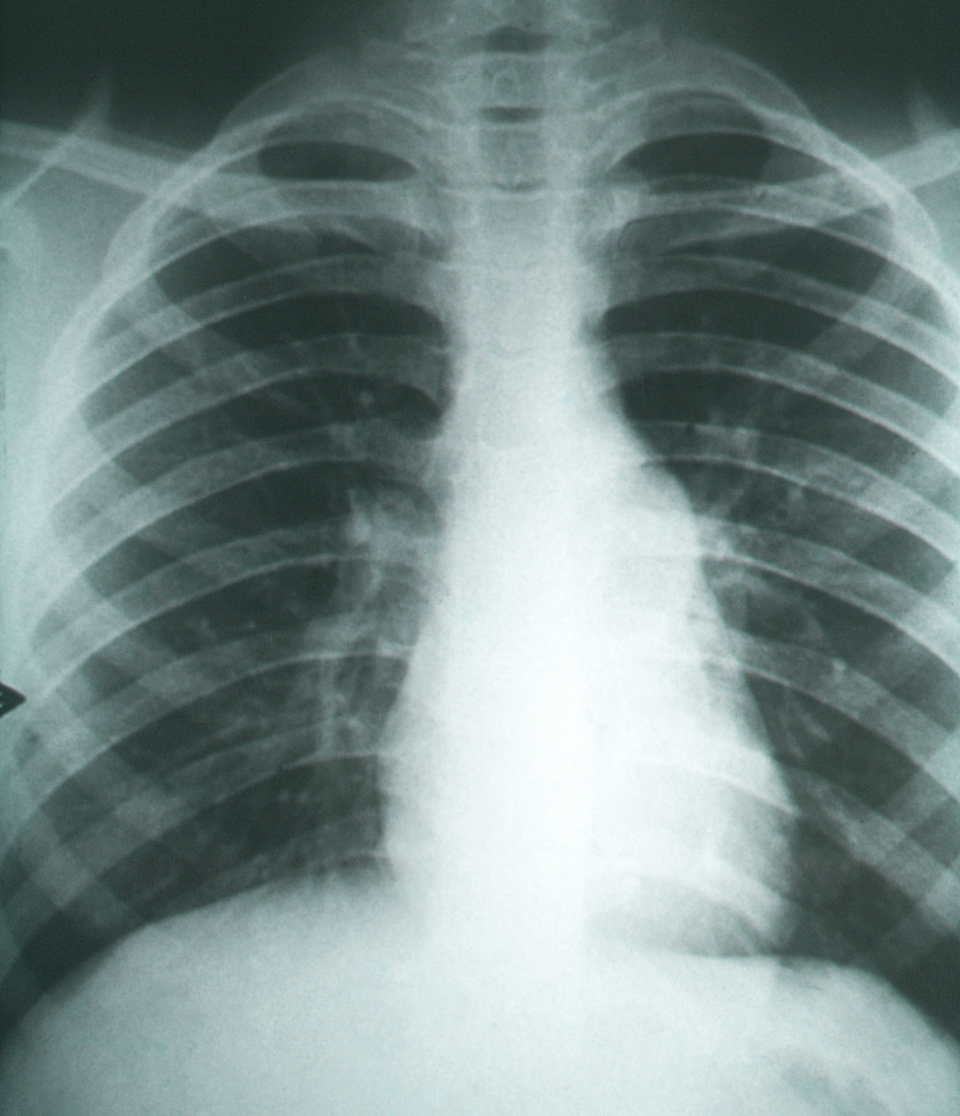
Credit: Photo: A case of pulmonary fibrosis caused by coccidioidomycosis. Courtesy: Centers for Disease Control and Prevention, Dr. Lucille K. Georg.