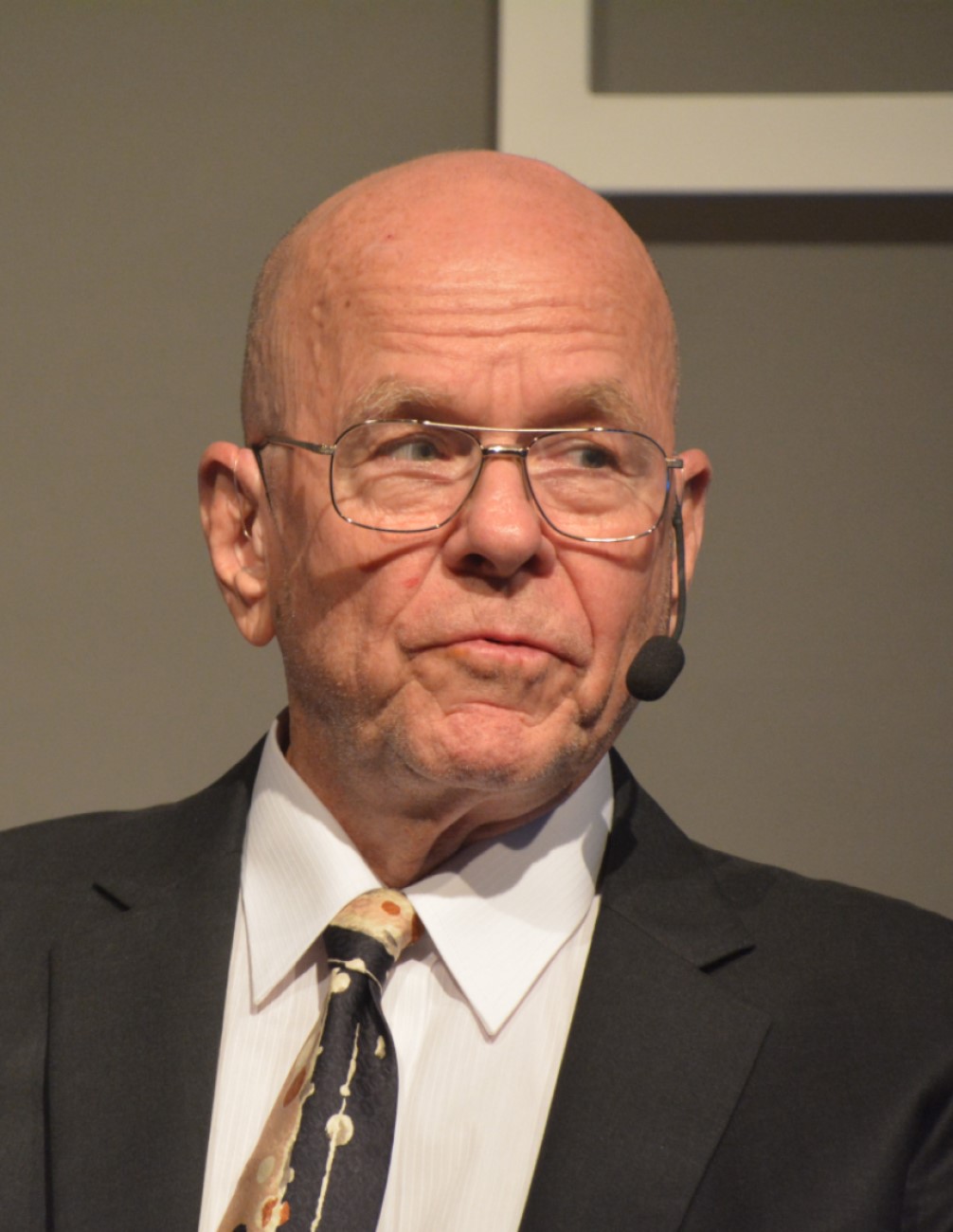
Dr. K. Barry Sharpless joined the Research Institute of Scripps Clinic faculty
On Jul. 12, 1990, Dr. K. Barry Sharpless joined the Research Institute of Scripps Clinic faculty as the W.M. Keck Foundation Chair in chemistry. Sharpless is best known for his work on chirally catalysed oxidation reactions for which he was awarded the 2001 Nobel Prize in Chemistry.
The Sharpless Lab pursues useful new reactivity and general methods for selectively controlling chemical reactions. Though the focus has progressed from regio- to stereo- to asymmetric and, now, to connectivity control, the core chemistry remains unchanged: the oxidation of olefins, that single most versatile, powerful and reliable (KBS argues) chemical transformation. The Sharpless Lab was the first academic chemistry group with robotics, and the lesson from the combinatorial numbers game was the primacy of reliability. “Click” chemistry was the Sharpless Lab’s response: a set of powerful, virtually 100% reliable, selective reactions for the rapid synthesis of new compounds via heteroatom links (C-X-C). Click chemistry is integral now to all research within the Sharpless Lab.
In 2002, the Sharpless group discovered CuAAC (the copper-catalyzed azide-alkyne cycloaddition), now known as a quintessential ‘click chemistry’. Recently the Sharpless group discovered SuFEx, another near-perfect click reaction. In concert with the thiol-ene reaction, these three make click chemistry a far-reaching method for drug discovery, chemical biology and materials science.
Tags:
Source: Scripps Research Institute
Credit: