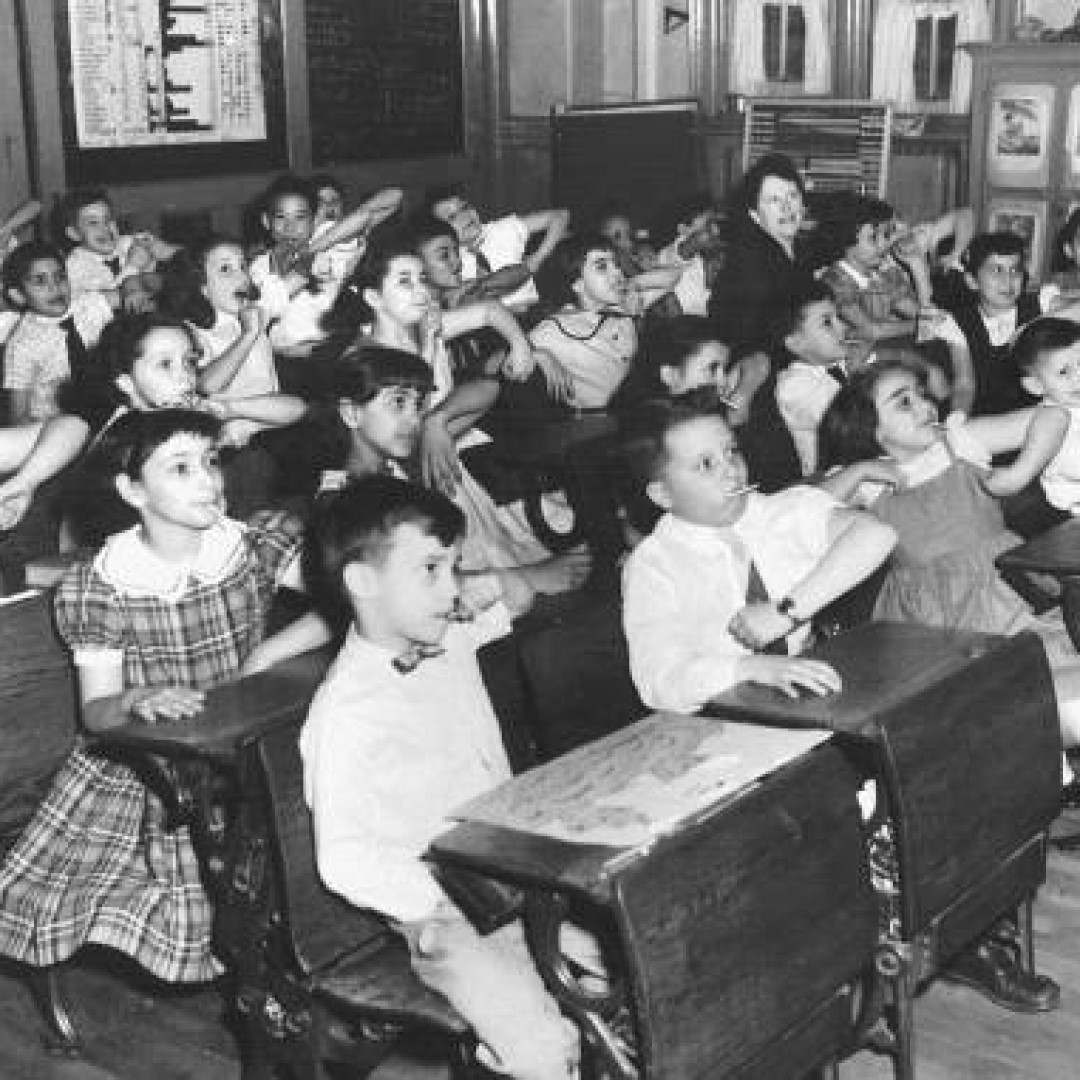
Dr. Jonas Salk initiated the first community-based pilot trial of the polio vaccine in a Pittsburgh suburb
On May 16, 1953, Dr. Jonas Salk initiated the first community-based pilot trial of the Polio vaccine in the Pittsburgh suburb of Sewickley, drawing volunteers from the practices of two area physicians. By year’s end, nearly 700 children and adults had received the vaccine.
Dr. Julius S. Youngner developed a method to more efficiently measure antibody levels in order to accommodate the increasing number of blood sera samples coming into the lab. The color change test replaced the more laborious roller tube technique.
The first human pilot studies were conducted nearby in Alleghany County, Pennsylvania in the spring of 1953 and involved 15,000 people—mostly children. Using the generation of serum antibodies against the three types of poliovirus as an outcome, this pilot study optimized the vaccine vehicle, injection schedule, and inoculation dose. These studies demonstrated a 4‐ to 16‐fold increase in serum polio titers after vaccination and the additional benefits of booster injections.
In the case of polio vaccine, massive sociopolitical forces drove nearly every aspect of the translational process. Unlike some other diseases, poliovirus did not seem influenced by gender, socioeconomic class, or sexual orientation. However, the virus disproportionately afflicted children more than older individuals. The images of large iron lung facilities housing those struggling to breathe and permanently paralyzed children in braces walking to and from school struck a national chord. Parents and communities were strongly motivated to fight this disease in any way possible. A major paralytic polio epidemic in 1952, just 2 years before the 1954 Field Trials, was also likely fresh in parents’ minds as they agreed to have their children participate in this national experiment.
The success of these pilot studies led to the immediate launching of the largest clinical trial in human history—the 1954 Field Trials. Designed by Salk’s mentor Dr. Francis, 1.8 million children in the United States, Canada, and Finland were recruited for this experiment. In fact, this trial was so large that the entire process required over 300,000 volunteers to carry out.
Tags:
Source: National Library of Medicine
Credit: