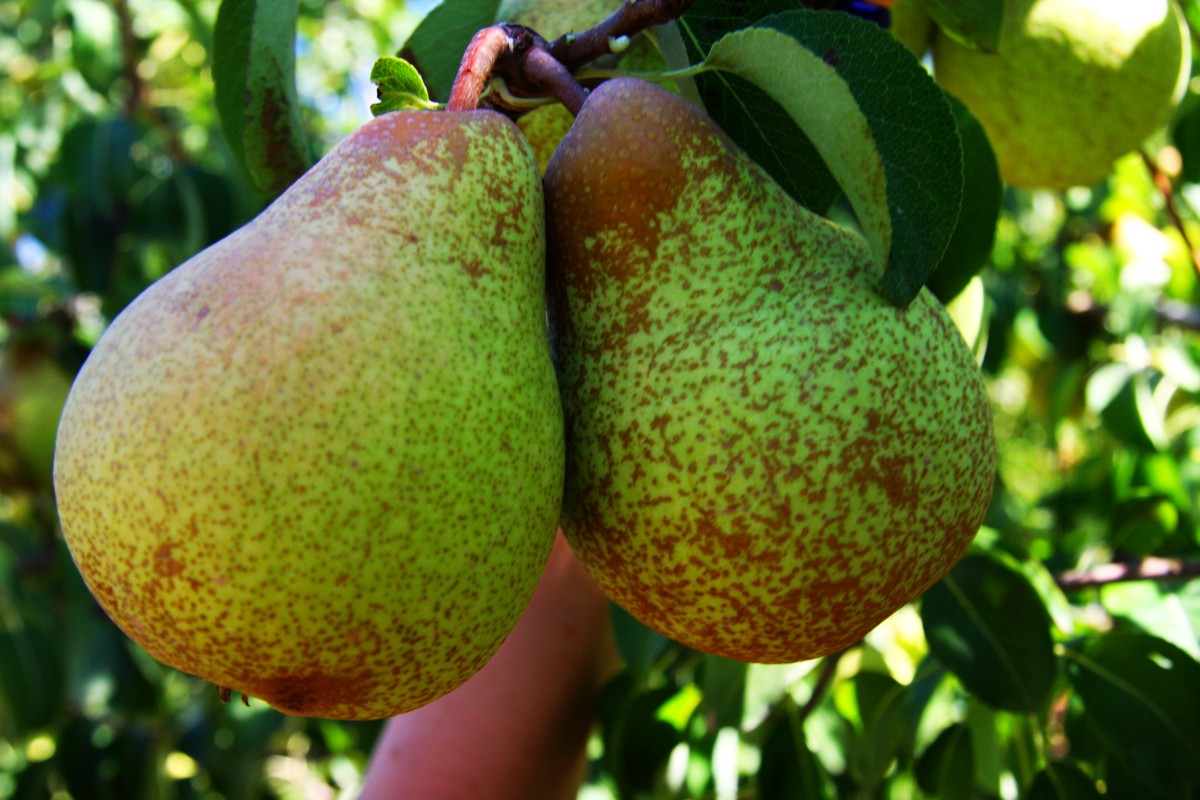
Cracking the pear genome: how students helped unlock a new tool for the pear industry
On Mar. 17, 2024, researchers at the HudsonAlpha Institute for Biotechnology announced a unique collaboration between students, scientists, and the pear industry fostered through the American Campus Tree Genomes (ACTG) initiative. Pears are big business in the Pacific Northwest. But did you know that traditional pear breeding has remained largely unchanged for centuries? This slow process is difficult and costly, requiring the long-term commitment of labor, materials, and land-space resources. However, traditional pear breeding might get some help from genomics at the ACTG.
ACTG was born from two professors’ desire to memorialize Auburn University’s iconic Toomer’s Oak trees that were poisoned during the 2010 Auburn University football season. Their plan: sequence the oak’s DNA and create the first-ever live-oak reference genome. To sweeten the pot, they created a semester-long course so that actual Auburn students could take part in sequencing the Auburn oak trees.
“ACTG leverages iconic and economically valuable trees to bridge the gap between students and cutting-edge genomics,” says ACTG co-founder Alex Harkess, PhD. “Students collaboratively assemble, analyze, and publish tree genomes in prestigious journals, gaining invaluable experience.”
The first semester was a success despite most students having never written a manuscript, performed command line bioinformatics, or engaged in plant genomics molecular work. It sparked the now nationwide ACTG initiative, officially founded in 2021 by Alex Harkess, PhD, Faculty Investigator at HudsonAlpha Institute for Biotechnology, and Les Goertzen, PhD, Director of the John D. Freeman Herbarium at Auburn University. Other institutions can replicate the experience using their own campus trees as a springboard for scientific and educational endeavors.
ACTG is disrupting traditional academic models, offering students a unique entry point into the world of genomic research. The initiative transcends textbook learning, immersing participants in the actual process of assembling, analyzing, and publishing tree genomes in esteemed scientific journals. Students in this course have access to cutting-edge genome sequencing techniques and bioinformatic skills through experts at HudsonAlpha. By working on genuine research projects with tangible outcomes, students gain confidence and experience, shaping their trajectories toward successful careers in the ever-evolving field of genomics.
In the case of the pear industry, a cohort of Auburn students in the ACTG initiative worked with pear experts at Washington State University and USDA ARS to create a high-quality pear genome. The meticulous work of the ACTG students yielded a fully phased chromosome-scale assembly, a significant advancement over previous efforts.
The d’anjou genome assembly, published as a featured article in G3: Genes, Genomes, Genetics, reveals thousands of genomic variants of great importance to pear breeding efforts. This high-quality resource unlocks a treasure trove of information for pear breeders. The new genome assembly is also an important tool for studies on the evolution, domestication, and molecular breeding of pear.
Tags:
Source: HudsonAlpha Institute for Biotechnology
Credit: