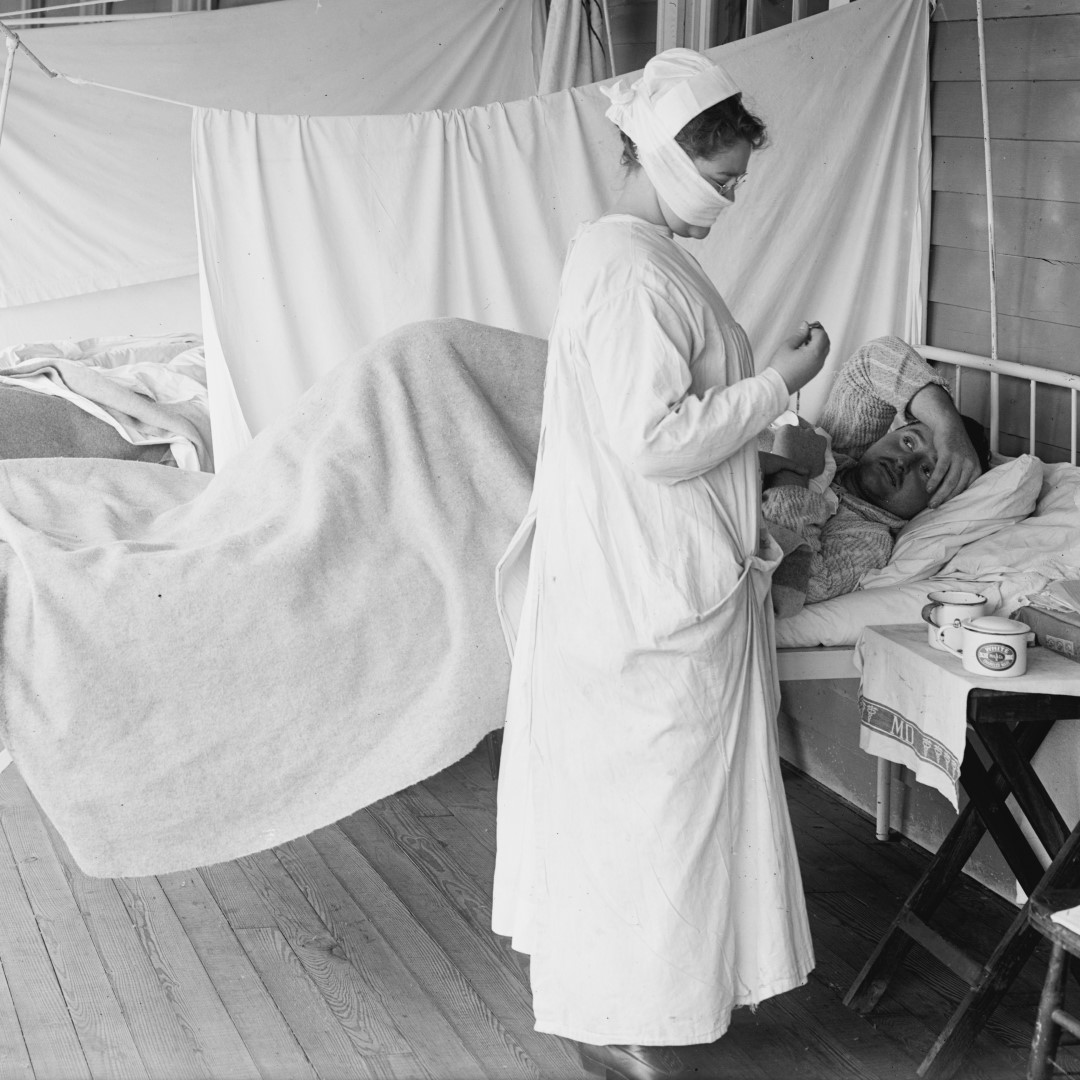
Cleveland Health Commissioner recommended suspending all public gatherings and to close all places of public assembly
On Oct. 9, 1918, Cleveland Health Commissioner Rockwood met with Acting Mayor W. S. FitzGerald and Director of Public Welfare Lamar T. Beeman to recommend suspending all public gatherings and to close all places of public assembly. Rockwood initially hoped to check the disease through voluntary action. Now he believed, as he told reporters, “more radical steps are needed.”
The next day, October 10, Mayor Harry Davis announced the decision to close all theaters, movie houses, dance halls, night schools, churches, and Sunday schools across Cleveland effective Monday, October 14. Saloons, poolrooms, and cabarets were not included in the order because officials believed that it was only necessary to close places where large crowds tended to congregate.
The initial plan was to close movie houses and theaters after their Saturday shows on October 12. After protests from owners, however, Rockwood agreed to give them extra time to make arrangements for their closing. As for schools, Rockwood believed students could be better monitored in classrooms than at home.
Tags:
Source: Influenza Encyclopedia, University of Michigan Center for the History of Medicine
Credit: Photo: Courtesy University of Michigan Center for the History of Medicine.