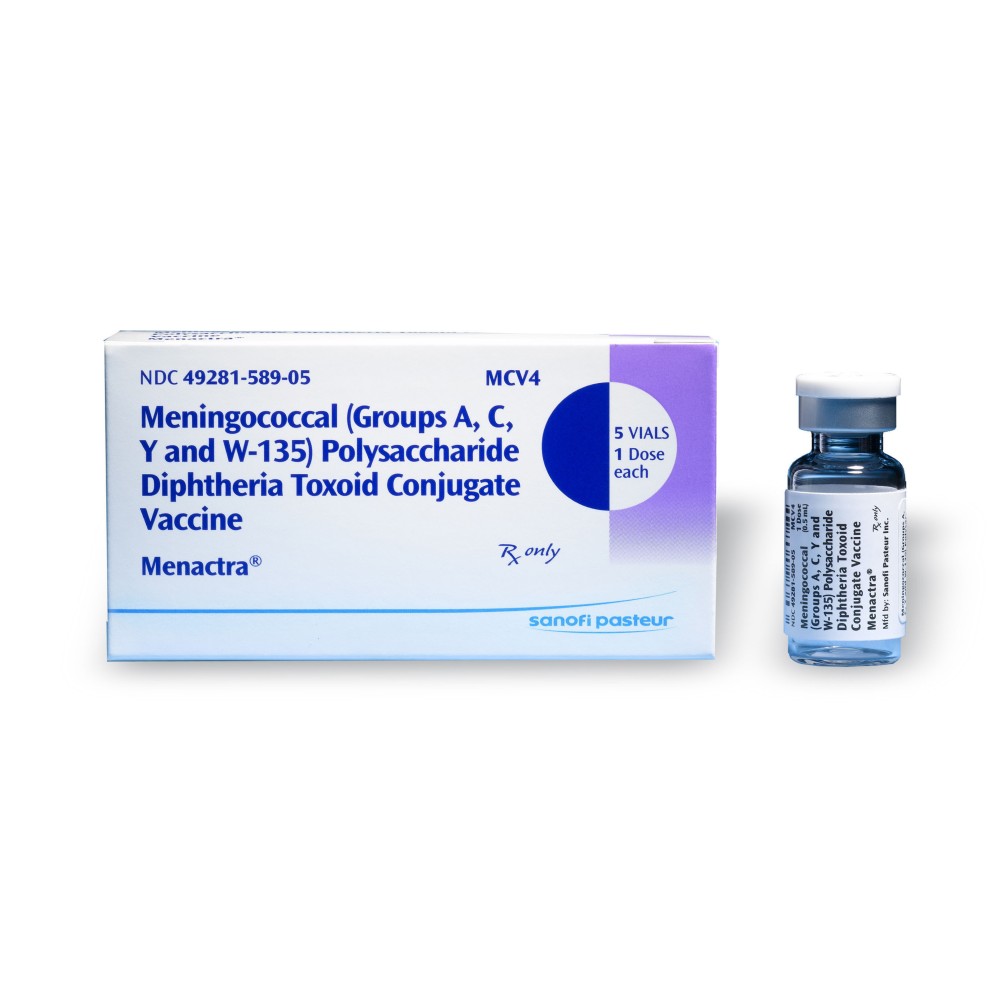
CDC published ACIP recommendations for use of meningococcal conjugate vaccines in HIV-infected persons
On Nov. 4, 2016, the U.S. Centers for Disease Control and Prevention’s (CDC) Immunization Practices Advisory Committee (ACIP) recommended routine vaccination with meningococcal conjugate vaccine for all adolescents and for certain groups of persons at increased risk for meningococcal disease:
persons who have persistent complement component deficiencies; persons who have anatomic or functional asplenia; microbiologists who routinely are exposed to isolates of Neisseria meningitidis; persons identified to be at increased risk because of a meningococcal disease outbreak attributable to serogroup A, C, W, or Y; military recruits; first-year college students living in residence halls; and persons who travel to or reside in areas in which meningococcal disease is hyperendemic or epidemic. In addition, ACIP recommends routine vaccination with serogroup B meningococcal (MenB) vaccine for persons who have persistent complement component deficiencies; persons who have anatomic or functional asplenia; microbiologists who routinely are exposed to isolates of N. meningitidis; and persons identified to be at increased risk because of a serogroup B meningococcal disease outbreak.
The immunogenicity and safety of MenACWY-D in 324 HIV-infected adolescents and young adults aged 11 through 24 years were evaluated in an open-label trial with a randomized second dose component (2,4). At study entry, participants received 1 dose of MenACWY-D. At 24 weeks, participants with CD4 percentage (the percentage of total lymphocytes that are CD4 cells) (CD4%) ≥15% were randomized to receive or not receive a second dose of MenACWY-D; all participants with CD4% <15% received a second dose. Vaccine effectiveness was inferred from serum bactericidal antibodies, measured using a serum bactericidal assay with a rabbit complement source (rSBA). Rates of seroresponse (proportion of subjects with a ≥fourfold rise in rSBA titer compared with the baseline titer) against each meningococcal serogroup (A, C, W, Y), geometric mean titers (GMT), and the percentage of subjects with rSBA at or above a predefined titer (≥1:128) were determined from sera obtained at study entry and at weeks 4, 24, 28, and 72. Adverse events (AEs) were assessed for 6 weeks after each MenACWY-D dose through active follow-up (2,4).
Among participants with CD4% ≥15% who received 1 vaccine dose, the proportions of participants with rSBA titers ≥1:128 at 4, 28, and 72 weeks were 65%, 31%, and 21%, respectively, against serogroup C, and 83%, 75%, 63%, respectively, against serogroup Y (2). Among participants with CD4% ≥15% who received 2 doses (at 0, 24 weeks), the proportions of participants with rSBA titers ≥1:128 at 4, 28, and 72 weeks were 59%, 64%, and 35%, respectively, against serogroup C; and 73%, 83%, 71%, respectively, against serogroup Y (2). Among participants with CD4% <15%, all of whom received 2 doses (at 0, 24 weeks), the proportions of participants with rSBA titers ≥1:128 at 4, 28, and 72 weeks were 22%, 22%, and 6%, respectively, against serogroup C, and 30%, 30%, 28%, respectively, against serogroup Y (2). A serious AE was experienced by 2.2%–6.5% of participants through 6 weeks post-vaccination*; one serious AE (ocular pain) was judged to be related to MenACWY-D. Serious AE rates were inversely related to entry CD4%. Two deaths were reported, but both were determined to be unrelated to the vaccine (2,4).
The immunogenicity and safety of MenACWY-D in 59 HIV-infected children aged 2 through 10 years with CD4% ≥25% was evaluated in an open label trial (3). Participants received MenACWY-D at study entry and at week 24. Vaccine effectiveness was inferred from serum bactericidal antibodies, measured using a serum bactericidal assay with rSBA. Rates of seroresponse (proportion of subjects with a ≥fourfold rise in post-vaccination rSBA titer compared with the baseline titer) against each meningococcal serogroup (A, C, W, Y), GMTs, and the percentage of subjects with rSBA at or above a predefined titer (≥1:128) were determined from sera obtained at entry and weeks 4, 24, 28, and 72. Study participants were assessed for AEs 6 weeks after each MenACWY-D dose (3).
The proportion of participants with rSBA titers ≥1:128 after 1 dose (week 4) and 2 doses (week 28) of MenACWY-D were 96% and 96%, respectively, for serogroup A, 49% and 80%, respectively, for serogroup C, 98% and 100%, respectively, for serogroup W, and 90% and 98%, respectively, for serogroup Y (3). At week 72 the proportions of participants with rSBA titers ≥1:128 were 80% for serogroup A, 45% for serogroup C, 95% for serogroup W, and 91% for serogroup Y (3). Overall, 5% of participants reported a serious AE; no AE was judged to be related to MenACWY-D (3).
Evidence supporting the use of meningococcal conjugate vaccines in HIV-infected persons was evaluated using the GRADE framework and was determined to be type 3 (low level of evidence) (Table 2). The recommendation was designated as Category A (recommended for all persons in an age-based or risk factor–based group) because of the epidemiologic data supporting an increase in risk for meningococcal disease among HIV-infected persons.
Tags:
Source: U.S. Centers for Disease Control and Prevention
Credit: