Ancient DNA found on cave walls In Portugal and Spain
On Jun. 24, 2026, researchers from the Max Planck Institute for Evolutionary Anthropology report that ancient human DNA can survive for thousands of years on cave walls, opening new ways to study prehistoric human activity. This interdisciplinary study was conducted within the framework of the First Art project, which is led by researchers from Spain and Portugal in collaboration with institutions across Spain, Portugal, the UK, China and Germany.
The First Art project aims to date the earliest cave art and to characterise its chemical composition. In collaboration with researchers from the Max Planck Institute for Evolutionary Anthropology, the team has now extended their analyses to include DNA analysis.
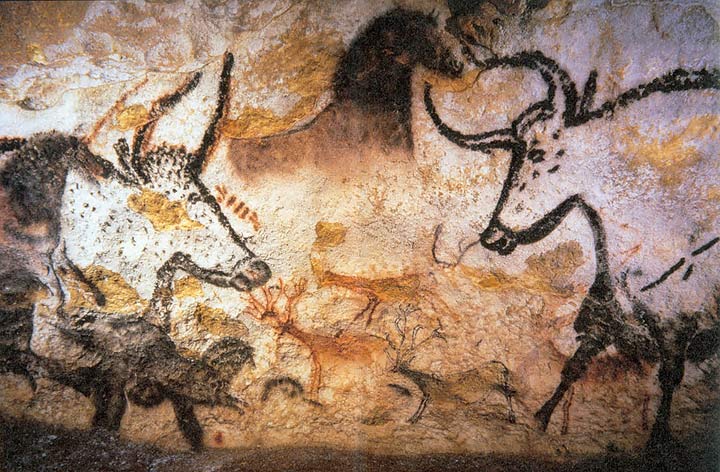
The findings explore the possibility of recovering ancient DNA directly from cave art, going beyond bones, sediments or, more recently, bone artefacts. The research focused on 24 rock art panels from eleven caves, including simple marks, hand stencils, as well as pigment naturally falling from some figurative paintings from the famous Cave of Altamira. Using cutting-edge DNA extraction and sequencing methods, the team analysed pigmented and unpigmented cave wall fragments, sediments, bones and a rare ancient airbrush tool used for applying paint.
Although the researchers found traces of ancient human DNA in one pigmented calcite crust sampled in Escoural Cave (Portugal), to their surprise they also found ancient human DNA in several non-pigmented parts of the cave wall in Escoural as well as in Covarón Cave (northern Spain), which had initially been sampled as negative controls. The study shows that human DNA can be preserved on cave walls long after the populations that visited the cave have disappeared.
Of the 120 samples collected, only five yielded authentic ancient human mitochondrial DNA: a calcite crust with pigment underneath from Panel 11 at Escoural Cave, two unpigmented cave wall samples from a deeper gallery also from the same site, and two unpigmented samples adjacent to rock art in Covarón. Importantly, two of these samples showed no detectable faunal mitochondrial DNA, a rare finding which strongly suggests that the DNA was deposited directly by humans through saliva, sweat or other bodily fluids. By contrast, three other unpigmented wall samples contained both human and faunal DNA, suggesting indirect deposition, likely via sediment transfer or water movement, rather than direct contact.
The human DNA of three of these samples comes mostly from females, one mostly from males, and one remains undetermined. Further analysis of the two unpigmented cave wall samples from Covarón revealed that their DNA belonged to modern humans, with nuclear DNA placing them within the Western hunter-gatherer genetic cluster. This is consistent with the findings for other ancient Iberian populations.
Despite favourable conditions for ancient DNA preservation at many sites, ancient DNA was detected in only one of the 24 rock art panels examined, and two additional locations adjacent to other rock art panels. This rarity suggests that pigment surfaces rarely retain enough DNA to survive for thousands of years, particularly if they are not protected by mineral crusts or sealed environments.
Tags:
Source: Max Planck Institutes
Credit: