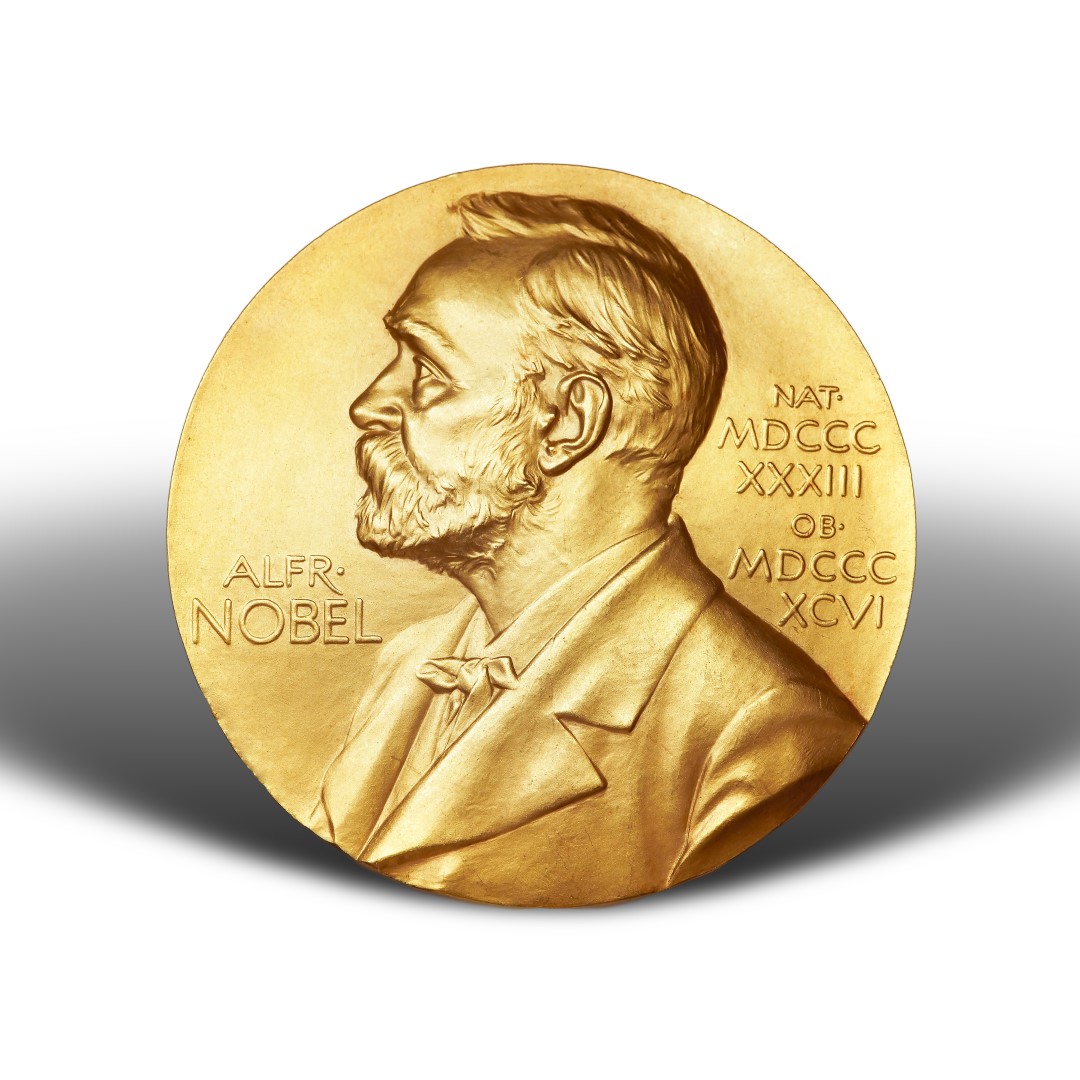
American chemist Paul Lauterbur and British physicist Peter Mansfield shared the 2003 Nobel Prize in Physiology or Medicine
On Oct. 6, 2003, American chemist Paul Lauterbur and British physicist Peter Mansfield made pioneering contributions during the 1970s which led to the application of magnetic resonance in medical imaging. They share the 2003 Nobel Prize in Physiology or Medicine.
The term “nuclear magnetic resonance” (NMR) was dropped because it was feared that people would associate it with atomic radiation. The technique was renamed “magnetic resonance imaging.
Imaging of human internal organs with exact and non-invasive methods is very important for medical diagnosis, treatment and follow-up. This year’s Nobel Laureates in Physiology or Medicine have made seminal discoveries concerning the use of magnetic resonance to visualize different structures. These discoveries have led to the development of modern magnetic resonance imaging, MRI, which represents a breakthrough in medical diagnostics and research.
Atomic nuclei in a strong magnetic field rotate with a frequency that is dependent on the strength of the magnetic field. Their energy can be increased if they absorb radio waves with the same frequency (resonance). When the atomic nuclei return to their previous energy level, radio waves are emitted. These discoveries were awarded the Nobel Prize in Physics in 1952. During the following decades, magnetic resonance was used mainly for studies of the chemical structure of substances. In the beginning of the 1970s, this year’s Nobel Laureates made pioneering contributions, which later led to the applications of magnetic resonance in medical imaging.
Magnetic resonance imaging, MRI, is now a routine method within medical diagnostics. Worldwide, more than 60 million investigations with MRI are performed each year, and the method is still in rapid development. MRI is often superior to other imaging techniques and has significantly improved diagnostics in many diseases. MRI has replaced several invasive modes of examination and thereby reduced the risk and discomfort for many patients.
Tags:
Source: The Nobel Foundation
Credit: Photo: ᄅ The Nobel Foundation.