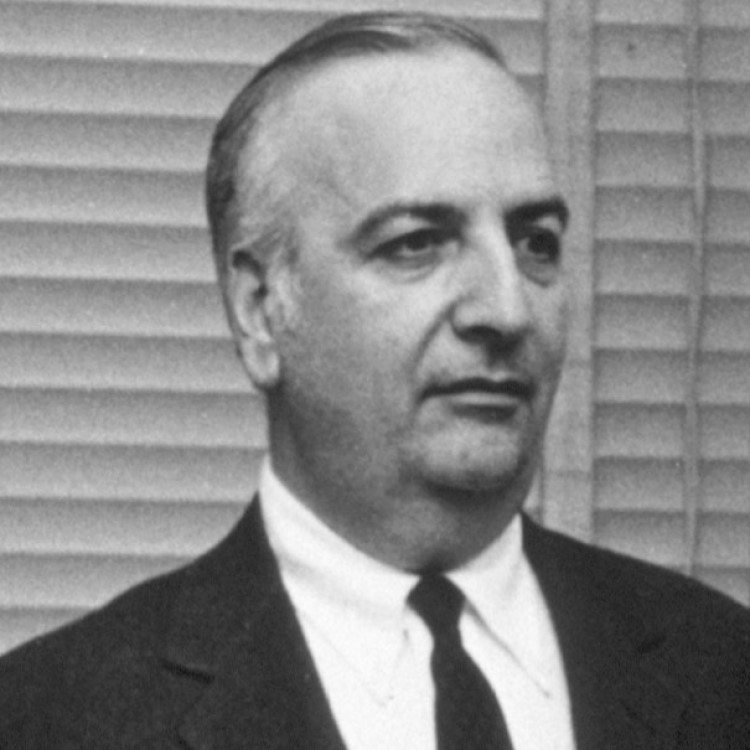
Alumnus Baruj Benacerraf was awarded the Nobel Prize for Medicine and Physiology
On Oct. 10, 1980, The Nobel Foundation announced they had awarded the Nobel Prize for Medicine and Physiology to Baruj Benacerraf, Jean Dausset and George Snell for their discoveries concerning “genetically determined structures on the cell surface that regulate immunological reactions.”
During the 1960s Benaceraff showed through studies of guinea pigs that the immune system’s reaction to certain substances is determined by genes that exist in a certain area on a certain chromosome.
Jean Dausset demonstrated the existence of H antigens in man and elucidated the genetic factors regulating their formation.
George Snell has laid the foundation for our knowledge of the laws that govern the body’s ability to distinguish “self” from “non-self”. He did this by studies on mouse strains that, through repeated sibling mating, were made as genetically identical as monozygous twins. Originally, he studied the possibility of transferring tumor cells from one strain to another. The rules of transplantability that he established proved to apply also to normal tissue, such as skin. Snell showed that transplantability was determined by the presence of special structures (antigens) on the surface of the cell. He called these antigens histocompatibility antigens. He showed, further, that the formation of these antigens was controlled by genes (designated H) found within a limited area on a specific chromosome. This area was called the major histocompatibility complex (MHC). So far it has been possible to establish the existence of about 80 different genes within the MHC in mice. With Snell’s fundamental discoveries came the birth of transplantation immunology.
Tags:
Source: The Nobel Foundation
Credit: