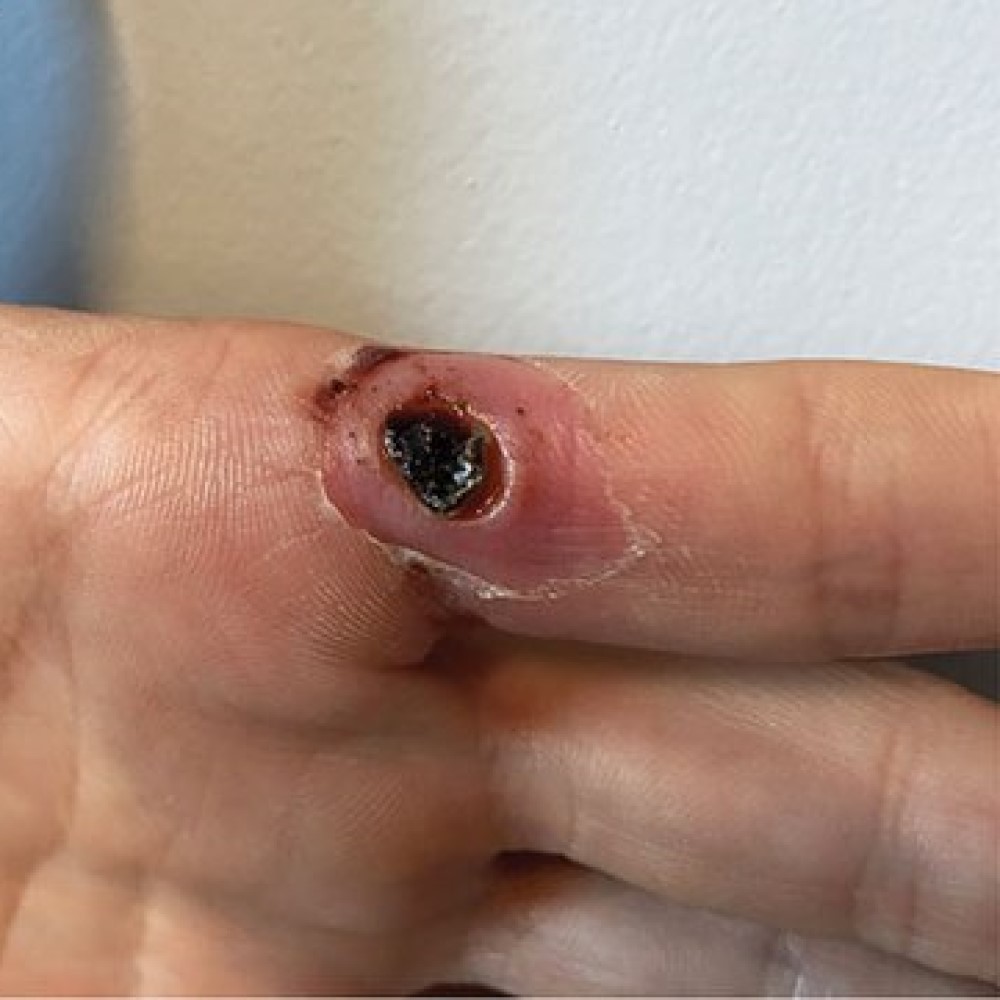
CDC and Texas Health Officials confirmed First Mpox In U.S. traveler
On Jul. 13, 2021, an emergency department (ED) physician in Dallas evaluated an early middle-aged man with a 2-week history of fever, cough, and fatigue, followed by onset of a diffuse rash. Less than 1 week earlier, the patient had been in Nigeria for a large social gathering. Because of the extensive pustular rash on his face, hospital staff members immediately placed the patient in an airborne isolation room, where he was managed with airborne and contact precautions plus eye protection. After reviewing CDC’s Travelers’ Health destination webpage for Nigeria, the ED physician suspected mpox, and public health authorities were immediately notified. The following day, the Dallas County Health and Human Services Laboratory Response Network laboratory confirmed, by real-time polymerase chain reaction (PCR), the presence of nonvariola orthopoxvirus DNA from lesion swabs. Subsequent testing by species-specific real-time PCR at Centers for Disease Control and Prevention (CDC) confirmed West African clade Mpox virus.
Interviews revealed that the patient had arrived in Nigeria on June 25 and stayed in three urban centers during his trip. By June 30, he began experiencing diarrhea, vomiting, cough, subjective fever, and fatigue, all characteristic signs and symptoms of the mpox prodrome, which also mark the onset of transmissibility of the virus to others (e.g., through infected body fluids or respiratory droplets). On July 8, 1 day before boarding the first of two return flights, the patient developed a purulent rash confined to a covered part of his body. After a brief layover in the Atlanta airport, he took a domestic flight to Dallas, and then a ride-share vehicle to his residence, where he lives alone. The next day, the rash had worsened and was visible on his face, prompting a friend to drive him to the hospital on July 13. Like many persons his age, the patient had never received the smallpox vaccine, which would have provided cross-protection against mpox but has not been routinely administered following the eradication of smallpox in 1980.
CDC, state and local public health authorities, and the treating clinicians launched an intensive investigation during July 13–September 4. Investigators reviewed what is known about orthopoxviruses and, through iterative discussions, categorized exposures as high, intermediate, low/uncertain, or no risk. Exposures were ascertained through information collected from airport video surveillance, the patient’s report of his activities and interactions with others, and flight seating assignments. This activity was reviewed by CDC and was conducted consistent with applicable federal law and CDC policy.
This was the first travel-associated mpox case in the United States, and the seventh such case worldwide, since a large 2017 outbreak in Nigeria (5,6). Case recognition launched a large public health response involving extrapolation of limited data about monkeypox to develop a framework for managing potentially exposed persons and preventing additional cases.
Tags:
Source: U.S. Centers for Disease Control and Prevention
Credit: